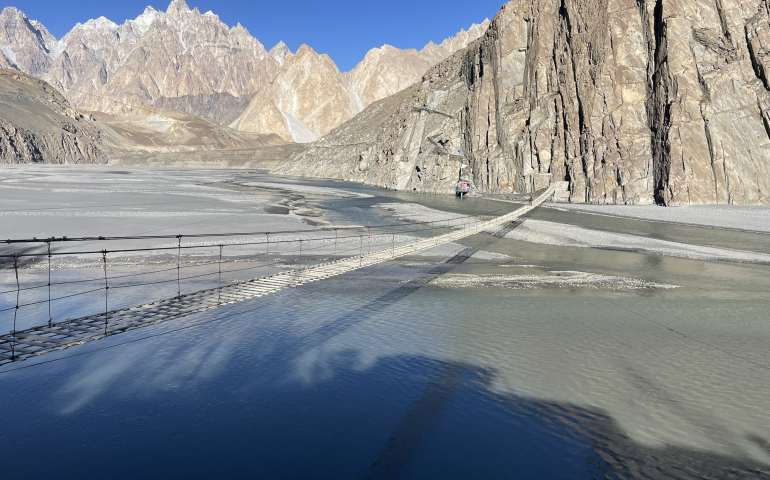
Visit to Gilgit-Baltistan (Nov 2025)
In the Name of Allah, the Merciful, the Beneficent
Introduction
Dr Abdul Rashid Gatrad is a Consultant Paediatrician and Professor of Paediatrics and Child health. He is also one of the founders and CEO of Midland International Aid Trust (MIAT), an organisation doing some charitable work in India, Palestine, Pakistan, Sudan and other countries. He has been insisting since a few months that I should join him on his journey to Pakistan to observe some of the programmes funded by a family friend in Gujrat and also attend the inauguration of an empowerment centre in Faisalabad. In addition, since my previous visit to Chitral in February this year, a visit to the Gilgit-Baltistan region of north Pakistan has been under discussion with my dear friend, brother Abdus Salam of Global Reach.

I thus travel to Manchester Airport on Thursday 20 November 2025 by train and board the 8.40pm Emirates A380 flight whilst my dear colleague, brother Riaz of Dundee departs at a similar time from Edinburgh. My flight arrives into Dubai at 8.40am the next morning Friday 21 November 2025, 45 minutes later than scheduled and Riaz’s flight is delayed further. There is just about sufficient time for me to visit a friend in Dubai who kindly sends his driver and also has breakfast ready. I return to the Airport and meet up with Riaz and we board the 12.20pm Flydubai flight to Faisalabad. Emirates does not fly to Faisalabad, it flies to Lahore, which is a two-hour drive from Faisalabad.
Arrival into Faisalabad
We arrive into Faisalabad International Airport at 4.30pm. This is my fifth visit to Pakistan but my first visit to Faisalabad. After immigration, a police officer insists on taking photos of our passports which he does. He follows us out of the terminal because apparently his storage is full and uses a colleague’s phone. We are received at the Airport by brother Salīm Ashraf who has been sent by Sayyid Mufti Mukhtāruddīn Shāh Ṣāḥib (b. 1370/1950) of Karbogha Sharif to receive us. He mentions that the city is famous for clothing and textiles.
First meeting with Sayyid Mufti Mukhtāruddīn Shāh Ṣāḥib
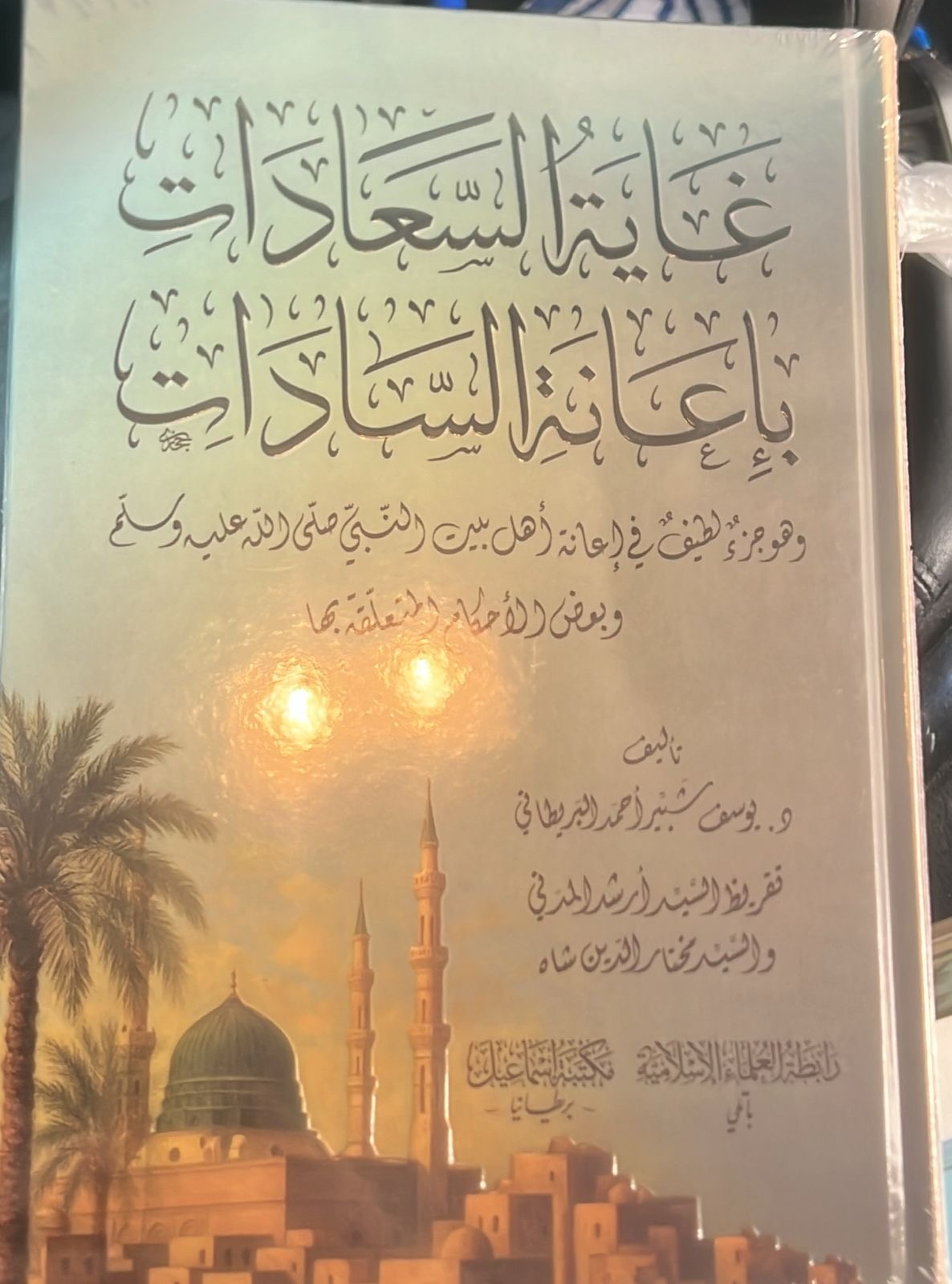
Sayyid Mufti Mukhtāruddīn Shāh Ṣāḥib is a disciple of Shaykh al-Ḥadīth Mawlānā Muḥammad Zakariyyā Kāndhelwī (d. 1402/1982) and the Shaykh al-Ḥadīth of Jamia Zakariyya Darul Uloom in Karbogha Sharif, which is located close to the border with Khost province of Afghanistan. Allah Almighty has given him widespread acceptance. In the month of Ramadan, thirty to forty thousand people attend his Khānqah (spiritual centre) and towards the end of Ramadan, the number of attendees reaches 100,000. Two years ago, my respected father Mufti Shabbir Ahmad (b. 1376/1957) met him in Saudi Arabia and both luminaries have remained in touch since. I also exchanged some letters with him and he kindly wrote forewords to two of our Arabic books: Ghāyat al-Saʿādat bi Iʿānat al-Sādāt (on the subject to assisting the household of our beloved Prophet ﷺ, the forewords to which are only written by Sayyids) and the collection of three books on Masjid al-Aqṣā, Shām and prisoners.

During my previous visit to Pakistan, I had intended to visit him in Karbogha Sharif, but this was not possible. Al-Ḥamdulillāh, we found out through his son, Mufti Zubayr Ṣāḥib that there is currently an Iṣlāḥī (spiritual) tour taking place and that Ḥaḍrat is in Faisalabad today.

We arrive at the location of the programme in the outskirts of the city, where Mufti Ṣāḥib’s talk is taking place in a tent attended by two to three thousand people. The subject is Ikhlāṣ. Mufti Ṣāḥib cautions against saying or believing that I did this and I did that, rather one should attribute success and good deeds to Allah Almighty. This is followed by the Dhikr Majlis. Mufti Ṣāḥib is extremely happy to meet us. He says:
“I have read your books and benefited from them.”
This is an honour for me. I gift him a copy of our Urdu and Arabic publications. He enquires about my father, my brother and also my uncle, Mawlānā Muḥammad of Dewsbury, who he also addresses as ‘Māmū’. He insists that we join him for dinner in Faisalabad city and also spend the night with him. As we have another meeting, we take leave and inform him that we will try to visit Karbogha Sharif or meet him elsewhere. I am struck by his simplicity and humility.
During the journey, Riaz had mentioned that he would like to meet a Scottish revert, Shaykh Yaʿqūb who runs a Madrasah somewhere near Islamabad. Allah Almighty is the best of planners, Shaykh Yaʿqūb is part of Mufti Ṣāḥib’s convoy, so we meet him here.
GSK Women Empowerment Skills Centre
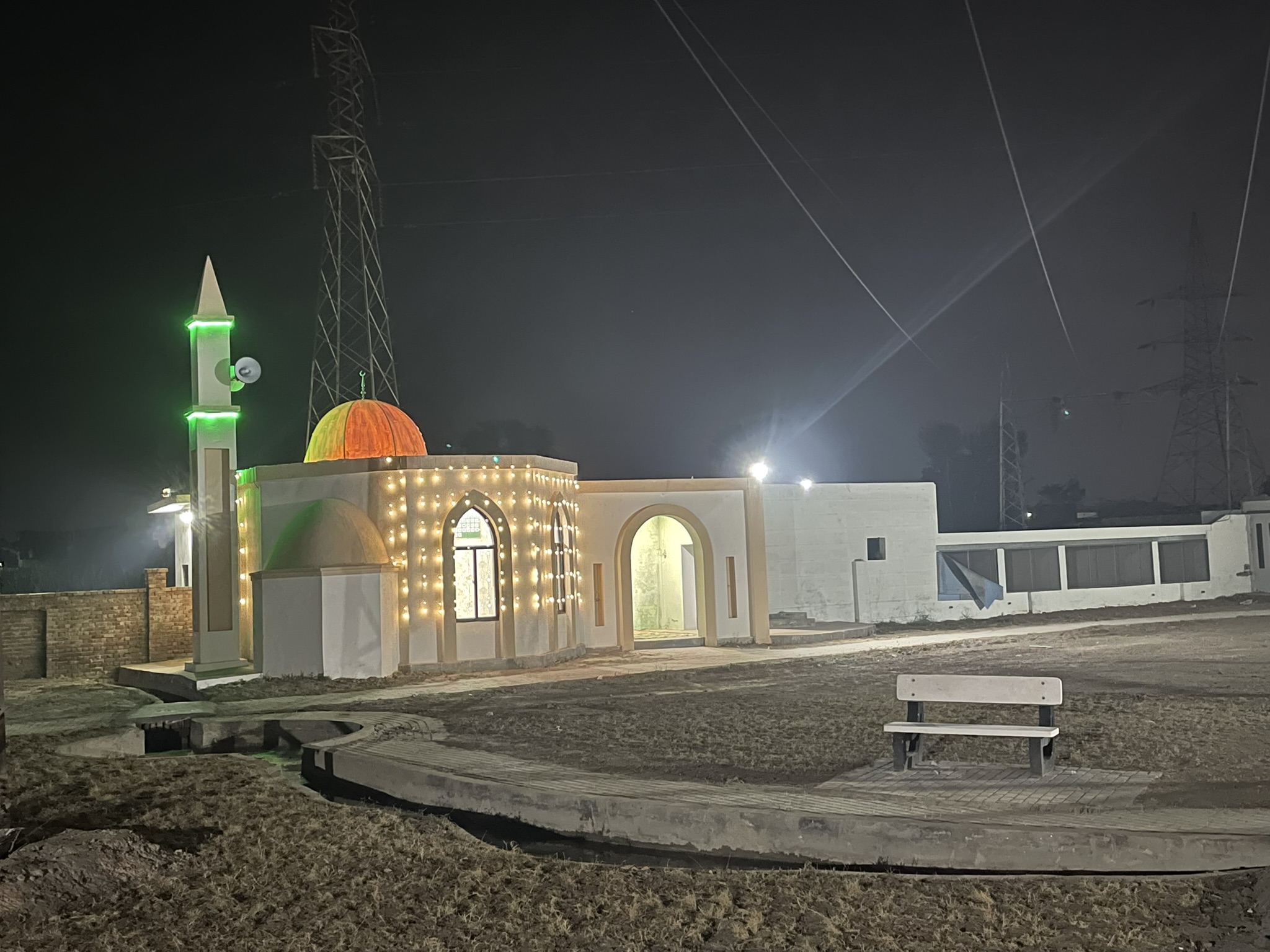
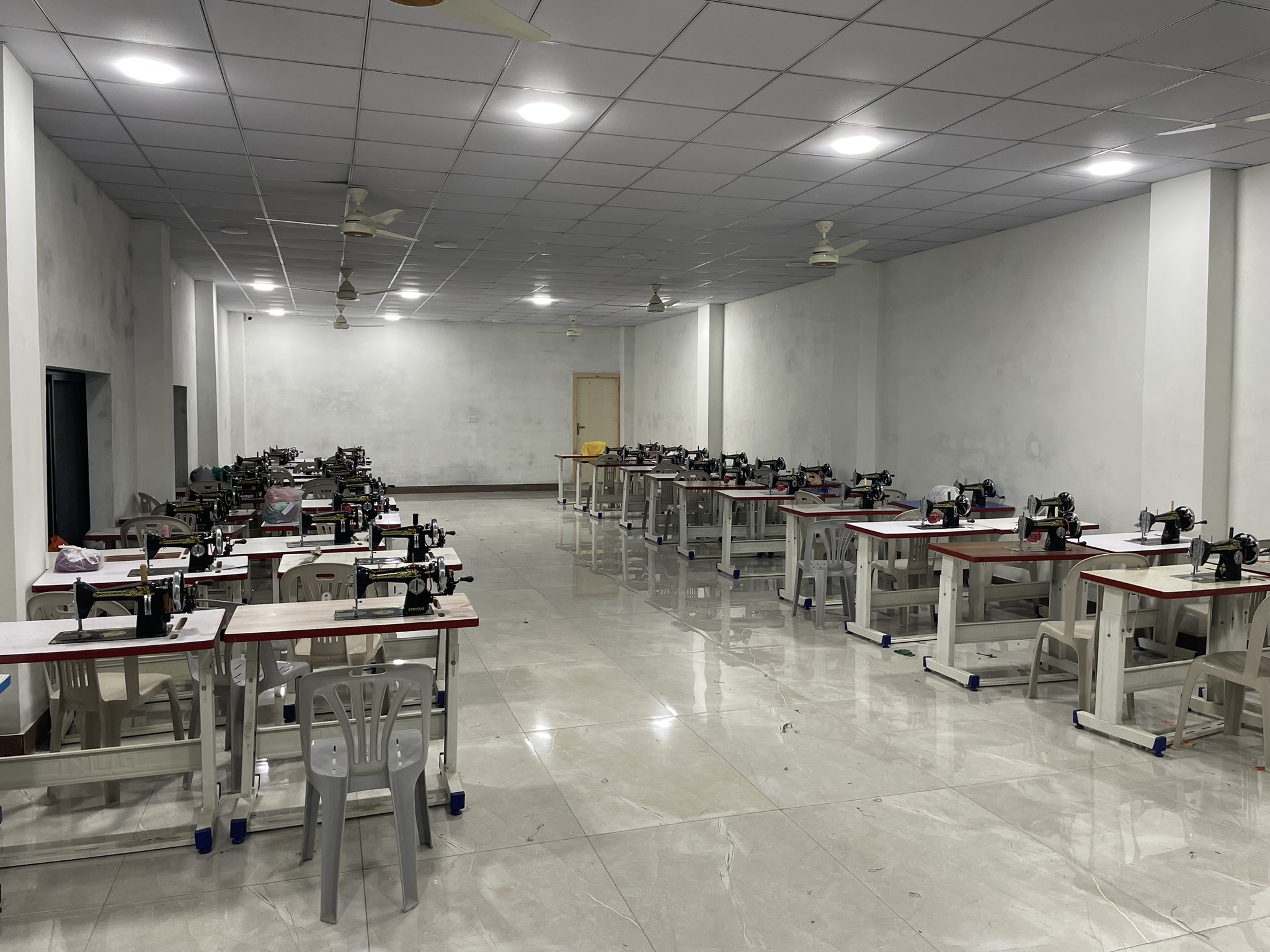
We proceed to the GSK Women Empowerment Skills Centre in Ghona West near Millat Town and meet with Dr Abdul Rashid Gatrad and also some of his local colleagues, Dr Shaukat Ali and his family who have established this Centre. The Centre aims to empower vulnerable orphan girls and support them to prosper in life. Many of these orphans do not have an ID card which is arranged for them. Some of them do not even know the Kalimah. Multiple challenges have to be dealt with. The centre is not a residential orphanage. The philosophy is that the orphans should reside with their mothers or guardians in their homes, which is their natural environment. The Centre is also providing empowerment skills via sewing machine, cooking and computer classes for poor widows and ladies. The complex also has a newly built Masjid and recreational facilities including a swimming pool. During the recent floods, a woman who lost her daughter had said:
“I wish my daughter knew how to swim, it would have saved her life.”
Dr Gatrad comments, “Swimming is not a luxury, it is a necessity.” The formal inauguration of the Centre is tomorrow.
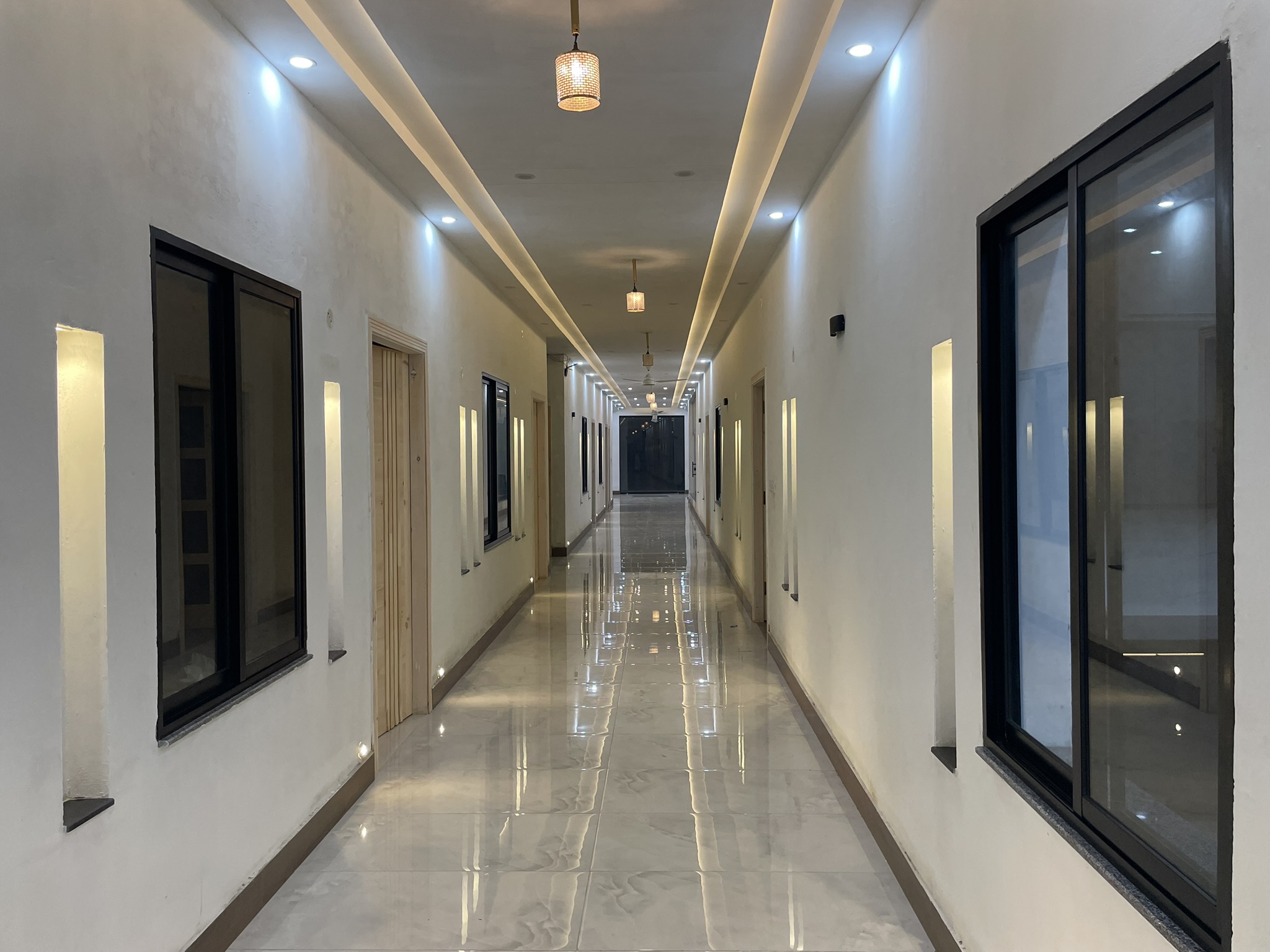
We eat dinner kindly cooked by Dr Shaukat’s family and discuss the Centre and the wider projects of Midland International Aid Trust (MIAT) in Pakistan. We rest thereafter at the Best Western Hotel, a clean four-star hotel which costs £50 a night.
Al-Khidmat Anwar Nazeer Hospital
The next morning, Saturday 22 November 2025, we begin at 9.30am by visiting the Al-Khidmat Anwar Nazeer Hospital on Jaranwala Road. My colleague Riaz has been involved in supporting this hospital.
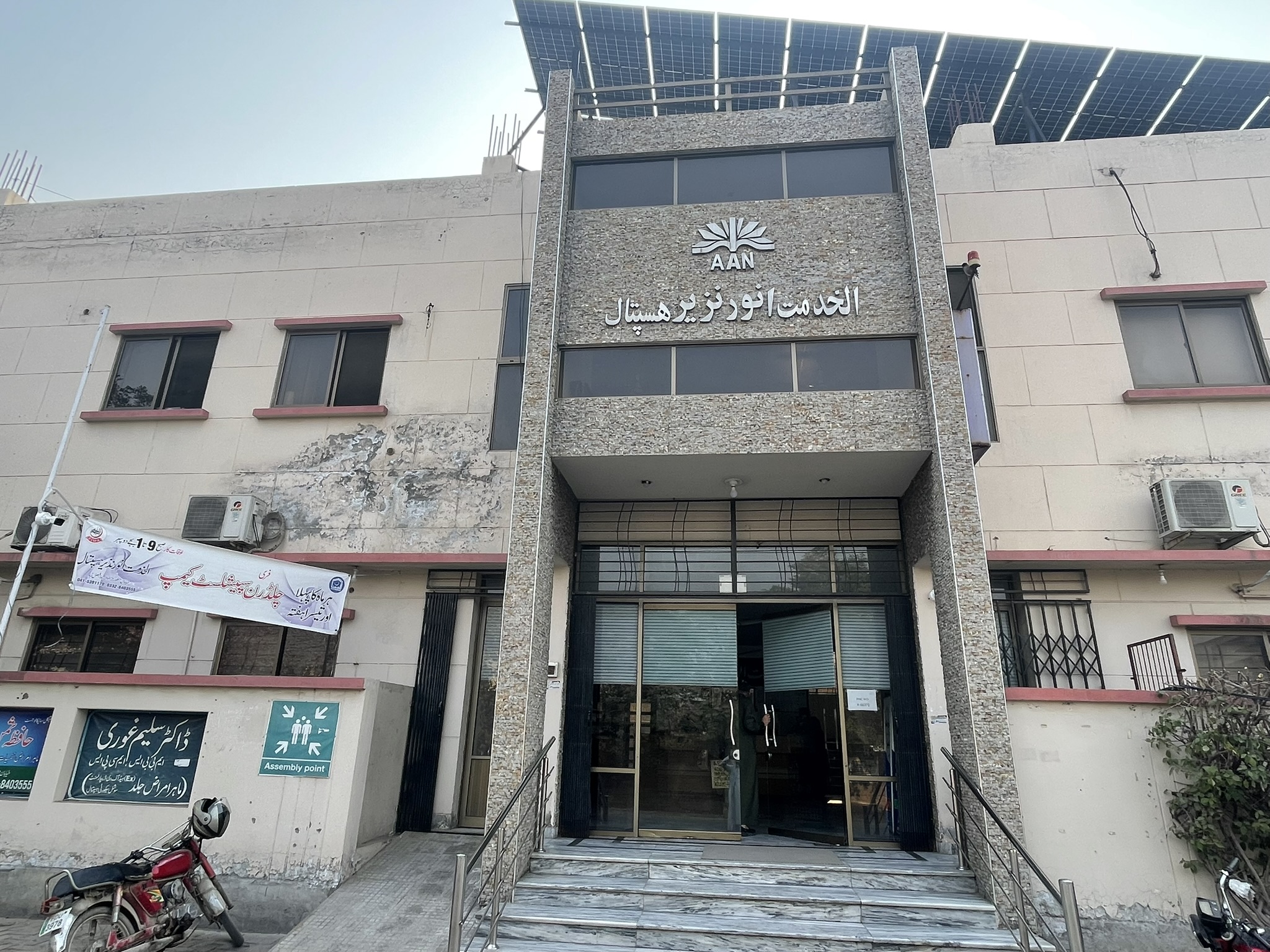
We are received by the staff including sister Maymūnah who established the hospital for the reward of her late father in 2017, and who has since handed the hospital over to Al-Khidmat Foundation, one of the largest NGOs in Pakistan. The hospital serves 100-150 patients daily and employs 60 staff. The cost of treatment for the patients is low compared to other hospitals. Despite this, many cannot afford the cost. The current monthly deficit is 1.2 million PKR (£3200). The hospital is also starting dialysis operations soon; four machines have already been sourced and there is a need for a further four machines, along with a lift.
Aghosh Al-Khidmat orphanage
At 11am, we arrive at the Aghosh Al-Khidmat orphanage located in Faisal Garden, West Canal Road, Faisalabad.
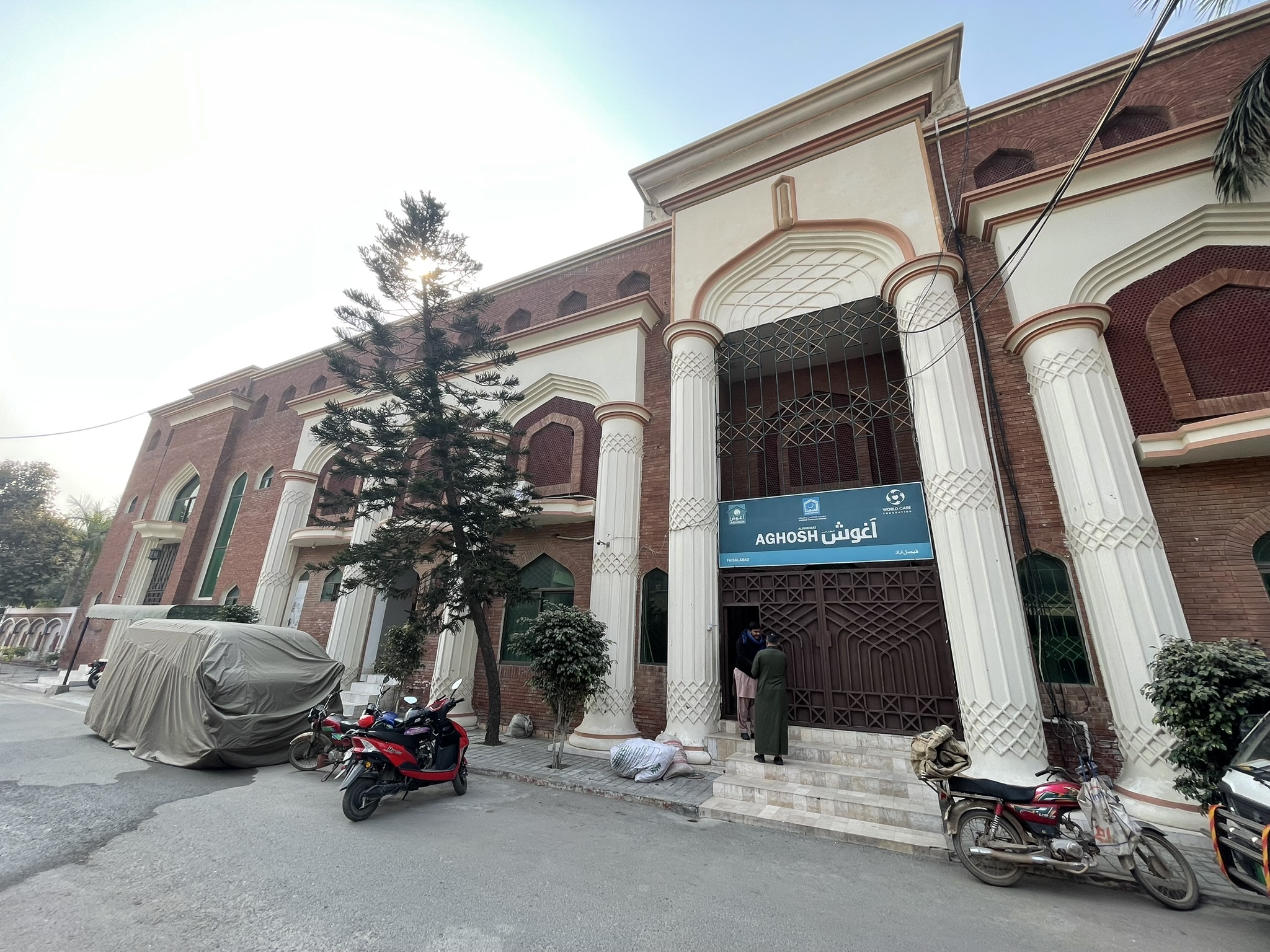
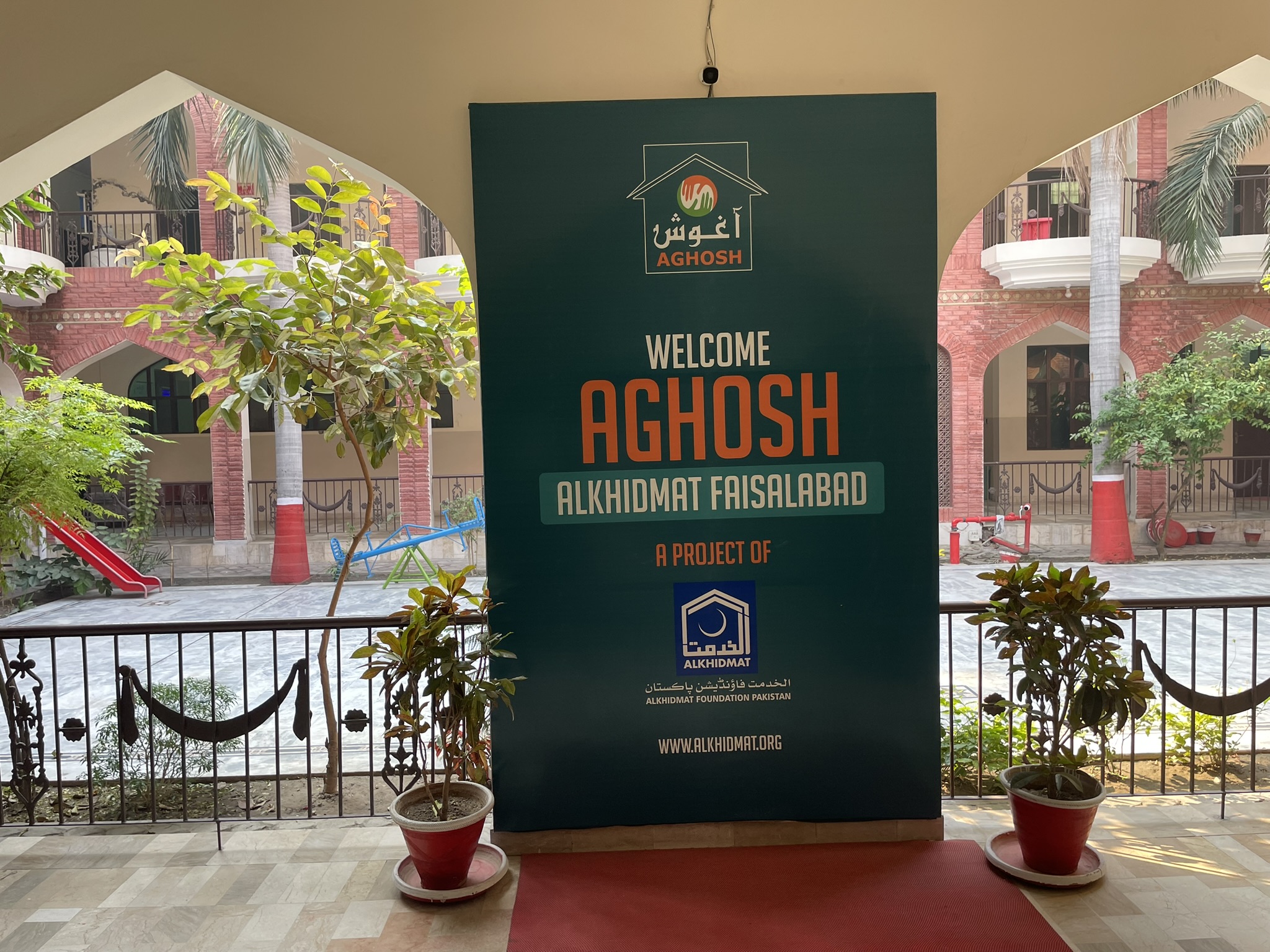
This orphanage was established in September 2023 and is part of a network of approximately 30 orphanages established by Al-Khidmat Foundation which collectively serve more than 30,000 orphans throughout Pakistan.
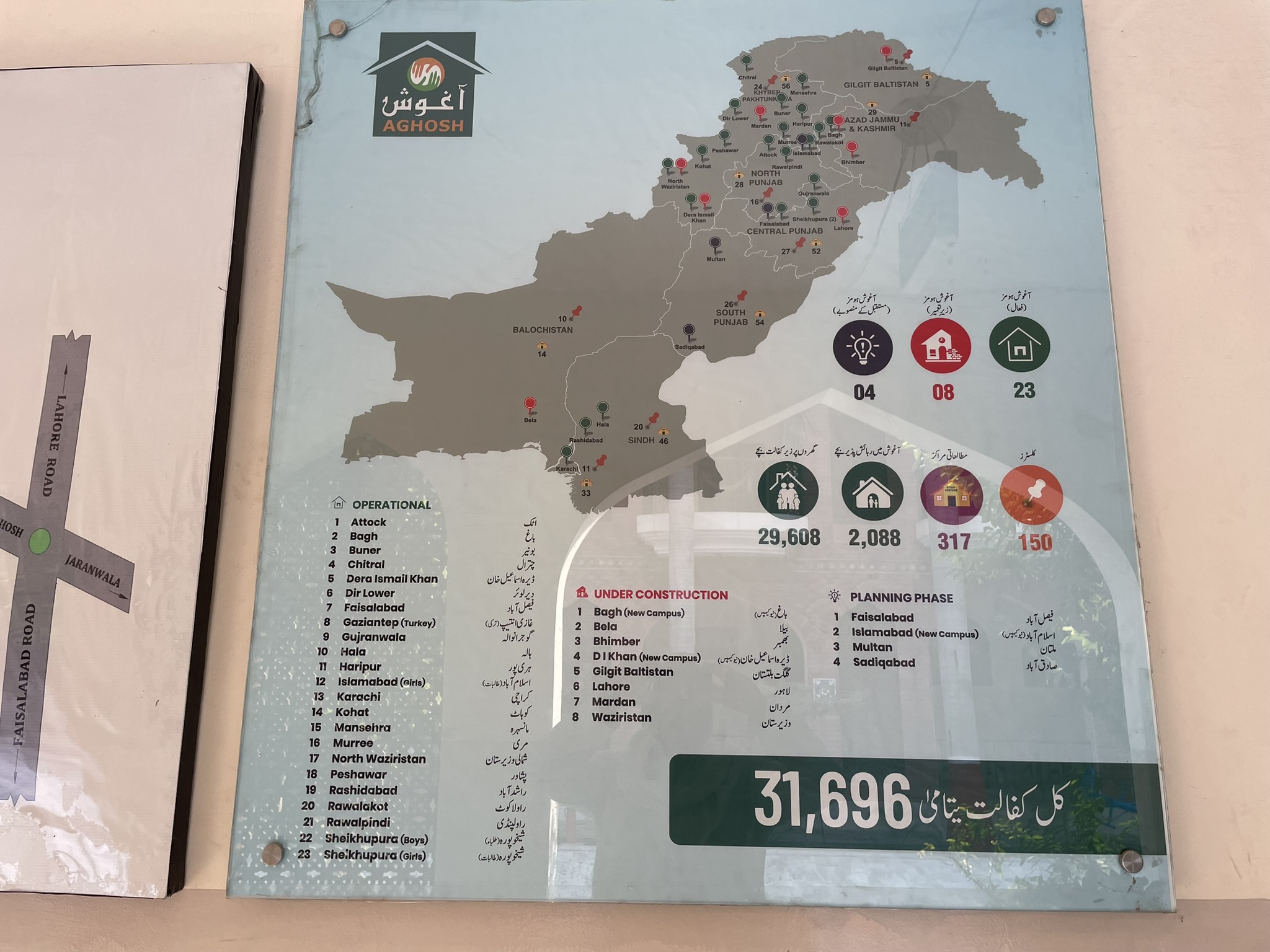
This orphanage in Faisalabad currently has 64 orphan boys who reside here. They attend local schools. Orphans are normally inducted between the 5-8 age range and looked after until the age of 18. The cost of running this centre is $10,000 per month.
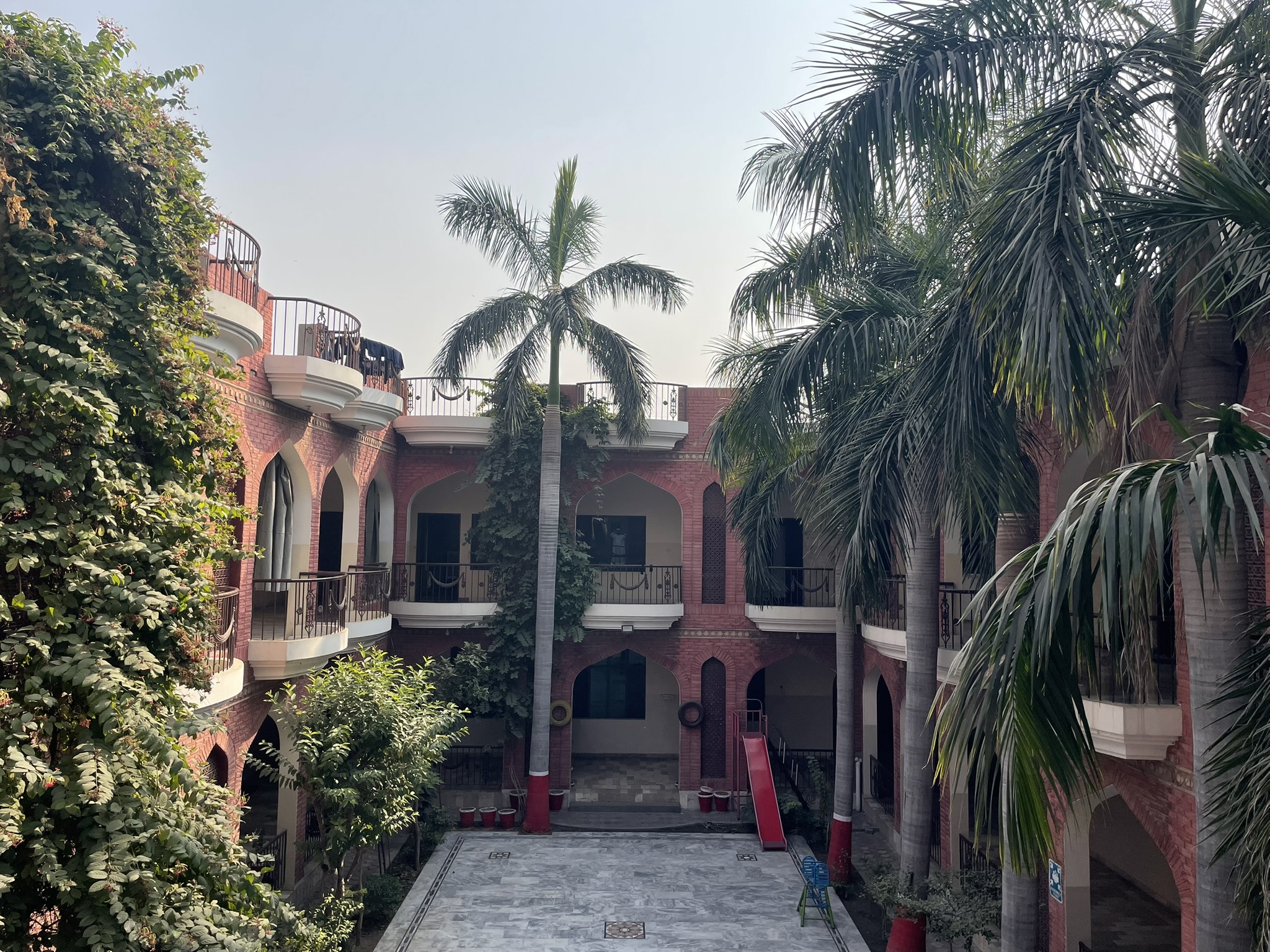
As it is Saturday, the orphans are on site and currently involved in some arts and crafts work. Some of them are painting the Palestinian flag. My colleague Riaz and his family have been involved in supporting this orphanage.
We return to the GSK Women Empowerment Skills Centre and perform Ẓuhr Ṣalāh in the new Masjid on site. The inauguration takes place thereafter with some speeches followed by lunch.
Second meeting with Sayyid Mufti Mukhtāruddīn Shāh Ṣāḥib
We had originally planned to spend the night in Faisalabad and travel to Gujrat in the morning. However, as a visit to Karbogha Sharif is looking difficult, we decide to travel to Lahore and spend some time in the company of Sayyid Mufti Mukhtāruddīn Shāh Ṣāḥib (b. 1370/1950). Today is his final Iṣlāḥī programme in the southern outskirts of Lahore city. We arrive at 7pm and partake in the Dhikr Majlis. There are five to six thousand people gathered in the tent. Several marriages also take place. After the programme concludes, we meet with Mufti Ṣāḥib and walk with him to a nearby house of one of his associates. Mufti Ṣāḥib insists I sit in his place. This is but his humility. We eat dinner together and discuss many issues including the worsening situation in Sudan. He mentions that he does not have much information in this regard as he stays away from social media. I commend him on his balanced statement in relation to the ongoing Pakistan-Afghanistan conflict. He mentions that he avoids joining in delegations. He praises my respected father and mentions that he is intelligent and someone who understands Ishāras (subtle hints). After food, he insists on checking our room and ensuring that it is suitable for our stay.
The Cleft Lip Hospital, Gujrat
The next morning, Sunday 23 November 2025, Mufti Ṣāḥib departs at 4.30am to attend the Janāzah of the wife of Ḥāfiẓ Ṣagīr Aḥmad (d. 1441/2020) who passed away yesterday. Ḥāfiẓ Ṣagīr was also a disciple of Shaykh al-Ḥadīth Mawlānā Muḥammad Zakariyyā Kāndhelwī (d. 1402/1982). Generally, Mufti Ṣāḥib sleeps between 10pm and 2am, and thereafter between 10am and 12pm. All associates wake up for Tahajjud Ṣalāh 30-45 minutes before Fajr Ṣalāh time begins.
We depart from Lahore at 7am and arrive at the Ayesha Bashir Hospital at 9am. The hospital, also known as the Cleft Lip Hospital, is located on the main GT road.
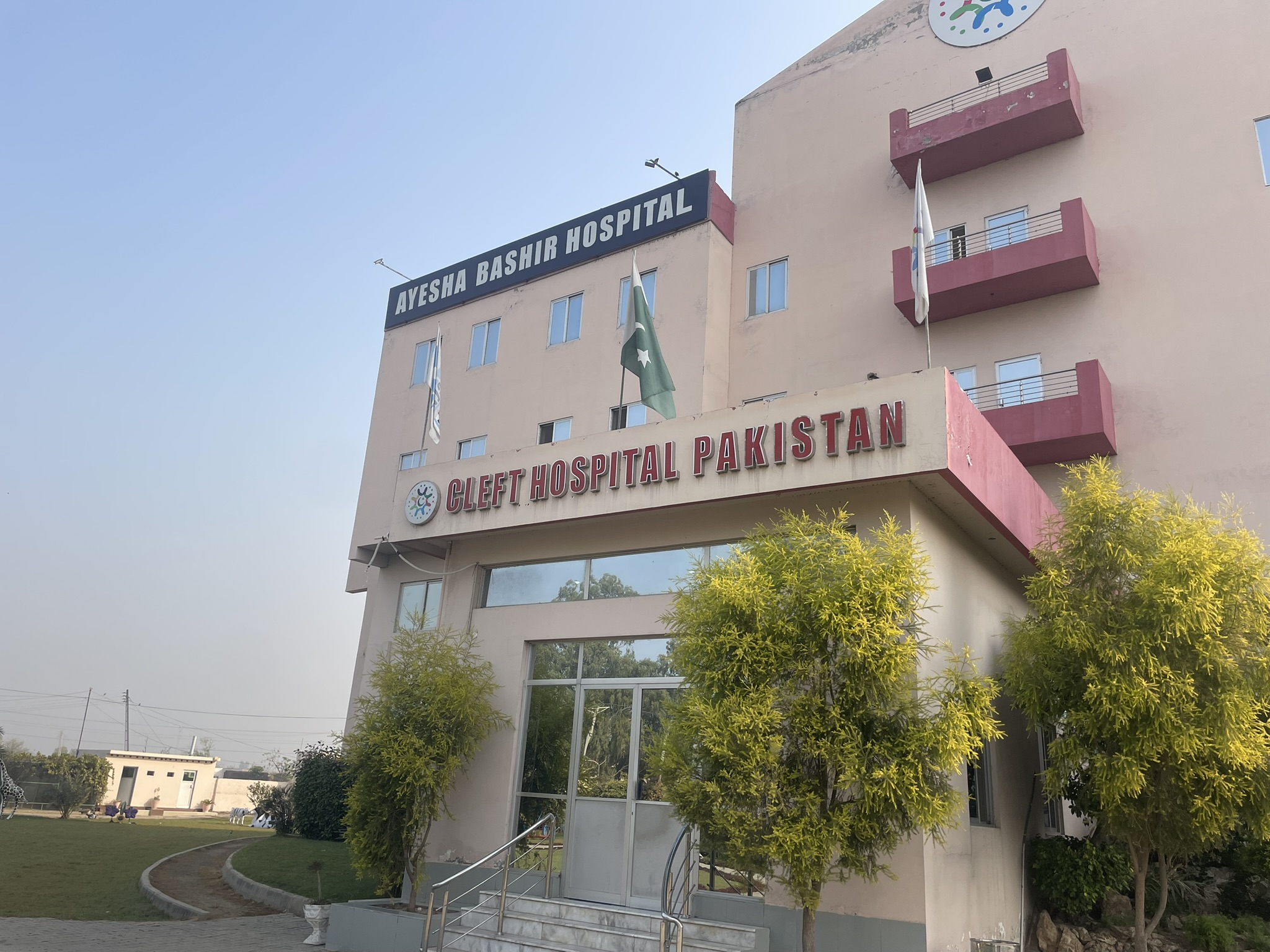
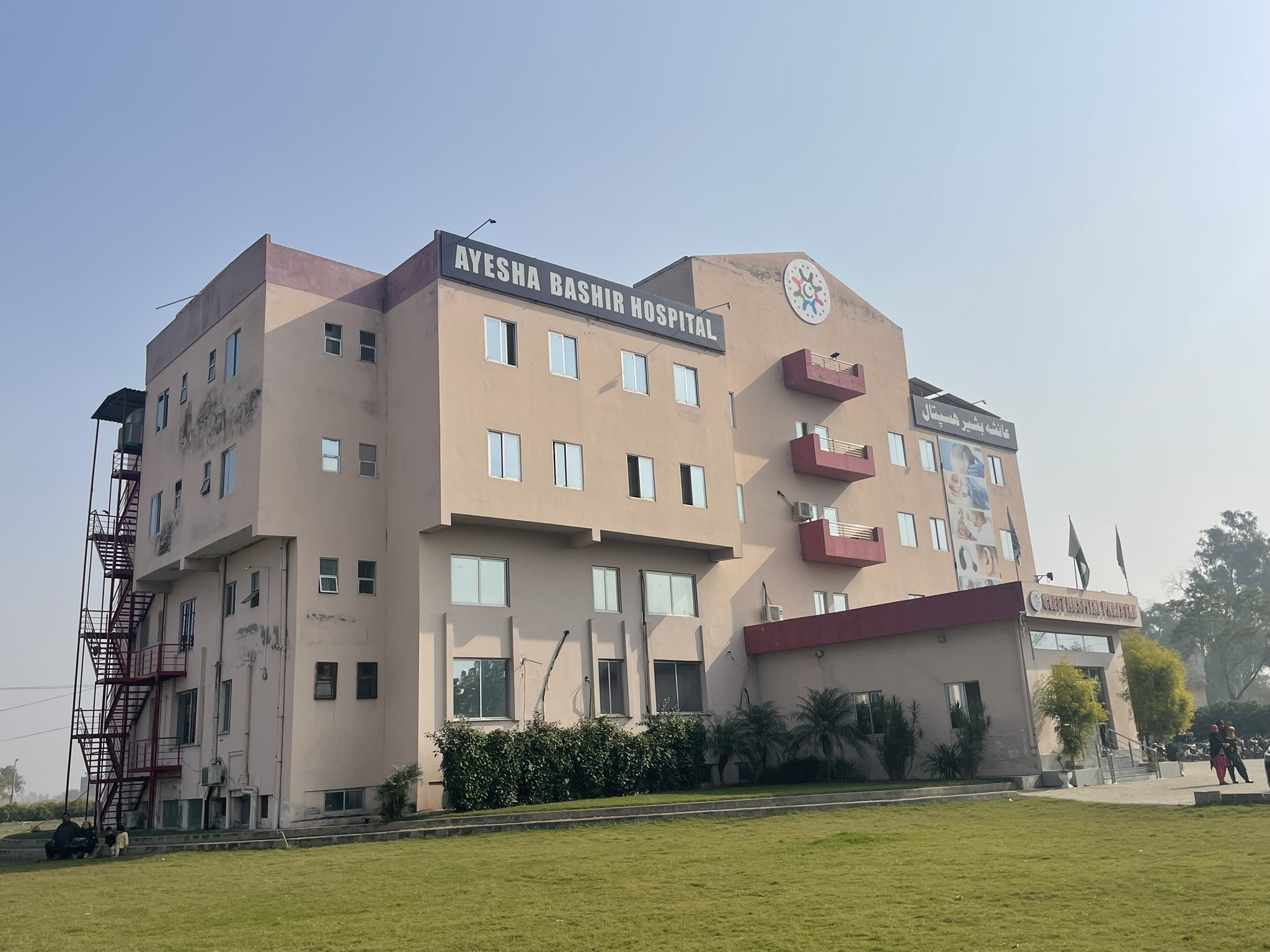
We are welcomed by Dr Ijaz the founder as well as Dr Abdul Rashid Gatrad. This hospital started in 2010 and has become a world class centre of excellence specialising in cleft lip and palate operations. It is the only hospital of its kind in the country and perhaps the world with all cleft lip related services provided under one roof. A new technique of cleft lip operations has been developed here and is now used globally and referred to as the ‘Gujrat Technique’. The centre has conducted 28,000 cleft lip operations to date. This is phenomenal and the life-long impact is huge. There is professionalism, attention to detail and the treatment and post-operation care is of an excellent standard. Twice a year, fifteen medical professionals including consultant doctors, speech therapists, audiologists and nurses come from abroad. The hospital also specialises in dental treatment for cleft lip patients and also plastic surgery. Some Palestinian medical students from Gaza (who are in Pakistan completing their medical studies via Midland International Aid Trust) are currently doing their placements here.
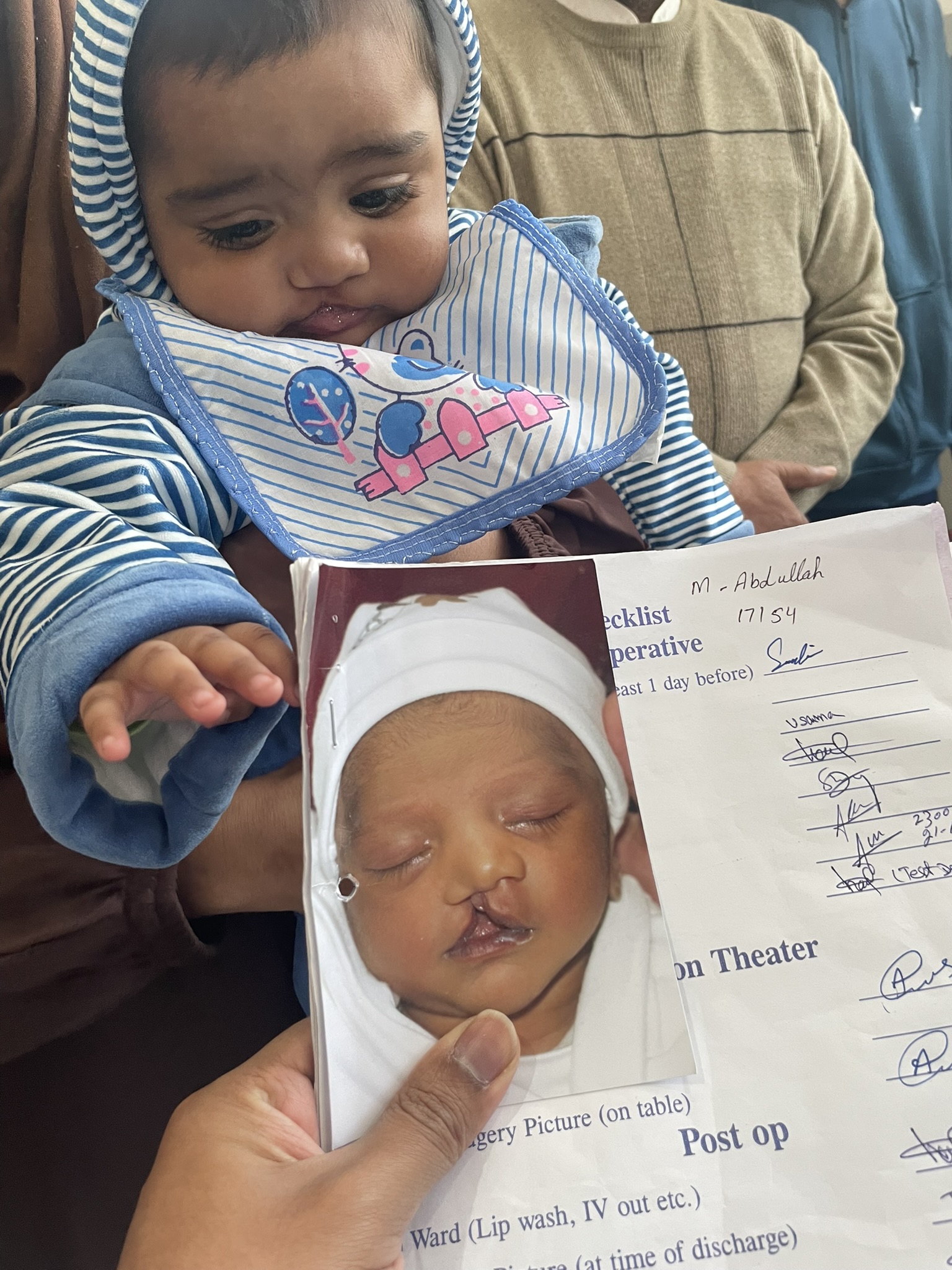
The hospital’s annual budget is ½ million pounds. Dr Ijaz and his team have worked really hard to make the hospital self-sufficient without compromising on the standards. We meet with some of the babies and young children who have benefited from the hospital’s services, along with the 28 staff employed by the hospital. It is truly remarkable and inspiring.
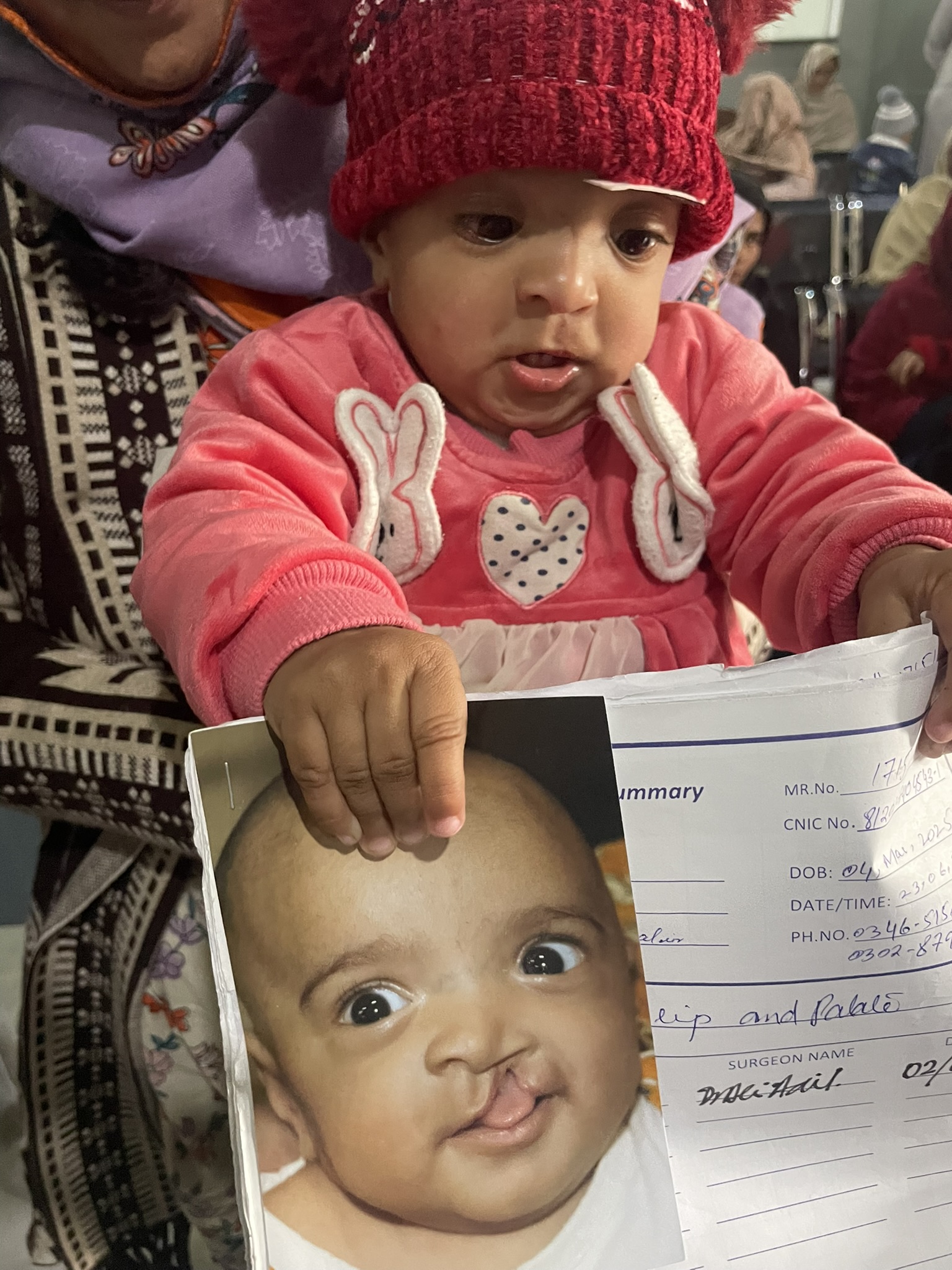
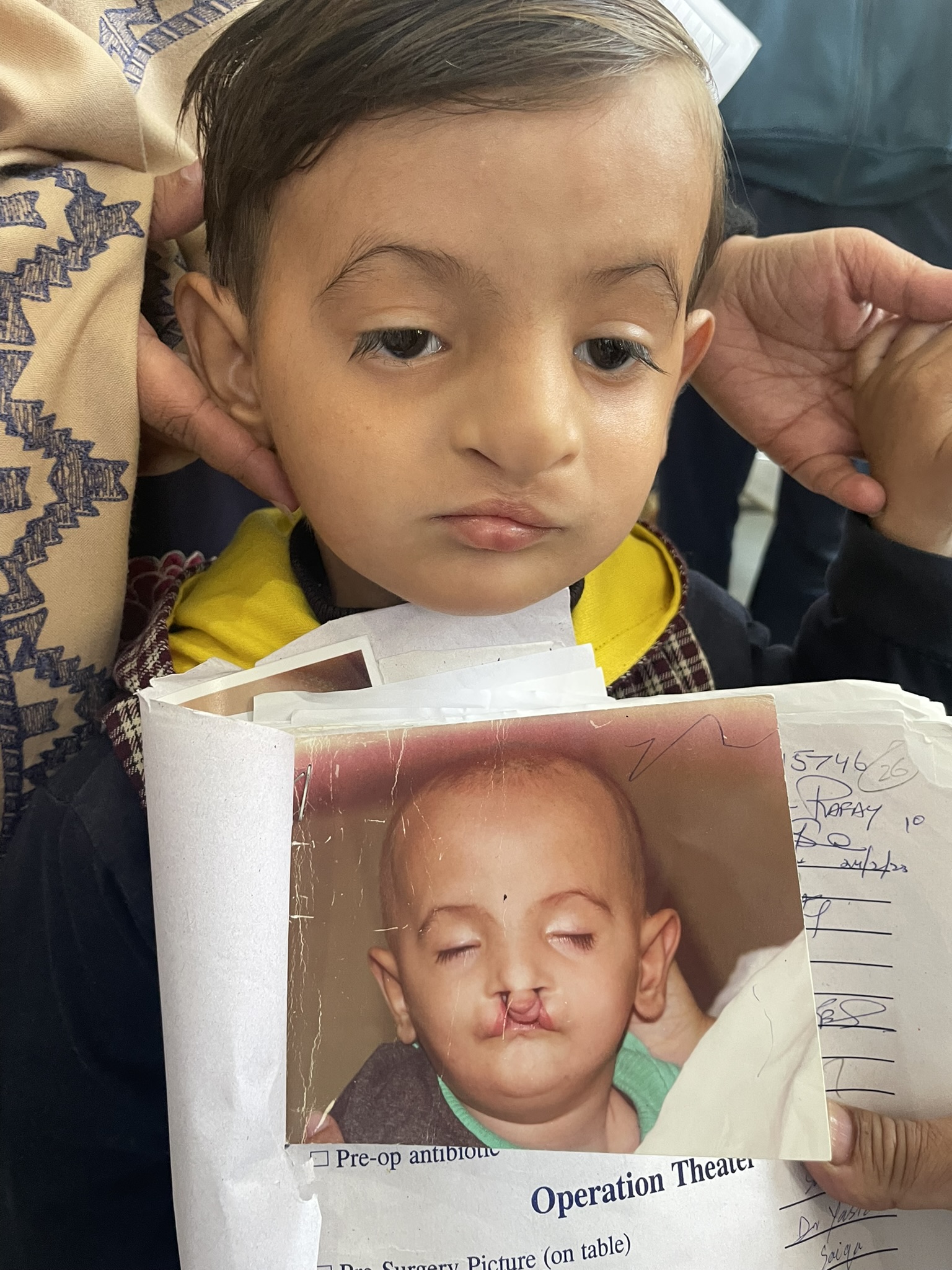
Dr Ijaz’s family comes from a business background. However, his father had supplicated in Hajj for Dr Ijaz to become a medical doctor and serve the people. He has since dedicated his life to such causes. His philosophy is to provide poor patients the same standard of care as the expensive hospitals provide to the affluent patients. This is clearly visible throughout the hospital, which along with being a hospital is also a leading research and teaching institute.


I ask Dr Ijaz and Dr Gatrad about the causes of the cleft lip. There is no one cause. Some people suggest that cousin marriages could be the cause of this, however, this is not substantiated. Dr Ijaz however advises that where the cleft lip is an existing problem within a family, then it is better to avoid cousin marriage in this specific scenario.
Muhammad Gatrad Artificial Limb and Club Foot Centre and Sook Kalan Clinic
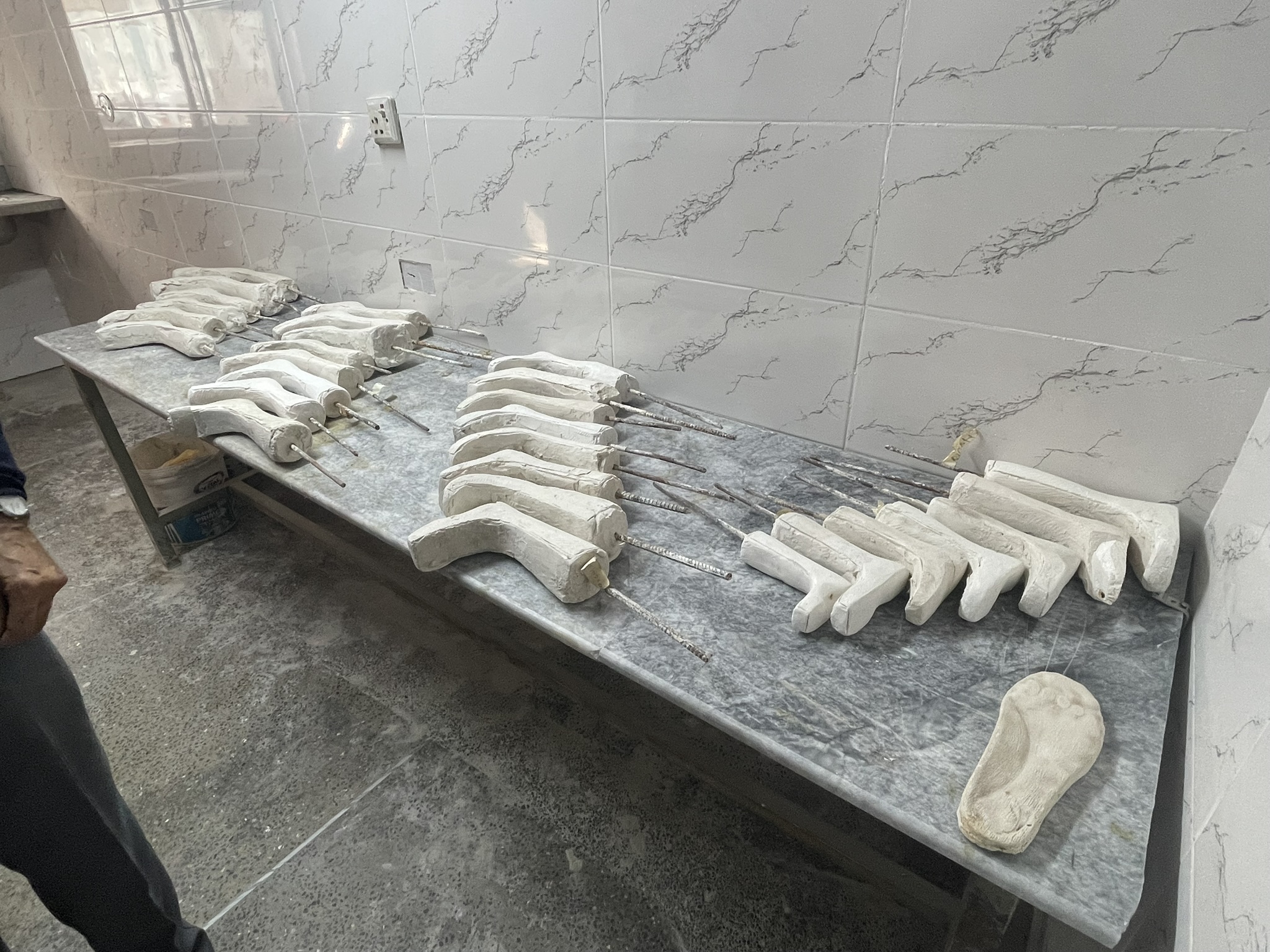
Our next stop at 1pm is the Muhammad Gatrad Artificial Limb and Club Foot Centre in Gujrat city. This is a centre fully managed by Dr Abdul Rashid Gatrad and his charity Midland International Aid Trust (MIAT). The centre specialises in rehabilitation after a club foot operation and also preventing the need for an operation by treatment after birth. The local manager here is brother Junaid. We identify that there are 35 patients of differing ages who need an operation but cannot afford it and the Centre does not have the financial means to fund them. We promise to consider their request. The cost of one operation and associated costs is £500. We also meet with some patients who have cerebral palsy. Centres like this truly transform the lives of these people and remind us of how grateful we should be to Allah Almighty for all His favours.


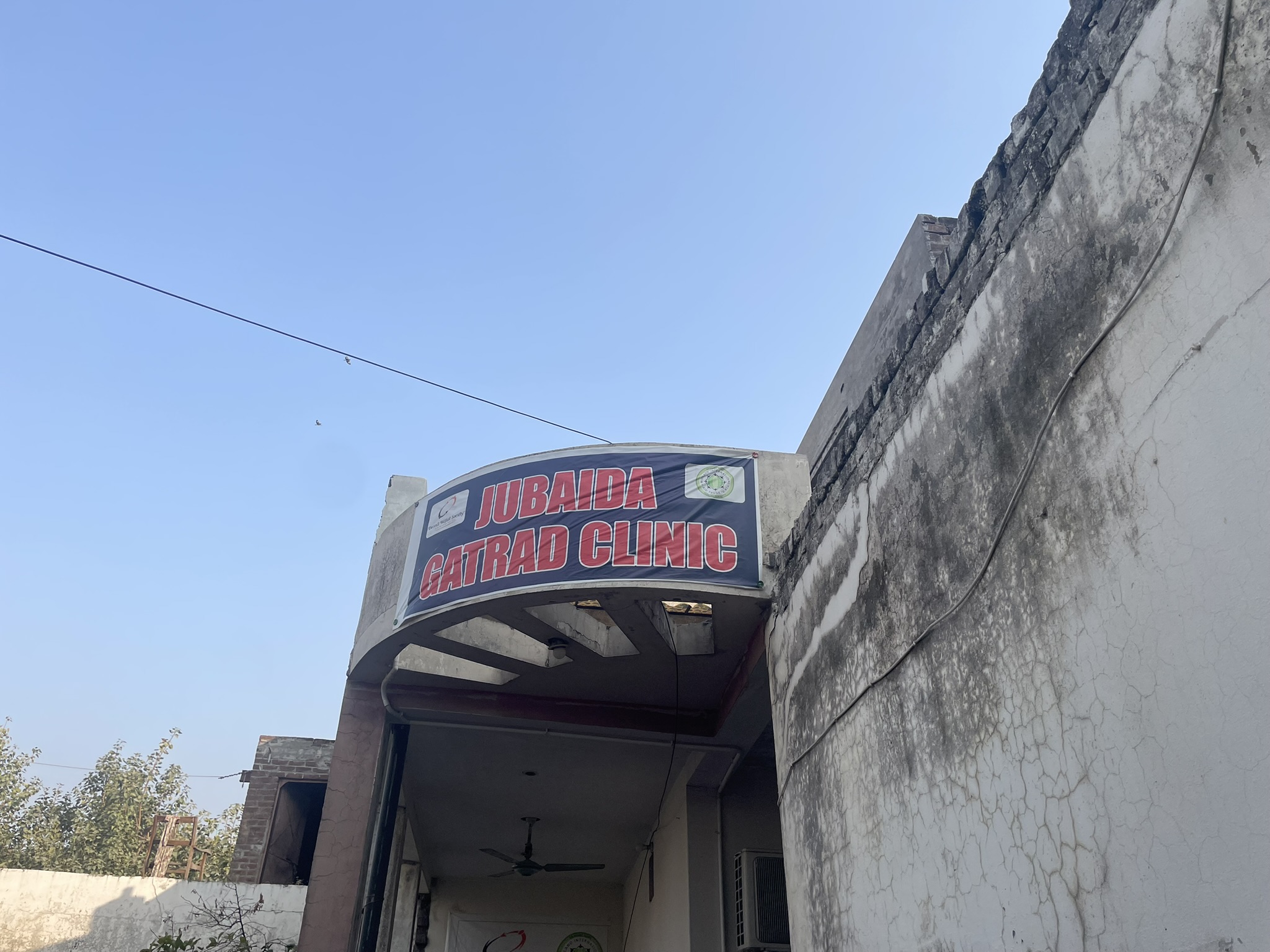
We also visit the Sook Kalan clinic in the outskirts of the city. This is a general clinic supported by Midland International Aid Trust.
We return to the Cleft Lip hospital, eat lunch, perform Ṣalāh and thereafter travel to Islamabad.
We arrive at the Serena Hotel at 8pm. The national cricket team is staying here so many of the roads are blocked. The hotel should be avoided when the cricket team is staying there.
Islamic Relief Pakistan
The next morning, Monday 24 November 2025, we eat breakfast at the Serena Hotel where the fresh grape juice deserves a special mention. We arrive at the Islamic Relief Pakistan Headquarters in Islamabad at 9.30am and meet with Syed Safi Pirzada and Muhammad Siddiq Mehsood. Islamic Relief’s annual budget in Pakistan is £16 million, of which 60% comes from institutional donors. The charity employs 550 people in Pakistan. The charity focuses on economic empowerment and sustainable projects with a focus on agriculture and livestock. There is also a large house construction programme.
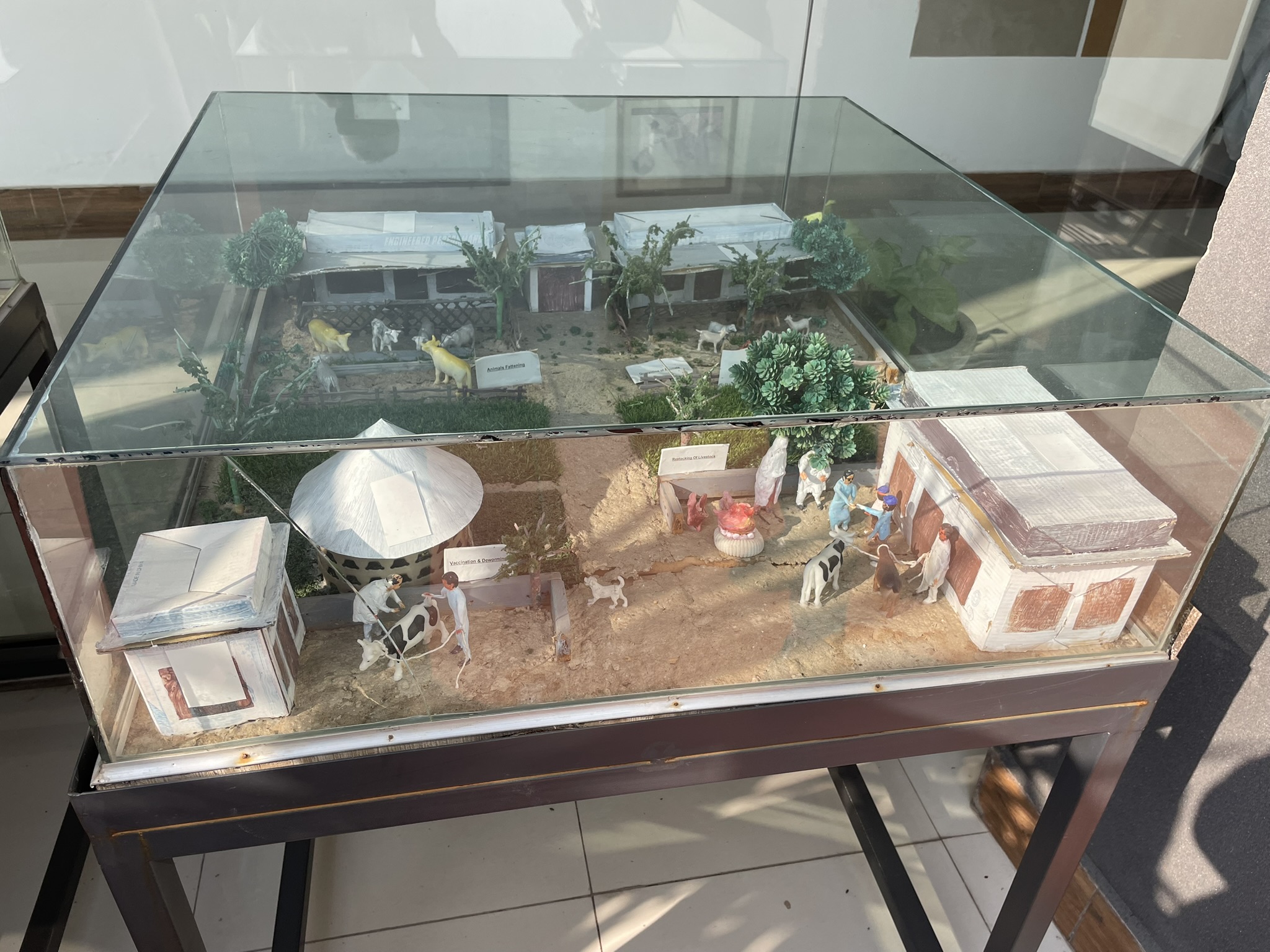
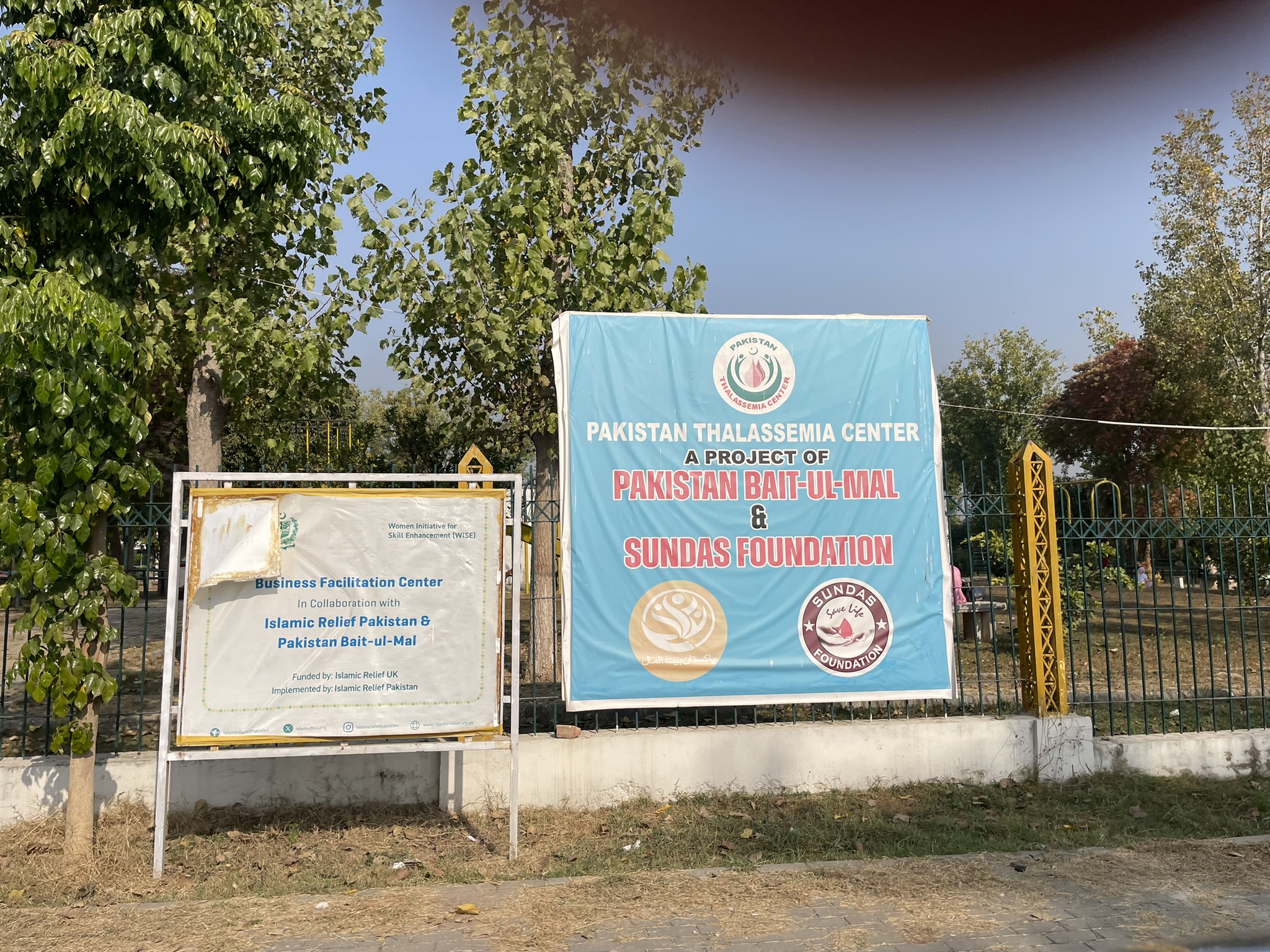
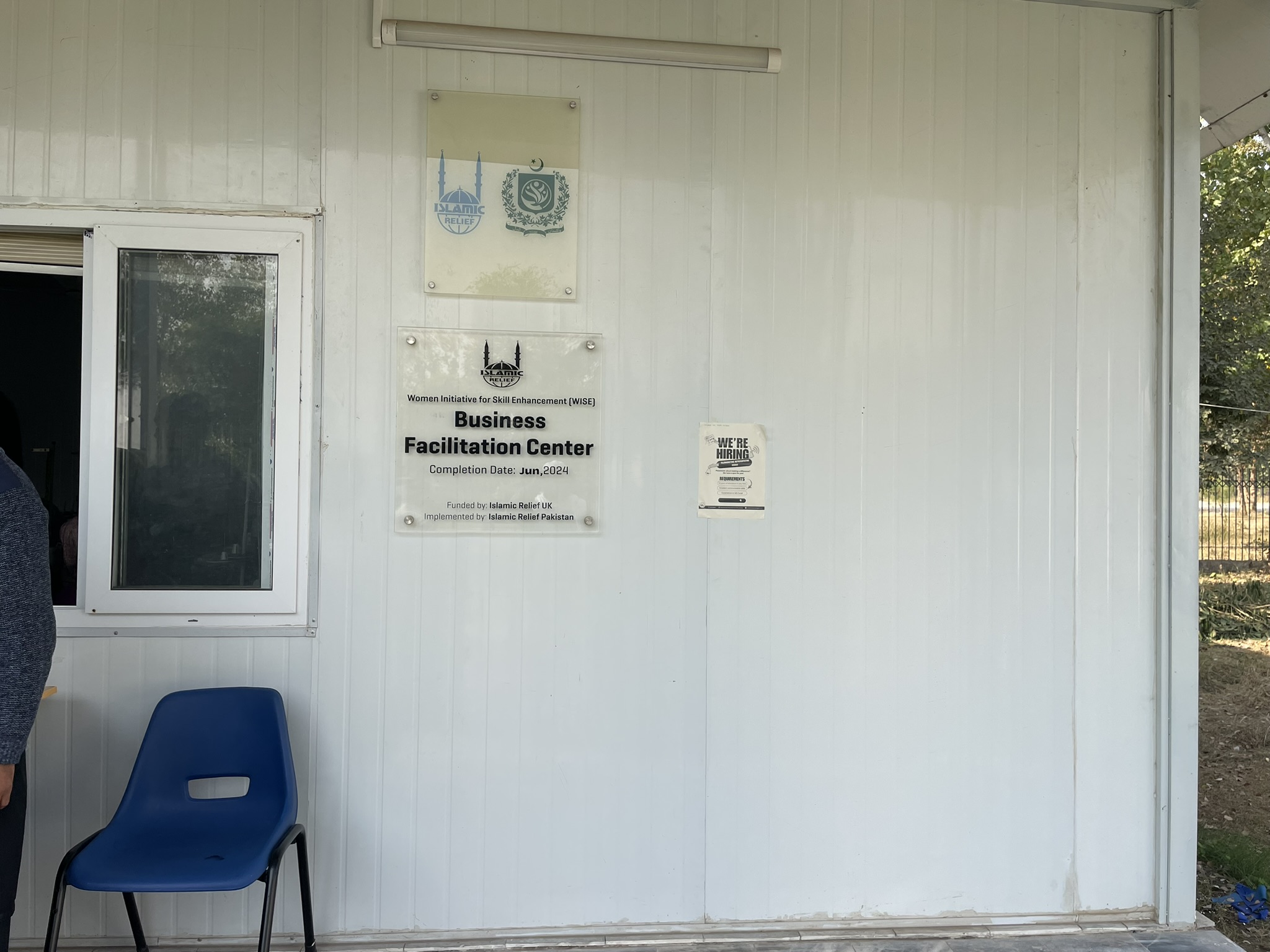
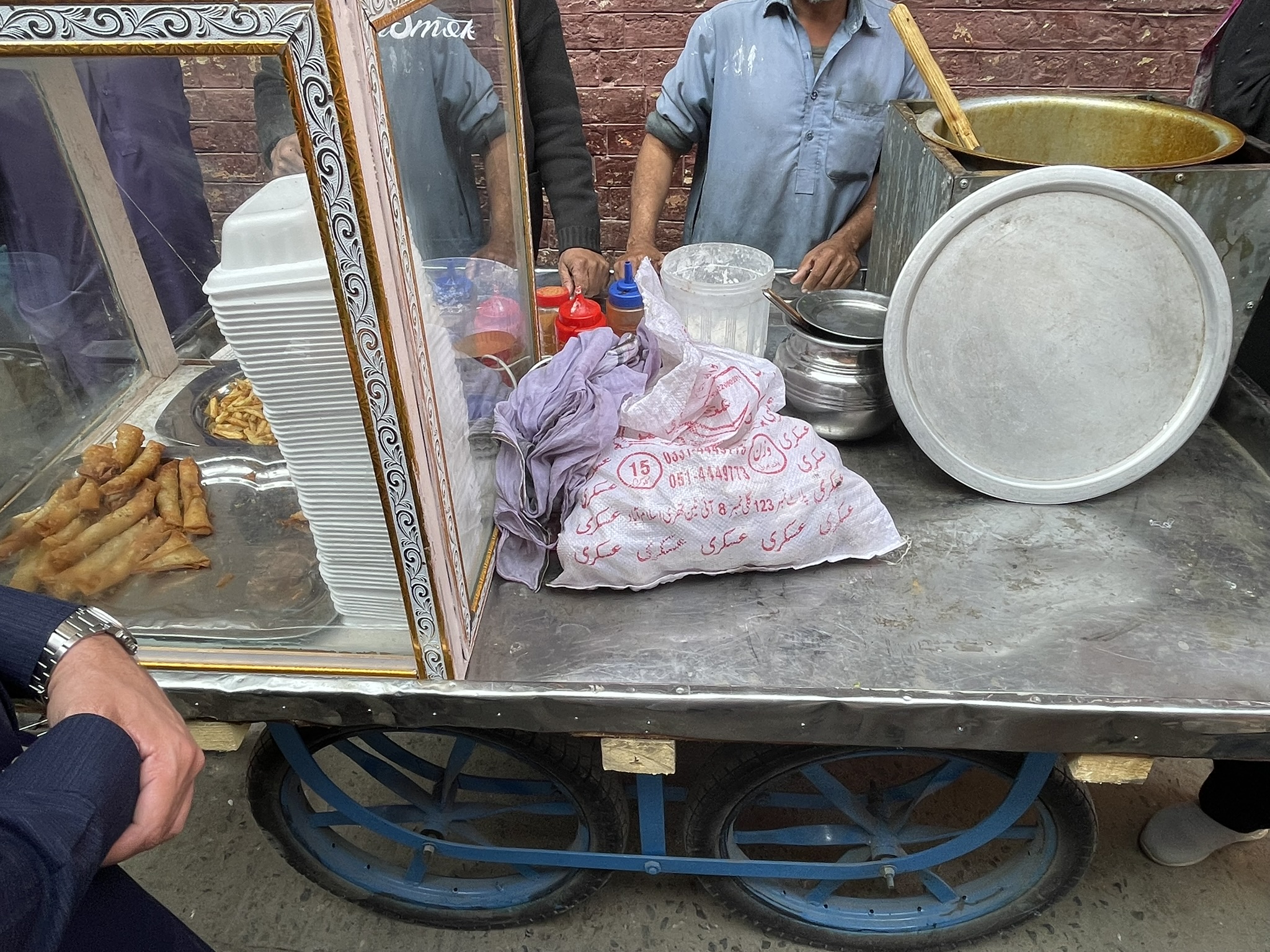
After touring the office, we visit a Business Facilitation project in Islamabad and also some small business start-up projects in Rawalpindi, which are commendable.
Rawalpindi Medical University
At 12.20pm, we arrive at the Rawalpindi Medical University (RMU) and meet with 35 medical students whose education is being funded by a family friend via FAMS (Financial Assistance for Medical Students). We discuss their studies with them and remind them to correct their intentions and make serving others their primary aim in life. This will transform every second of their studies and stay at university into an act of worship.
Over the past two years, I have heard my respected father Mufti Shabbir Ahmad (b. 1376/1957) commend the work of Dr Ismail of Doctors of Rahman and Midland Aid International Aid Trust and his colleagues who have visited Gaza and provided lifesaving medical treatment, whilst risking their lives, at a time when no one other than medical professionals are permitted to visit Gaza. He has also been instrumental in arranging regular meetings between doctors and scholars so that they can benefit from each other.
Global Reach houses in Dhamial
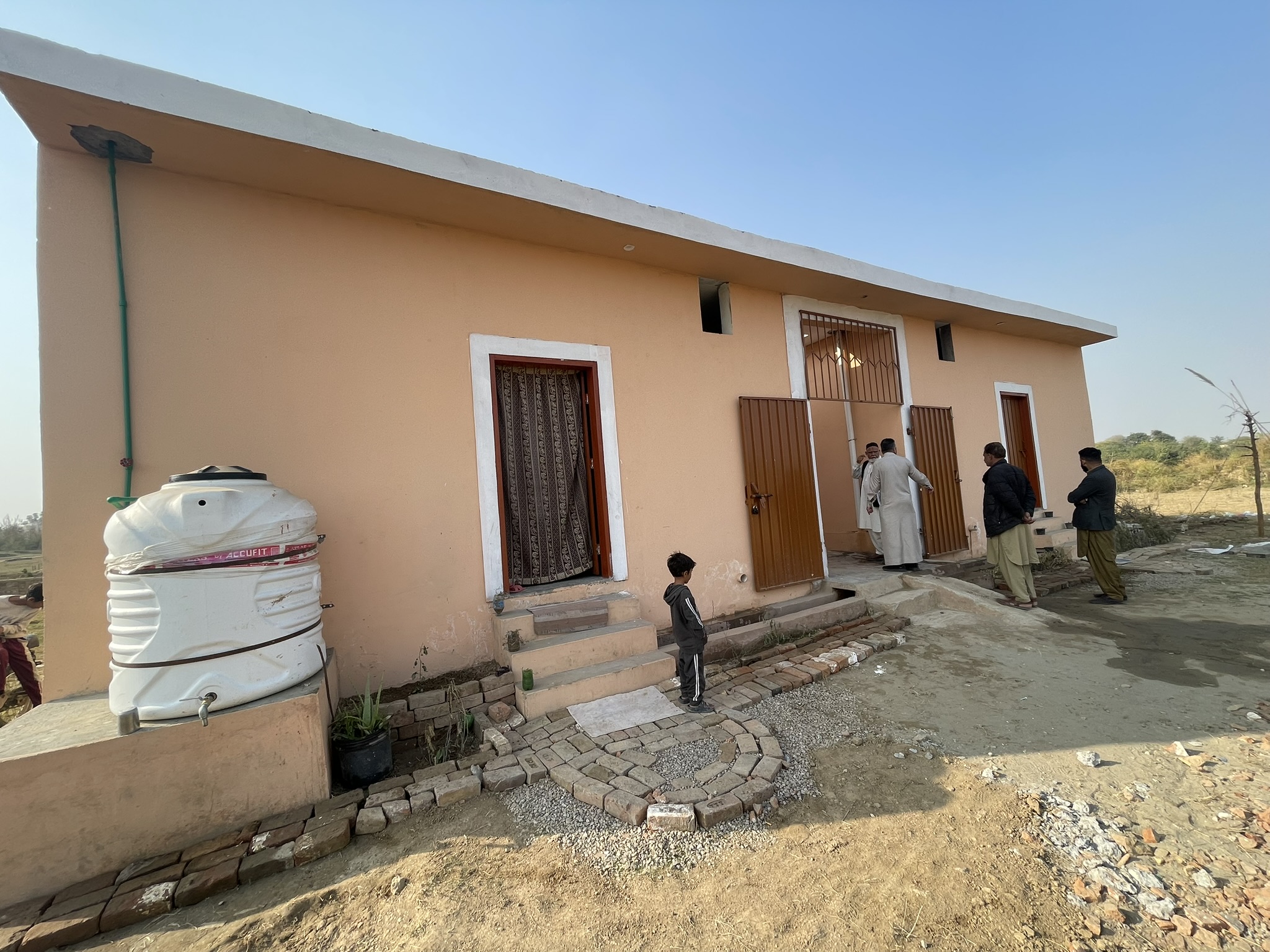
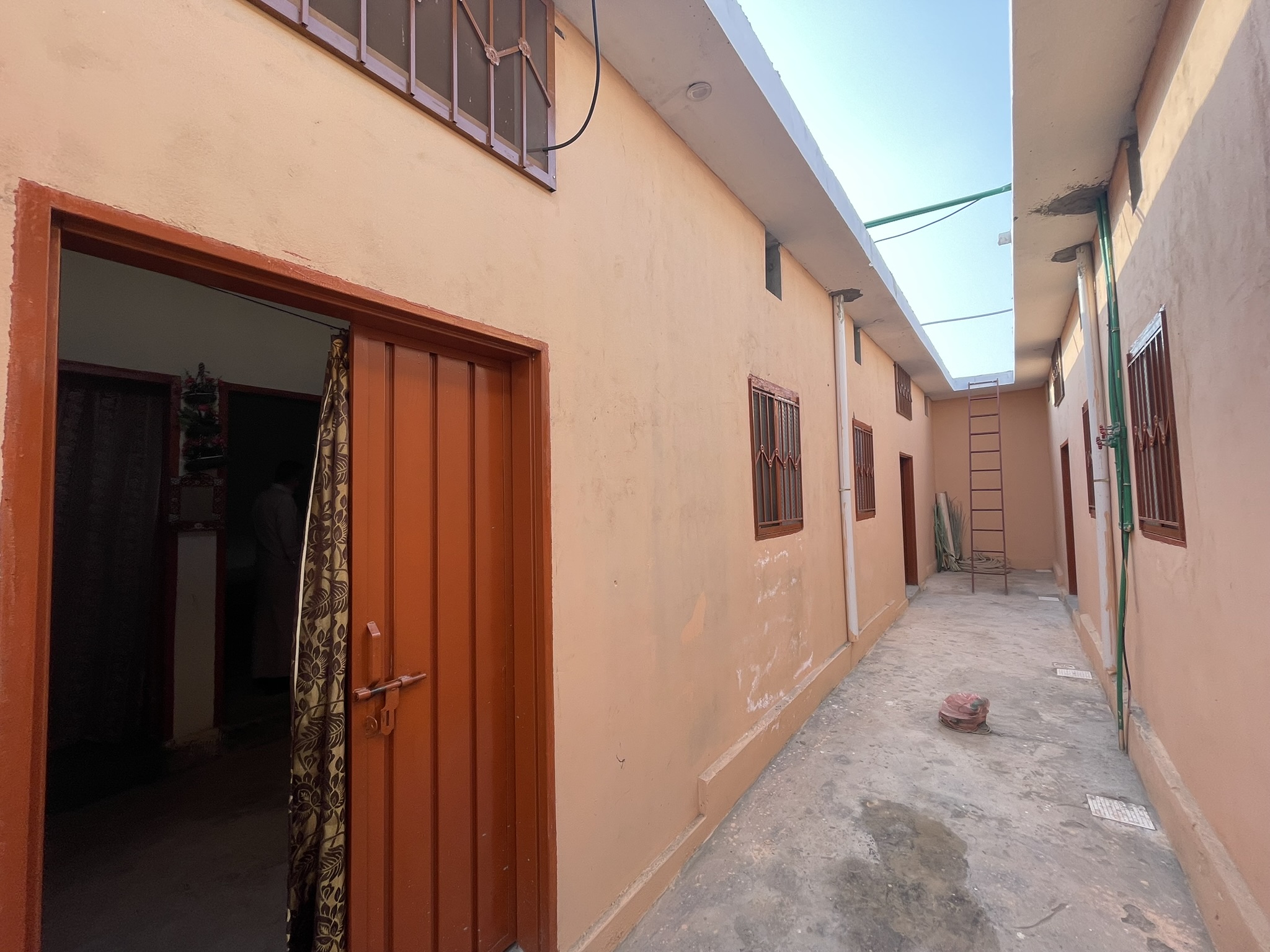
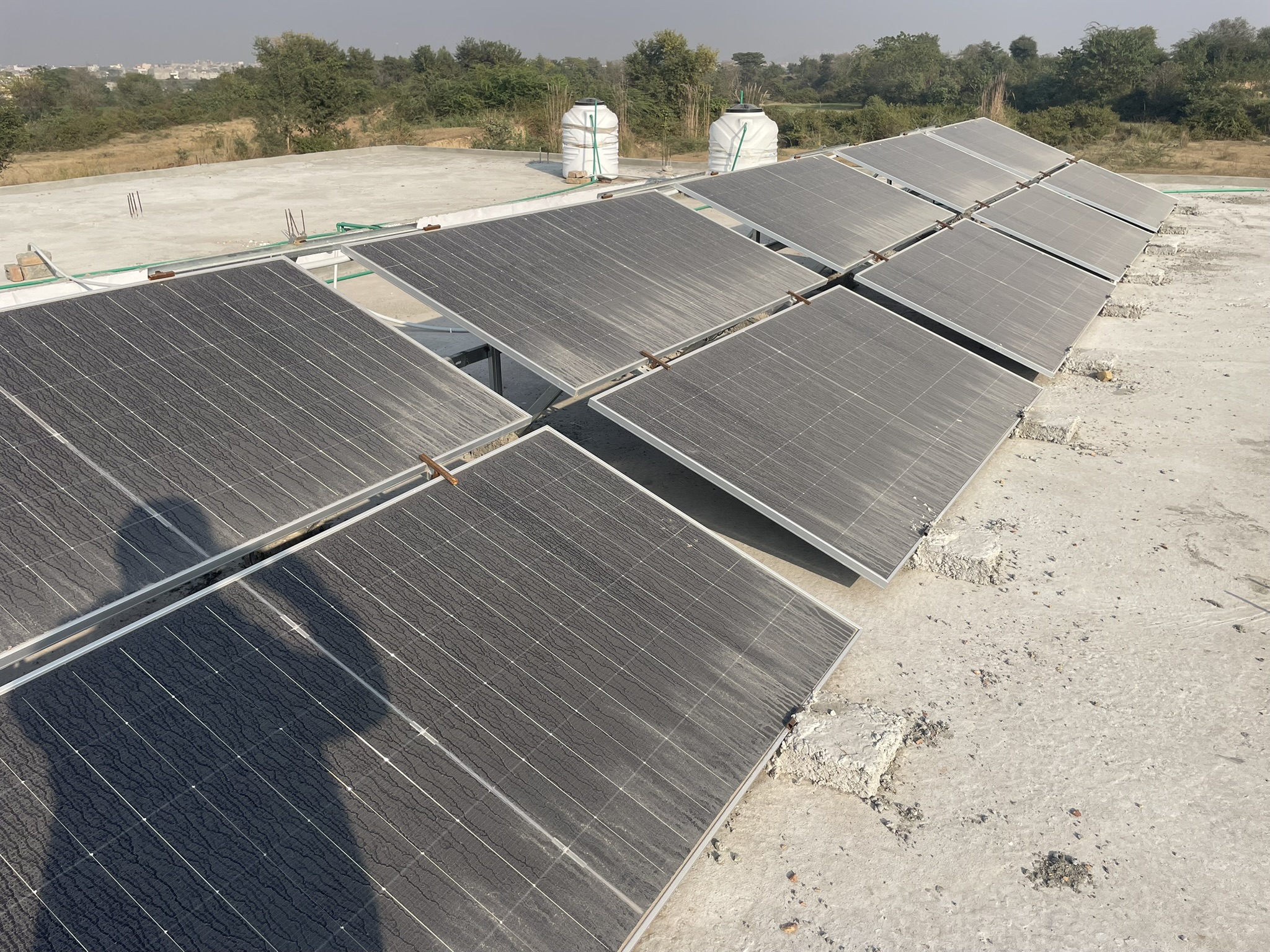
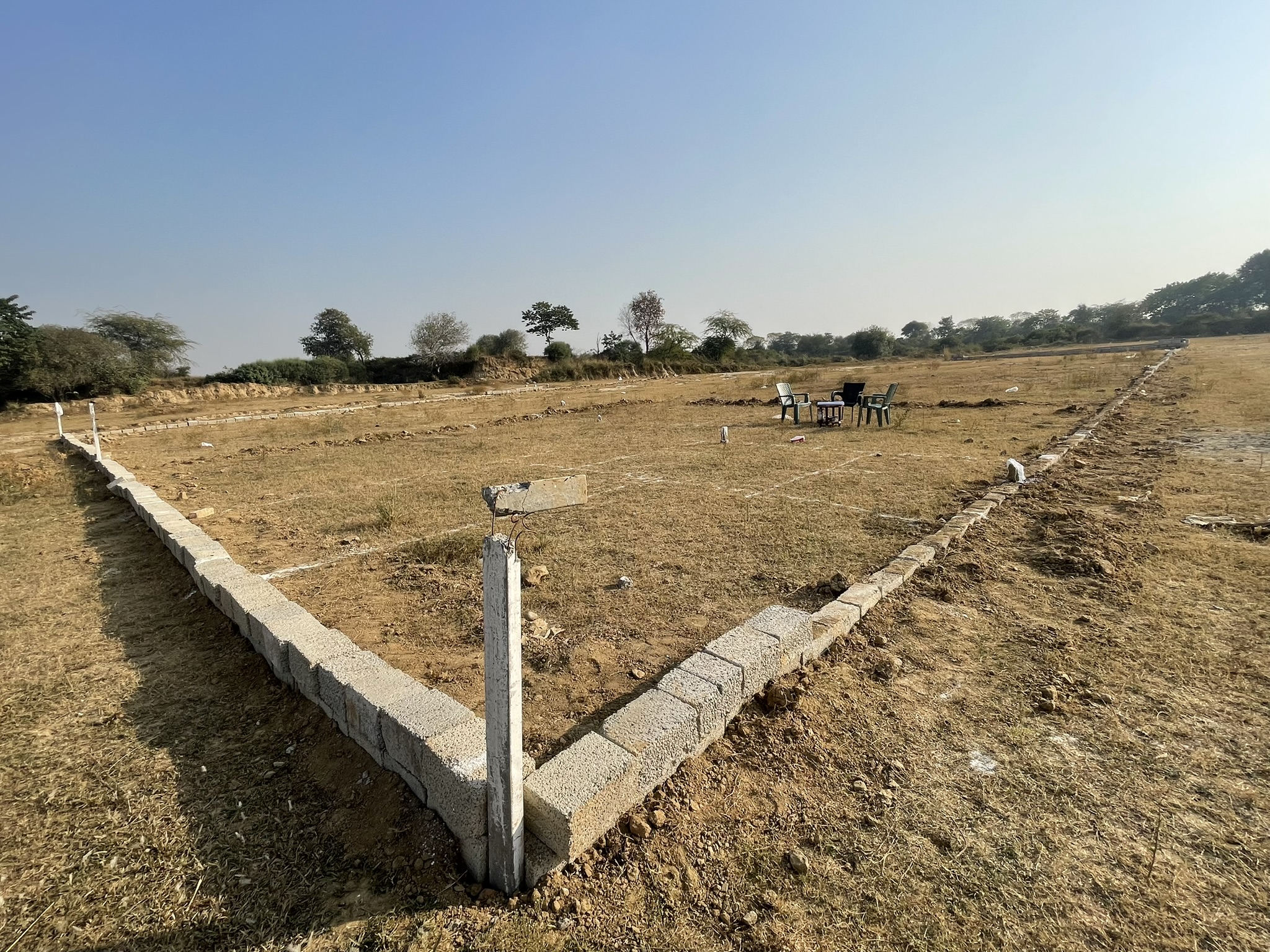
Naeem Bhai of Global Reach arrives and we travel to Banda, Dhamial village, which is a one-hour drive south of Rawalpindi. Global Reach has constructed four houses here at a cost of 1.2 million PKR (£3200) each and intends to build more houses here. The houses include solar panels on the roof.
The National University of Sciences & Technology
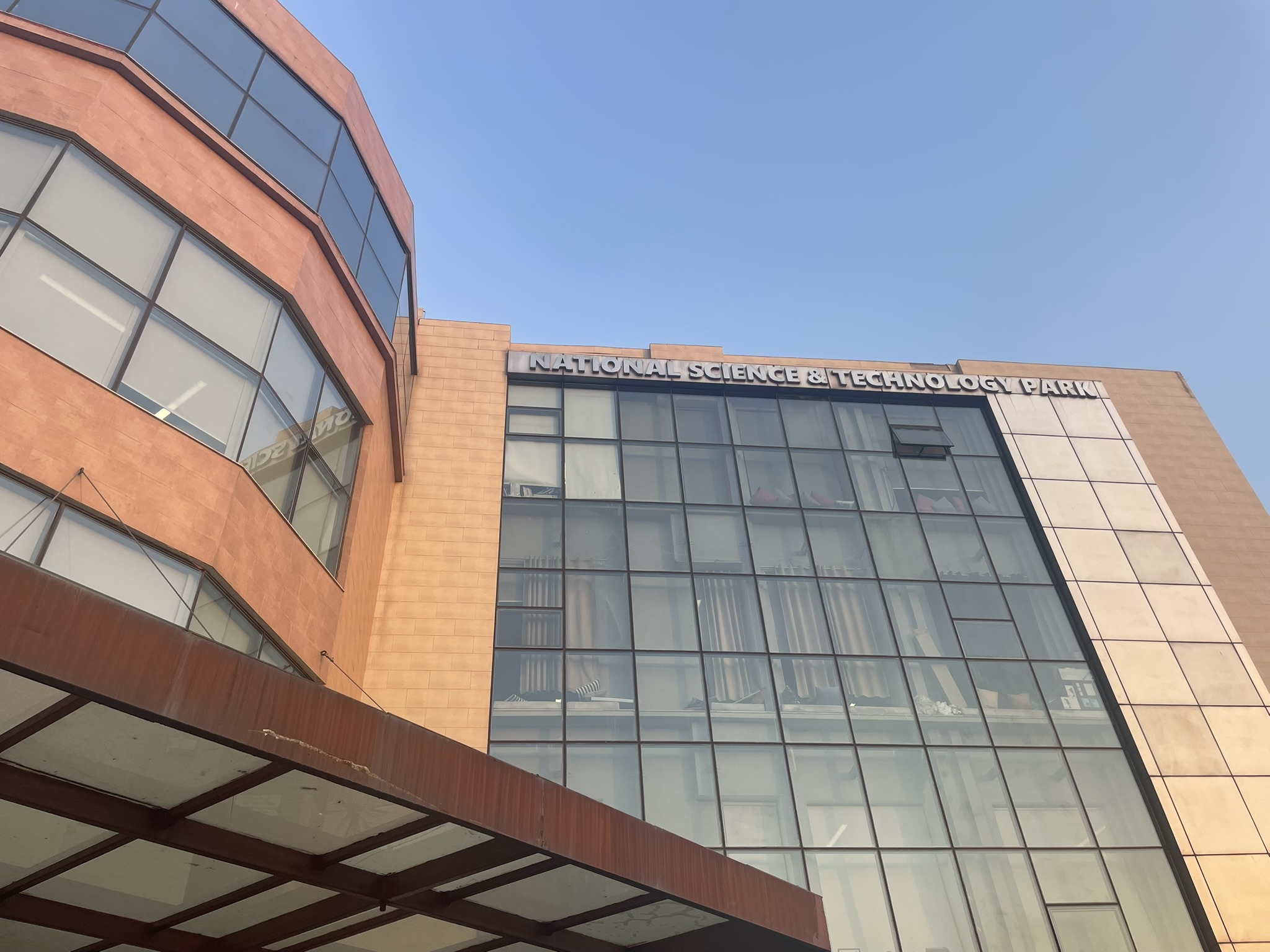
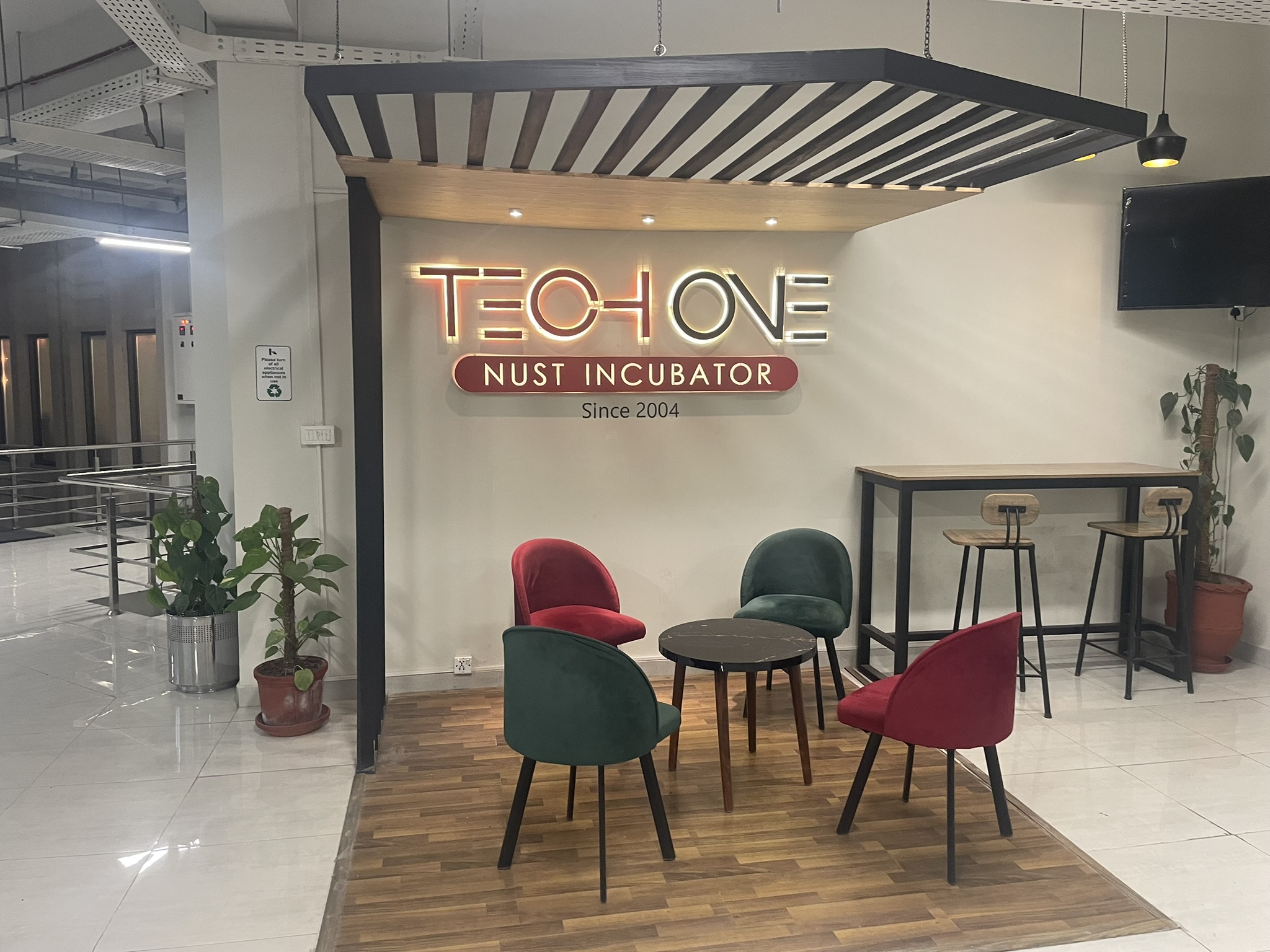
We return to Islamabad at 3.45pm and visit the National University of Sciences & Technology (NUST), one of the largest universities in Pakistan that serves 20,000 students and offers 160 degree programmes, with strong links to the military. The campus is impressive, spread over 800 acres of land. We meet with the Director of the University Advancement Office, Arooba Gillani and other staff members and thereafter proceed to meet with the students who have received scholarships from Professional Education Foundation (PEF) run by brother Hafiz ul Haq. We also visit the National Science and Technology Park within the campus where there are hundreds of new businesses including a PEF alumnus who now runs an AI based technology firm with a turnover exceeding $20 million.
Capital Smart City
Our final stop for the day is the Capital Smart City, located off the M2 motorway, 20 minutes from Islamabad International Airport, and 45 minutes from Islamabad city. The purpose of visiting this city is that some of the Palestinian medical students from Gaza who I met during my previous visit are now residing here, thanks to the efforts of Dr Yusuf of Doctors of Rahman and Midland International Aid Trust. We are welcomed by Brigadier Shamil Ahmad who gives us an overview of this Smart City project. Some 200 families are already residing here. It is ideal for those who wish to live in a safe secure and secluded area in close proximity to the airport. The facilities are excellent. The mosque is beautiful.
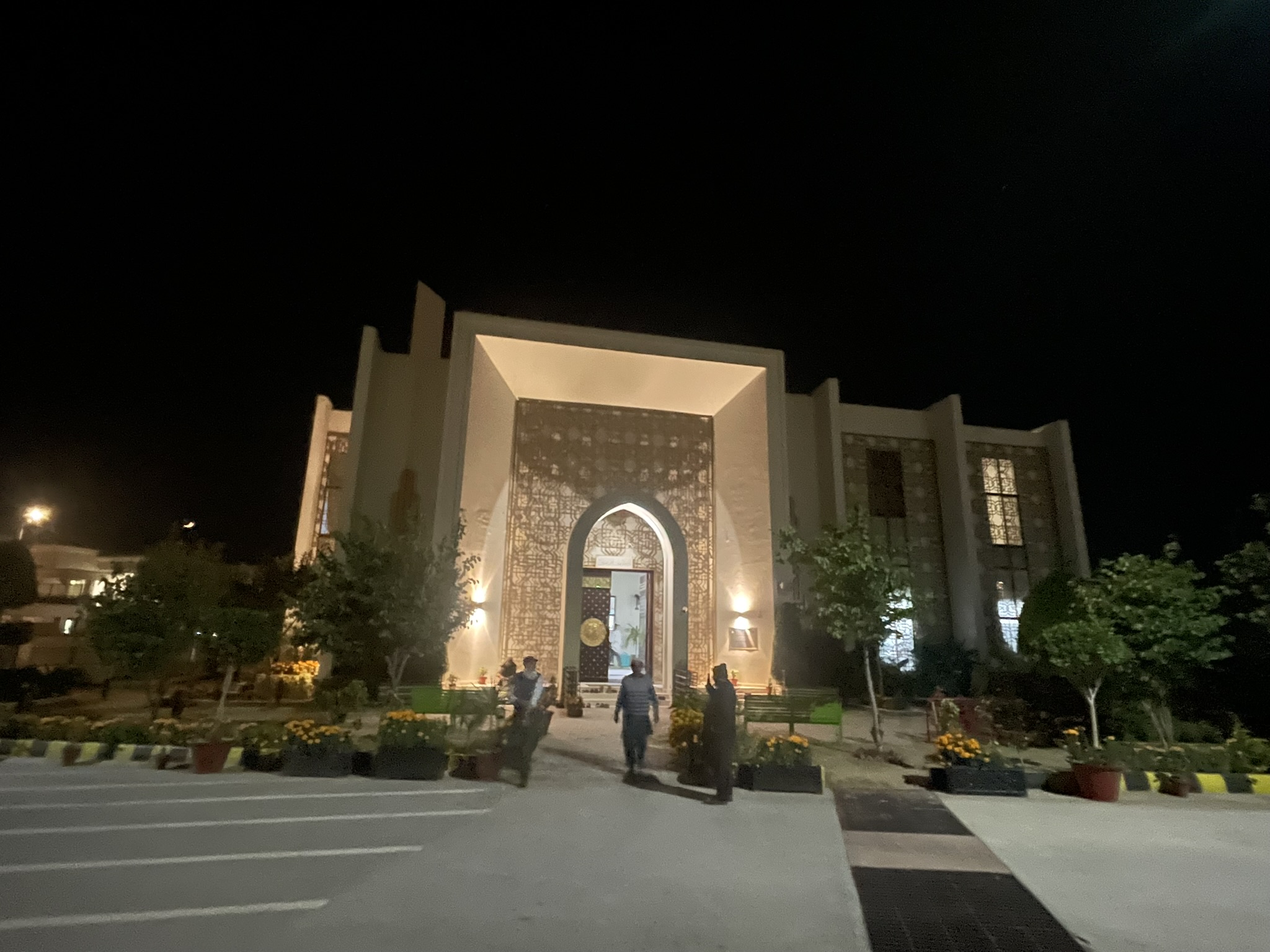
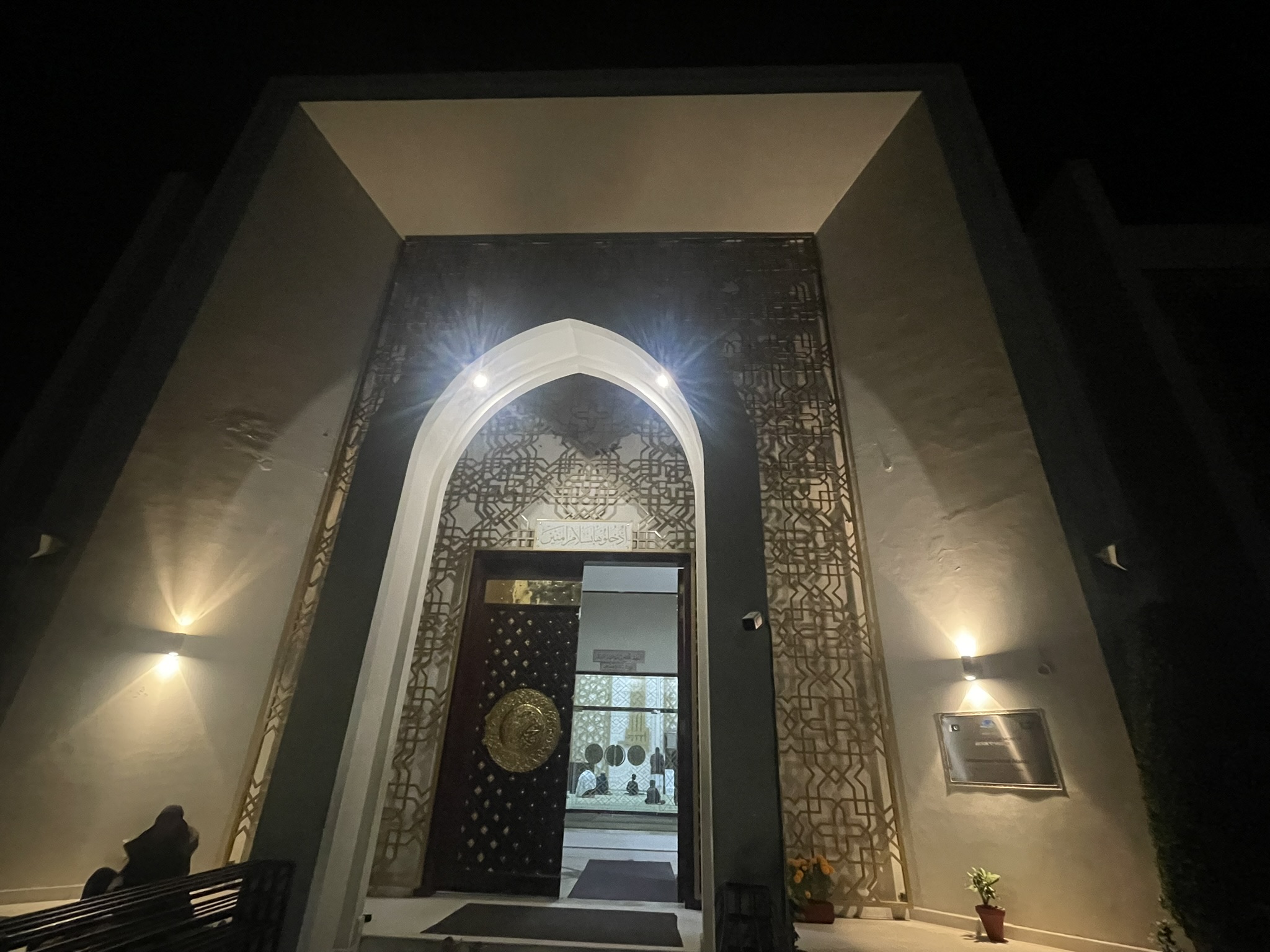
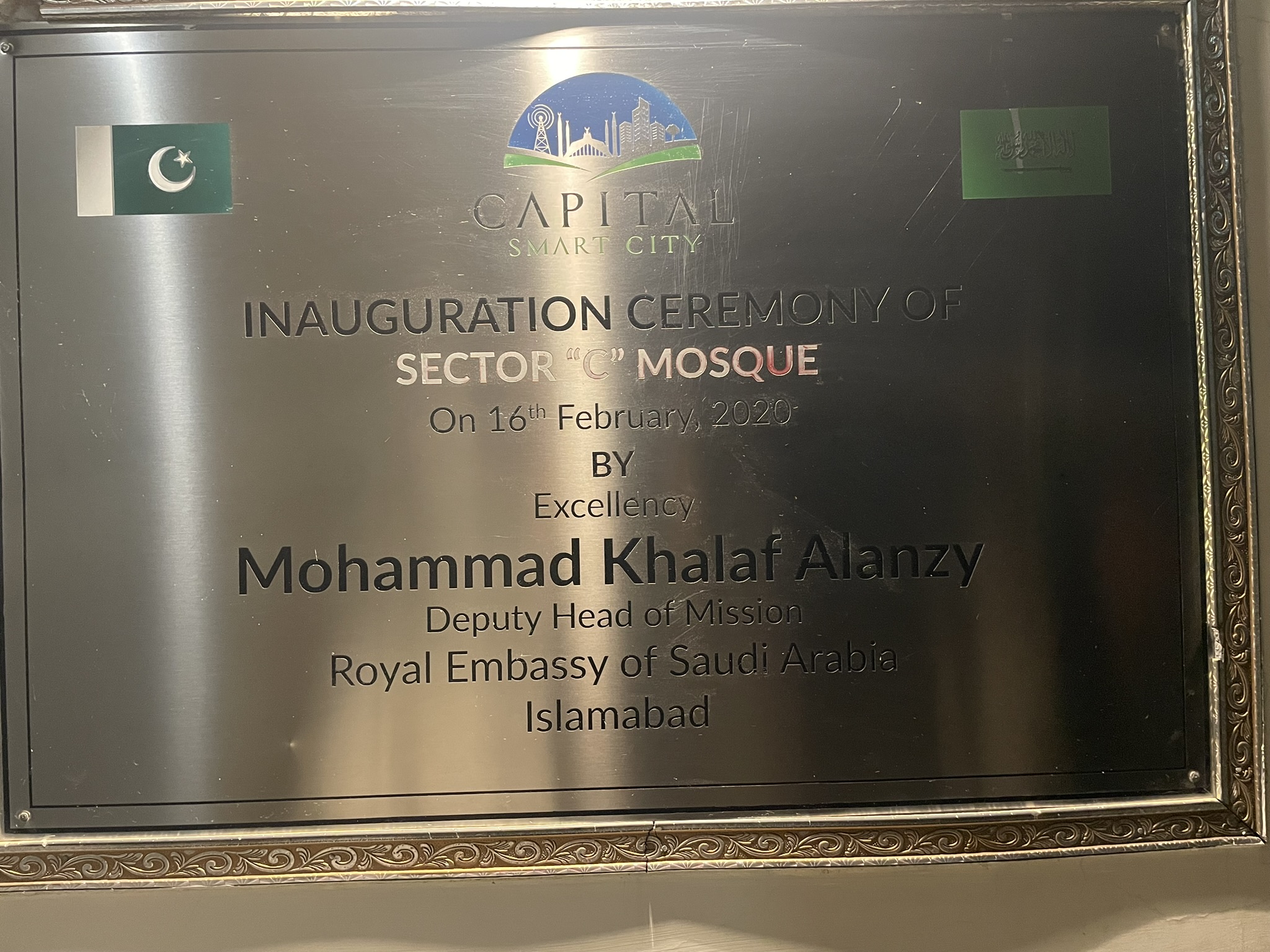
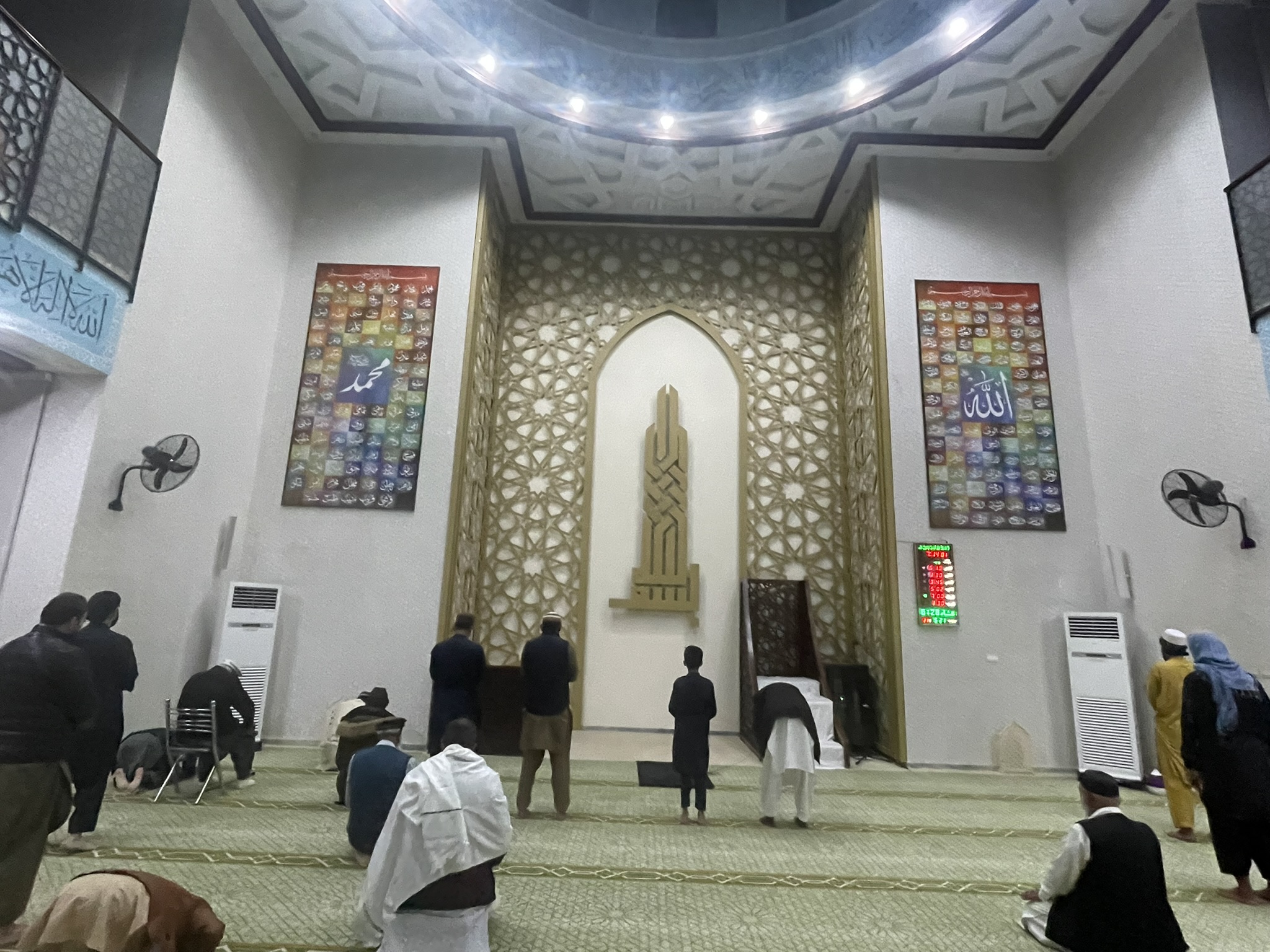
We meet with the Palestinian students who are immensely grateful for the quality of accommodation and the food, but struggle with the daily commute to the city. May Allah reward the management of the Smart City project for providing this accommodation for free.
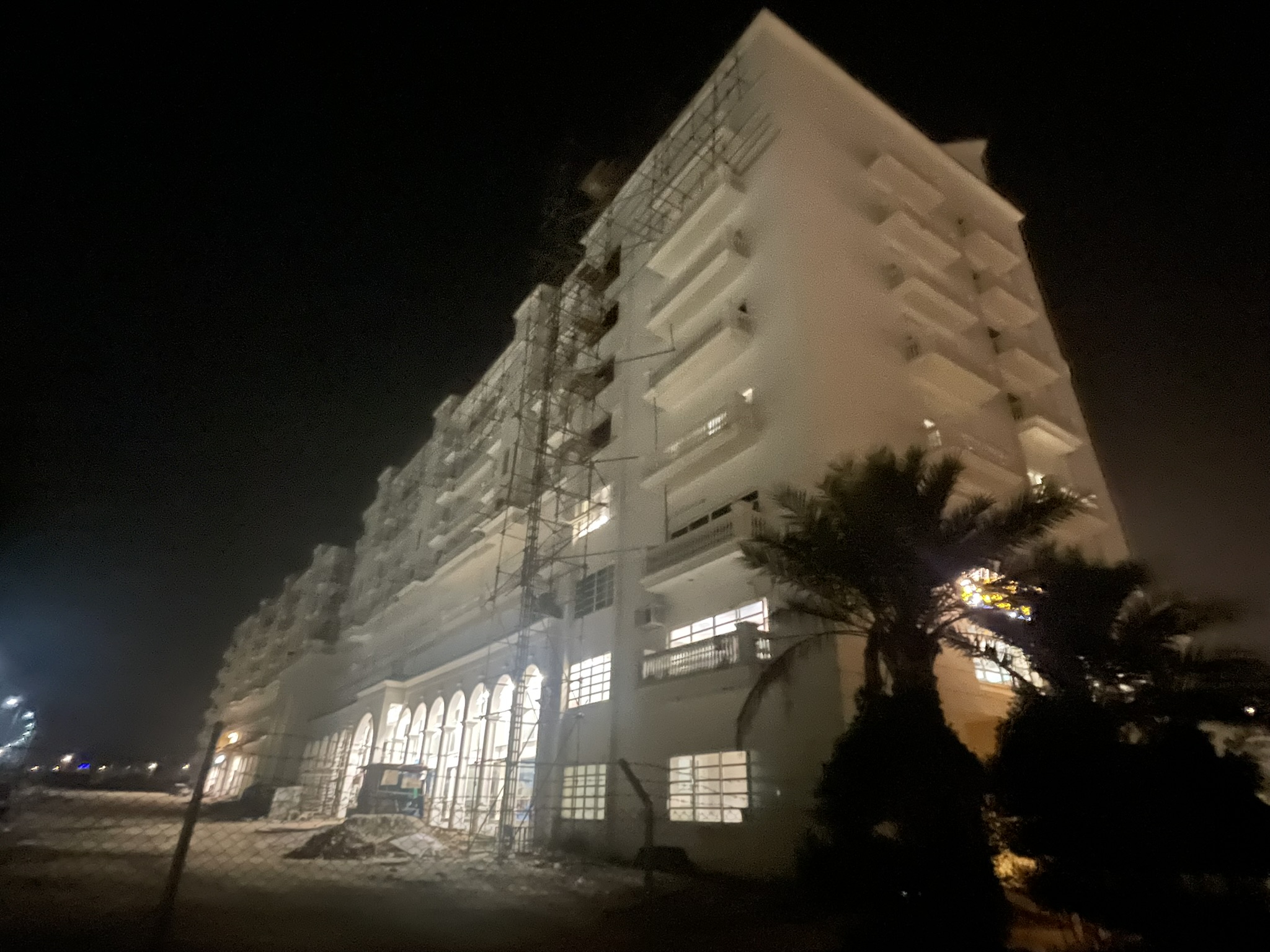
Brigadier Shamil Ahmad invites us for dinner at a local restaurant, The Shire Fusion Food, that serves Hunza cuisine, which begins with fresh apricot juice and yak meat salad. The food is excellent. As the project is in development phase, supermarkets, restaurants and all other shops located here do not have to pay any rent.
We return to Islamabad, navigate our way through the road blocks around the Serena Hotel, and rest for the evening.
Islamabad to Gilgit
The next morning, Tuesday 25 November 2025, we board the 11.15am PIA flight from Islamabad to Gilgit. This is the only flight option to Gilgit, and there are one or two flights daily. Gilgit has a short runway so a small aircraft with six bladed propellers is used. This is regarded as one of the most scenic flying routes in the world, offering views of the Himalayas, Nanga Parbat and Karakoram snow-capped peaks, along with stunning green and turquoise colour rivers and streams. The mountainous terrain and the peaks are such that pilots have to navigate and fly between mountains, providing a thrilling and breathtaking experience. This is why flights often cancel in adverse weather conditions.
Gilgit-Baltistan
We arrive at the small Gilgit Airport shortly after midday.
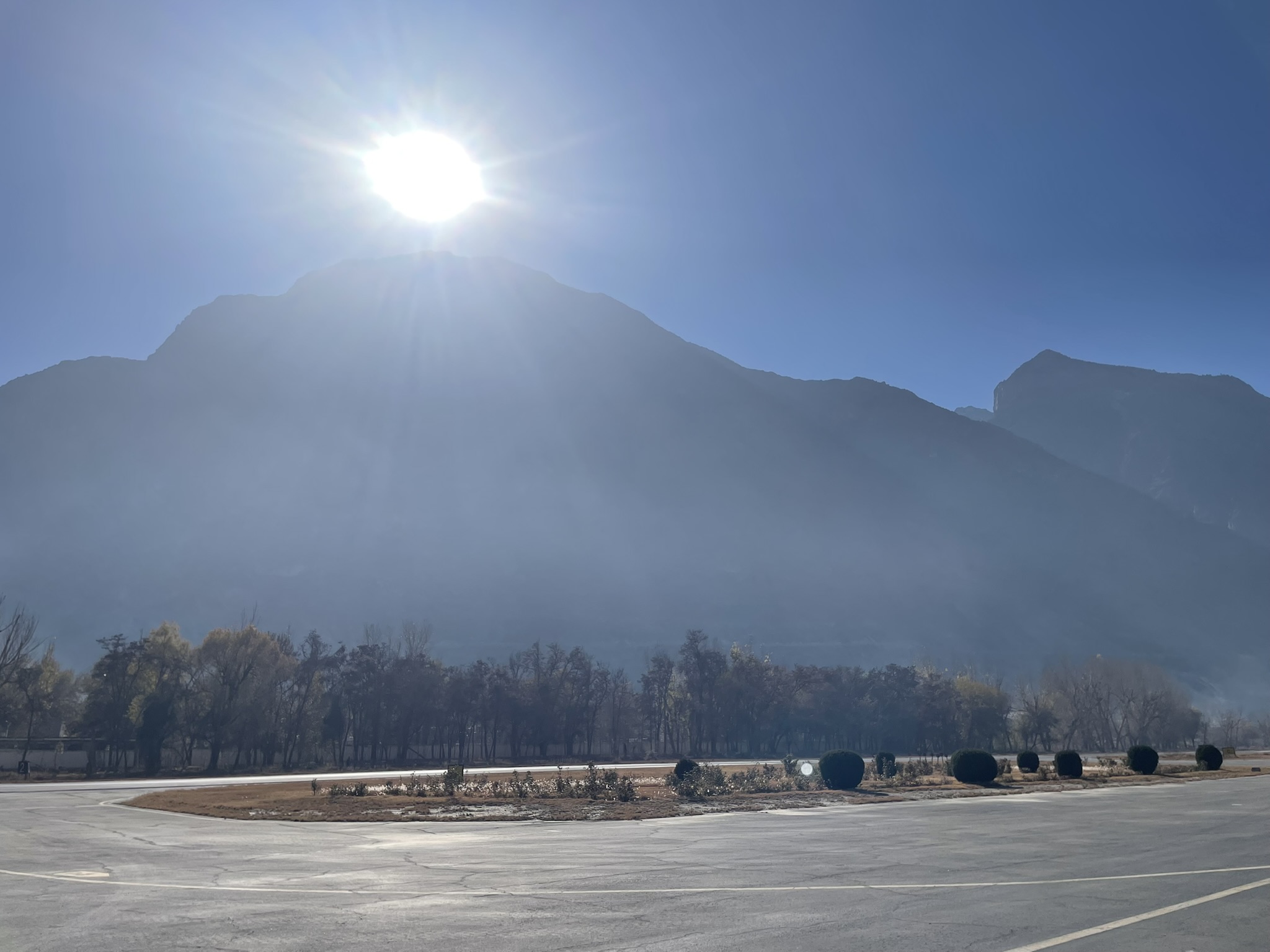
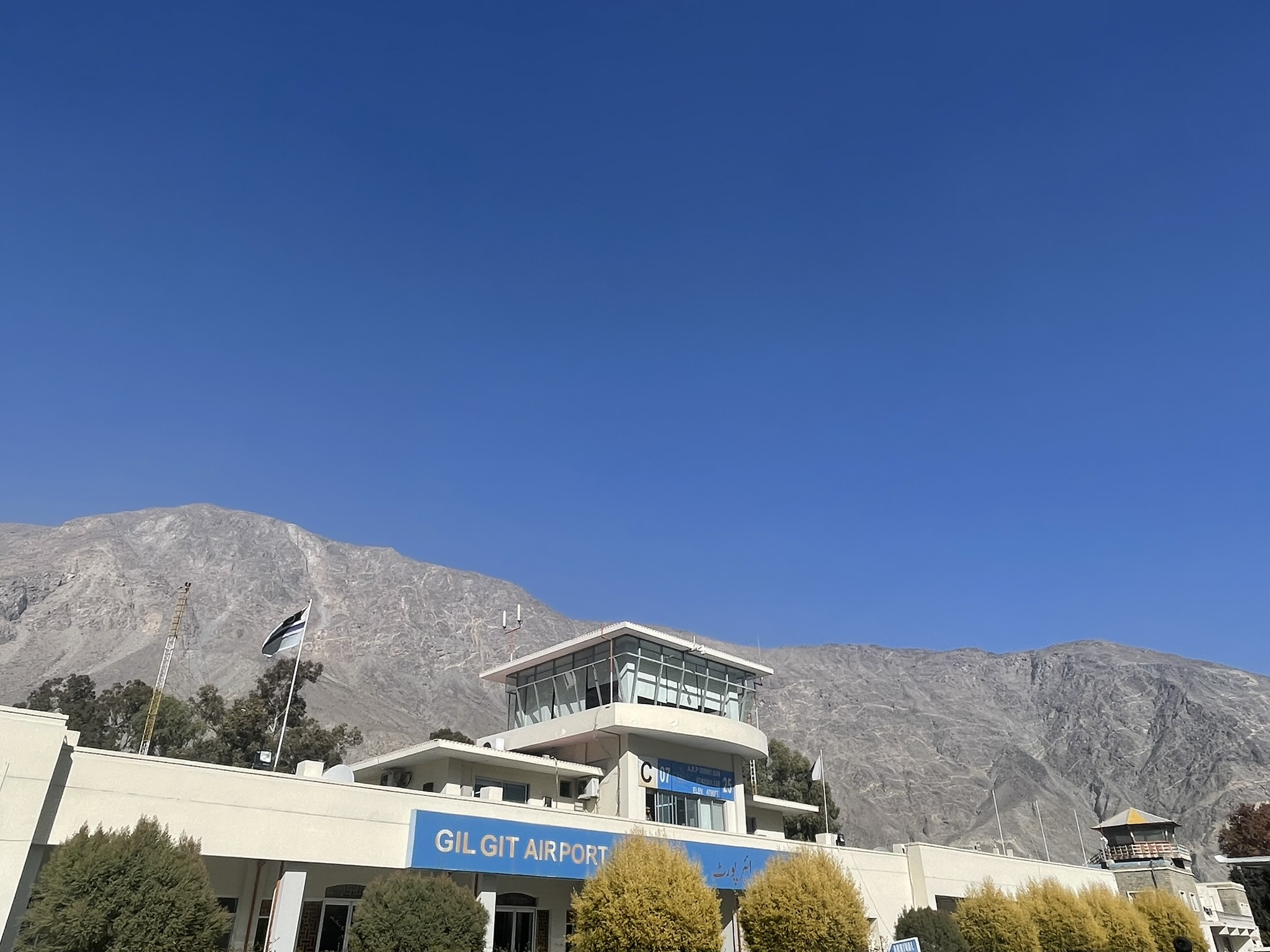
Gilgit is the capital and largest city of the Gilgit-Baltistan (GB) region, formerly known as the Northern Areas. The second largest city in this region is Skardu, which has a larger airport with direct flights to Karachi and Islamabad throughout the year, and to other cities during the summer season. The region borders Azad Kashmir to the south, the province of Khyber Pakhtunkhwa to the west, the Wakhan corridor of Afghanistan to the north, the Xinjiang region of China to the east and northeast, and the Indian-administered union territories of Jammu and Kashmir and Ladakh to the southeast. This region is administered by Pakistan as an administrative territory and consists of the northern portion of the larger Kashmir region, which has been the subject of disputes between India and Pakistan since 1947 and between India and China since 1959. There have been calls for the region to be made into a fifth province of Pakistan. However, the Pakistani government has not accepted this as this would jeopardise Pakistan’s demands for the entire Kashmir conflict to be resolved according to the UN resolutions. The region’s population is approximately 2 million that comprises of many diverse linguistic, ethnic and religious sects. Tourism and agriculture are among the region’s main sources of income. The region’s fruits include apricots, persimmon, cherries and pomegranates. The honey and nuts of the region are also famous.
Gilgit to Jaglot
We are welcomed at the Airport by Mawlānā Tawṣīf Ṣāḥib and his brother Mawlānā Zubayr Aḥmad Ṣāḥib who both reside in Jaglot, 45km south of Gilgit city, and graduated from Darul Uloom Karachi in 1999 and 2003 respectively. They both serve as Imāms in their local Masjids and also as teachers in a government school. They explain:
“Before the partition of the sub-continent, the Gilgit region was under the control of the Sikh Empire. On 1st November 1948, the region joined Pakistan, and the local people subverted the attempts for the region to join India. 85-90% of the people of the overall Gilgit Baltistan region are from Ahl al-Sunnah, but there is a sizeable Ismaili Aga Khani community who are not Muslims. In some areas like Hunza, they are in the majority. There is also a strong presence of Ithnā ʿAsharī Shiites who are very extreme in their views and are not Muslim. Gilgit city has all three sects, however, once you depart from Gilgit city and travel south towards Jaglot and thereafter towards Islamabad, it is overwhelmingly Sunni. There are very few Madāris in the entire Gilgit-Baltistan region that offer the full Dars Niẓāmī programme. The work of Tablīgh is strong, under the direction of Raiwind.”
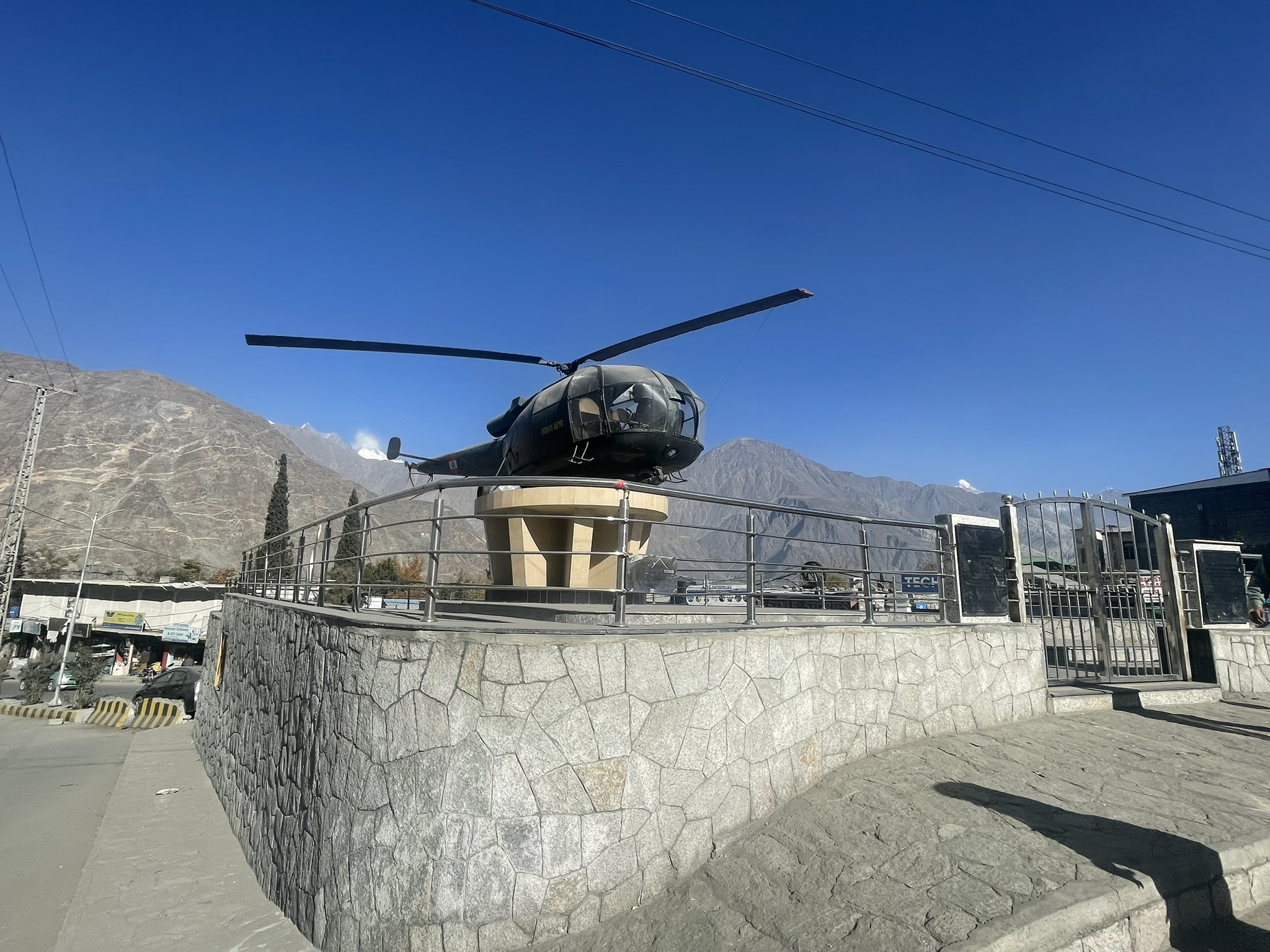
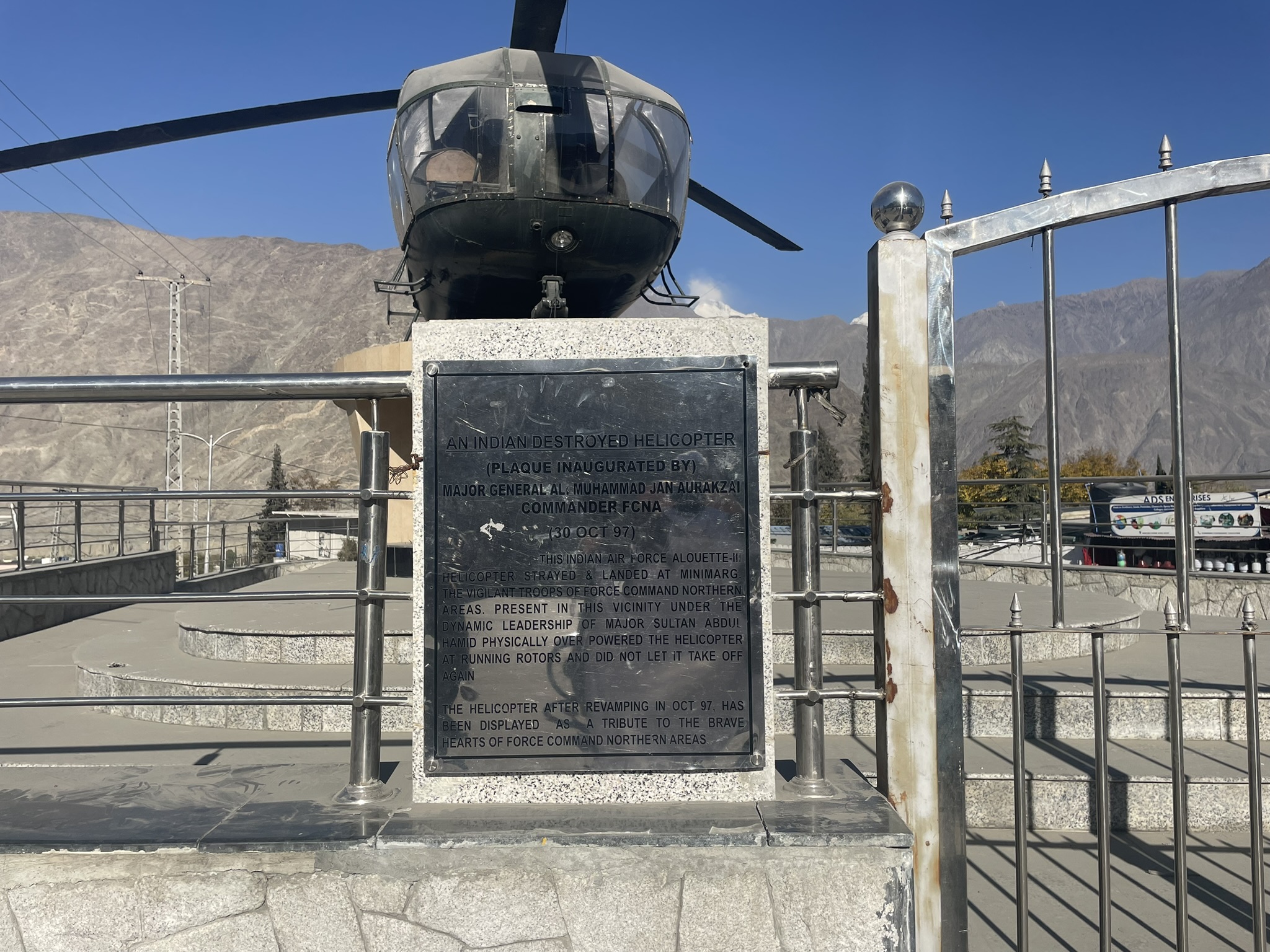
As we drive towards Jaglot, we stop opposite the FCNA (Force Command Northern Areas) headquarters at Hali Chowk and observe an Indian helicopter on display. This helicopter strayed and landed in this region during the 1970s, according to some online sources.
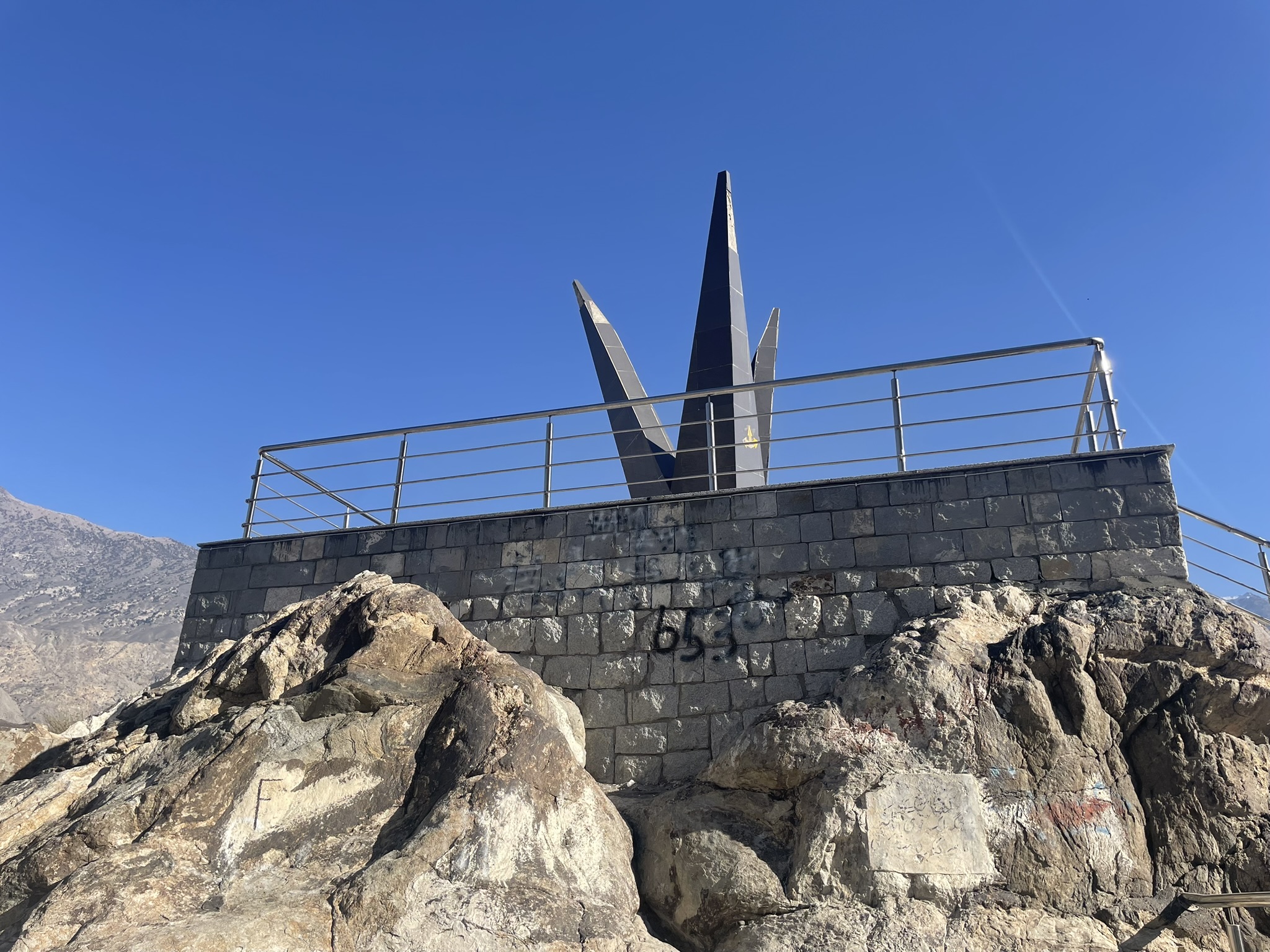
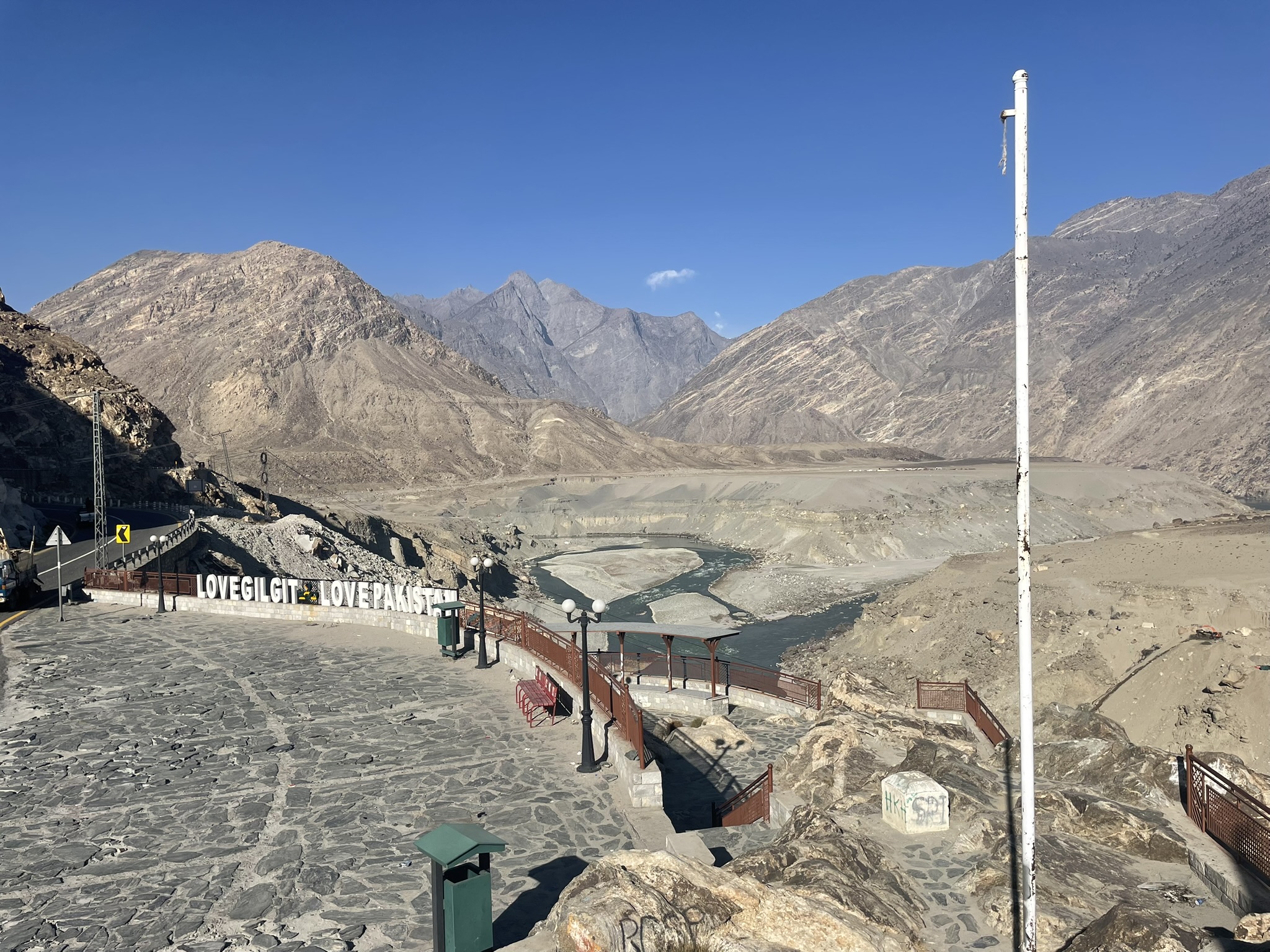
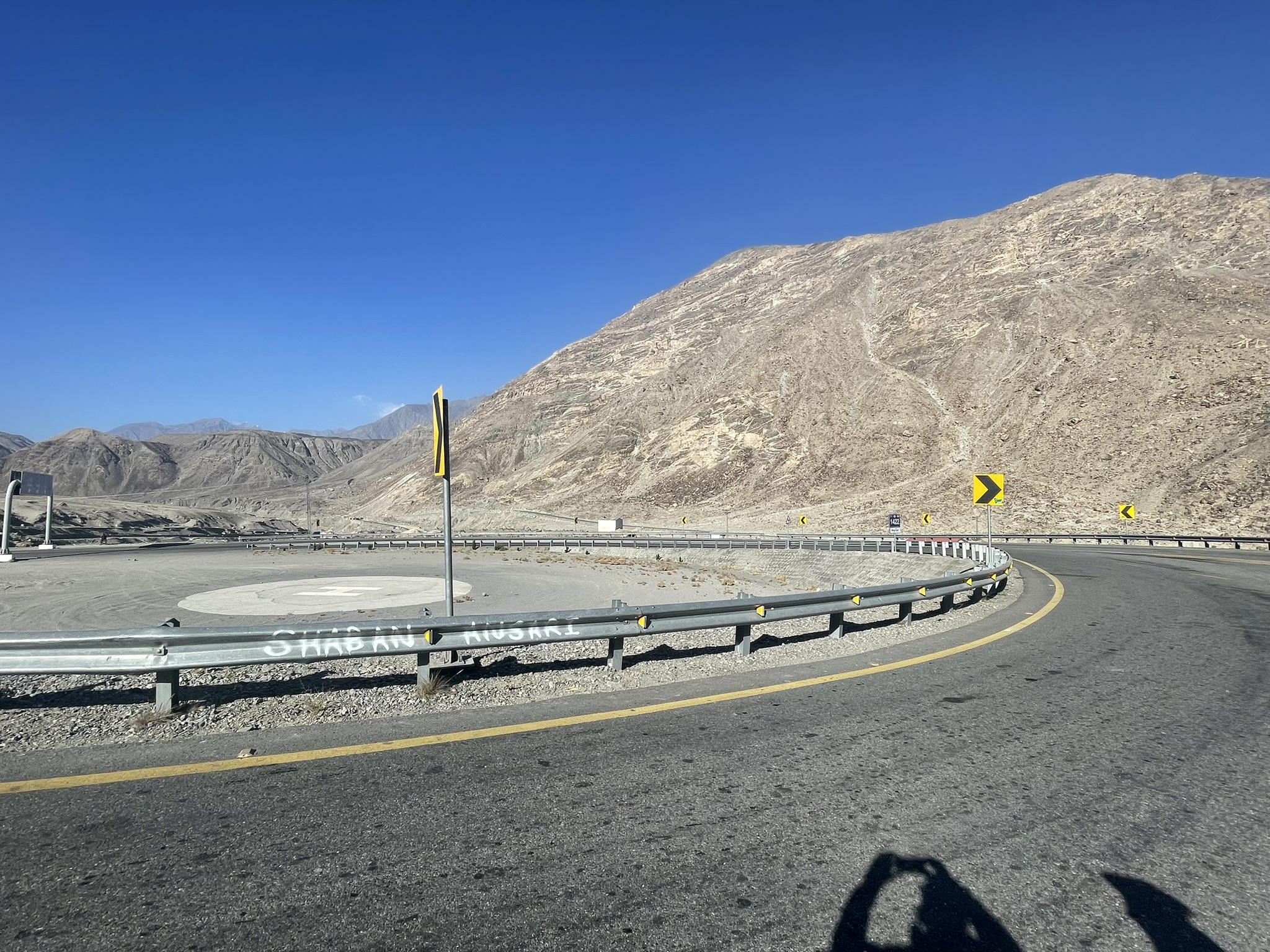
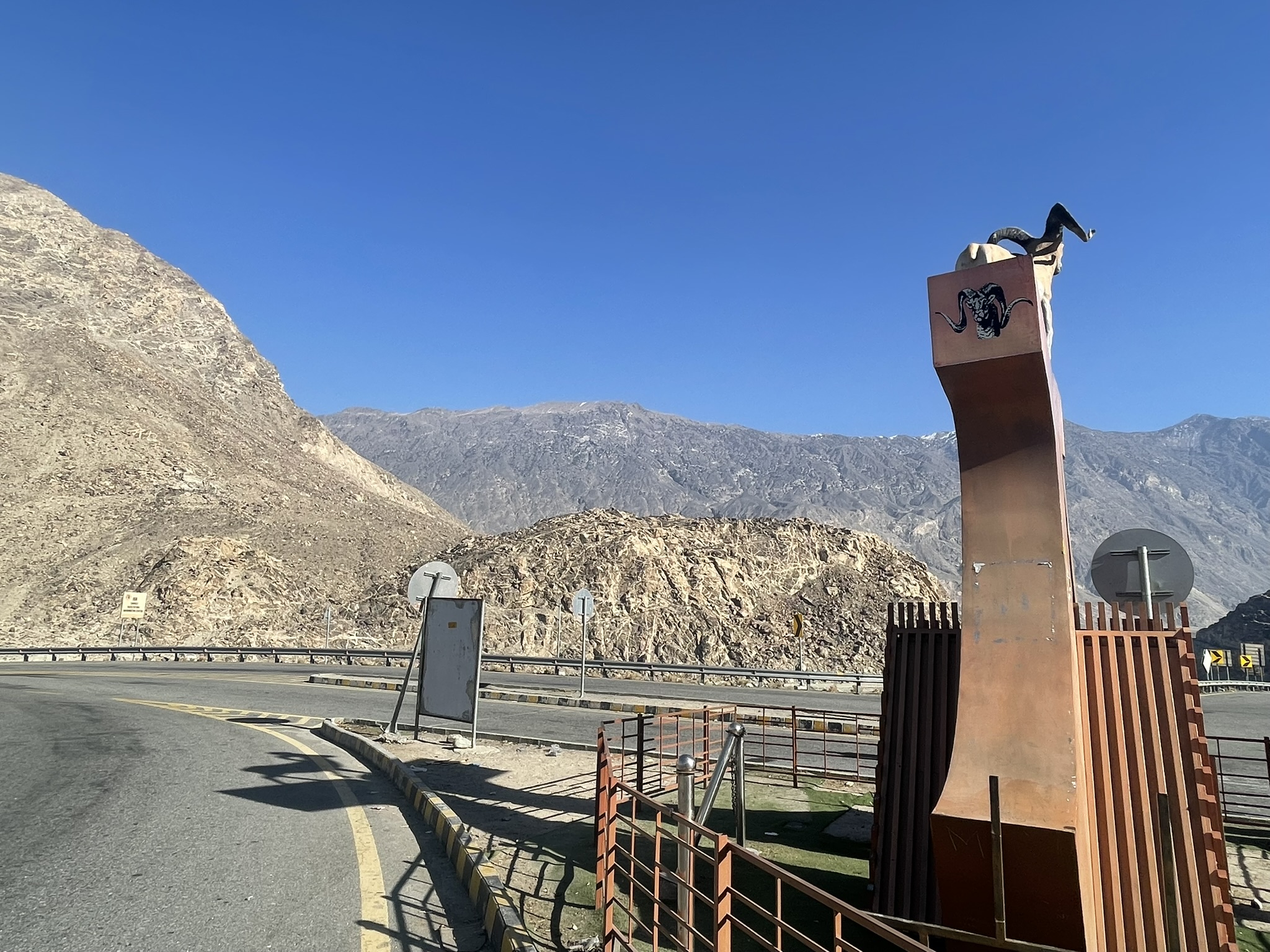
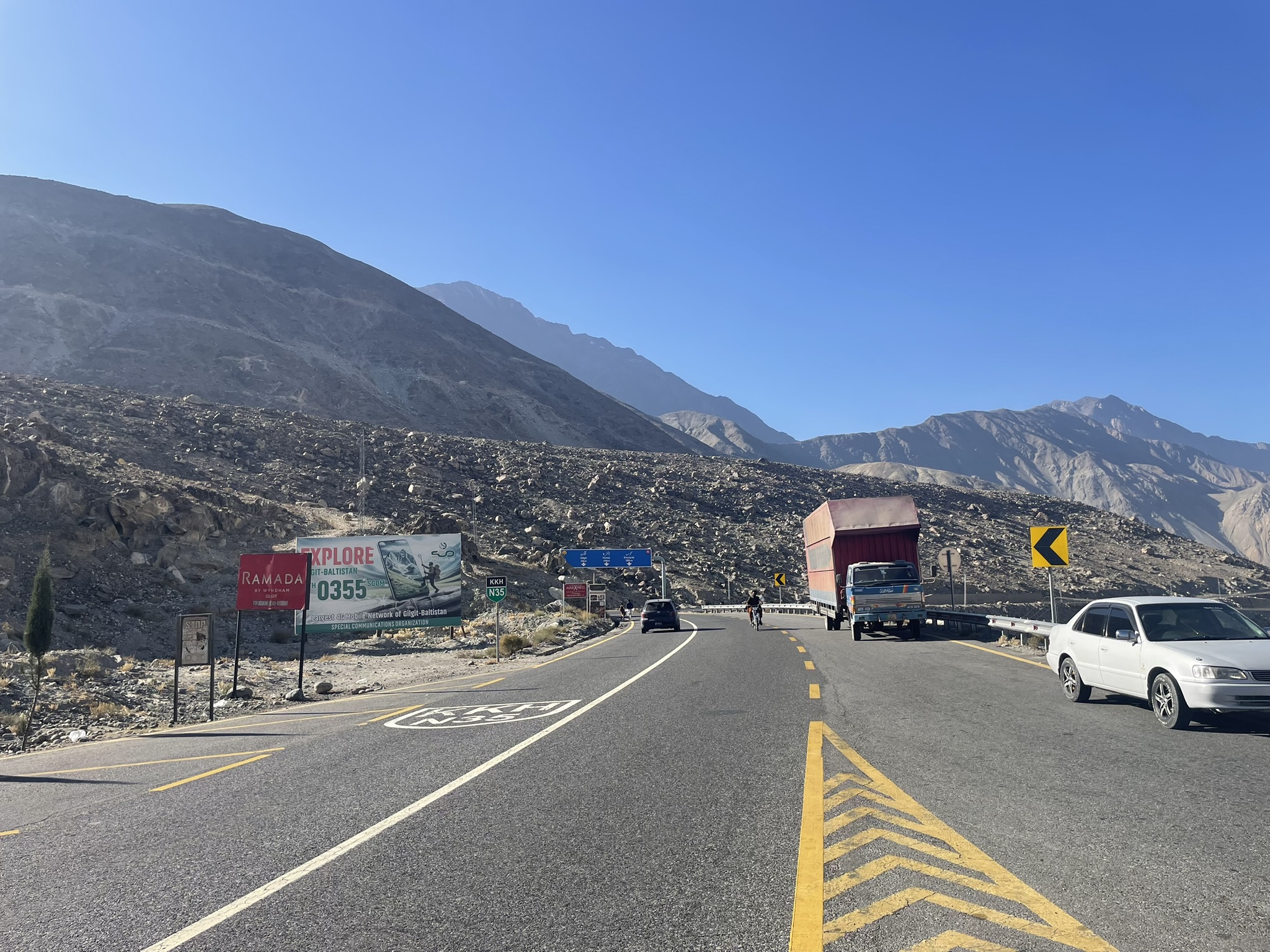
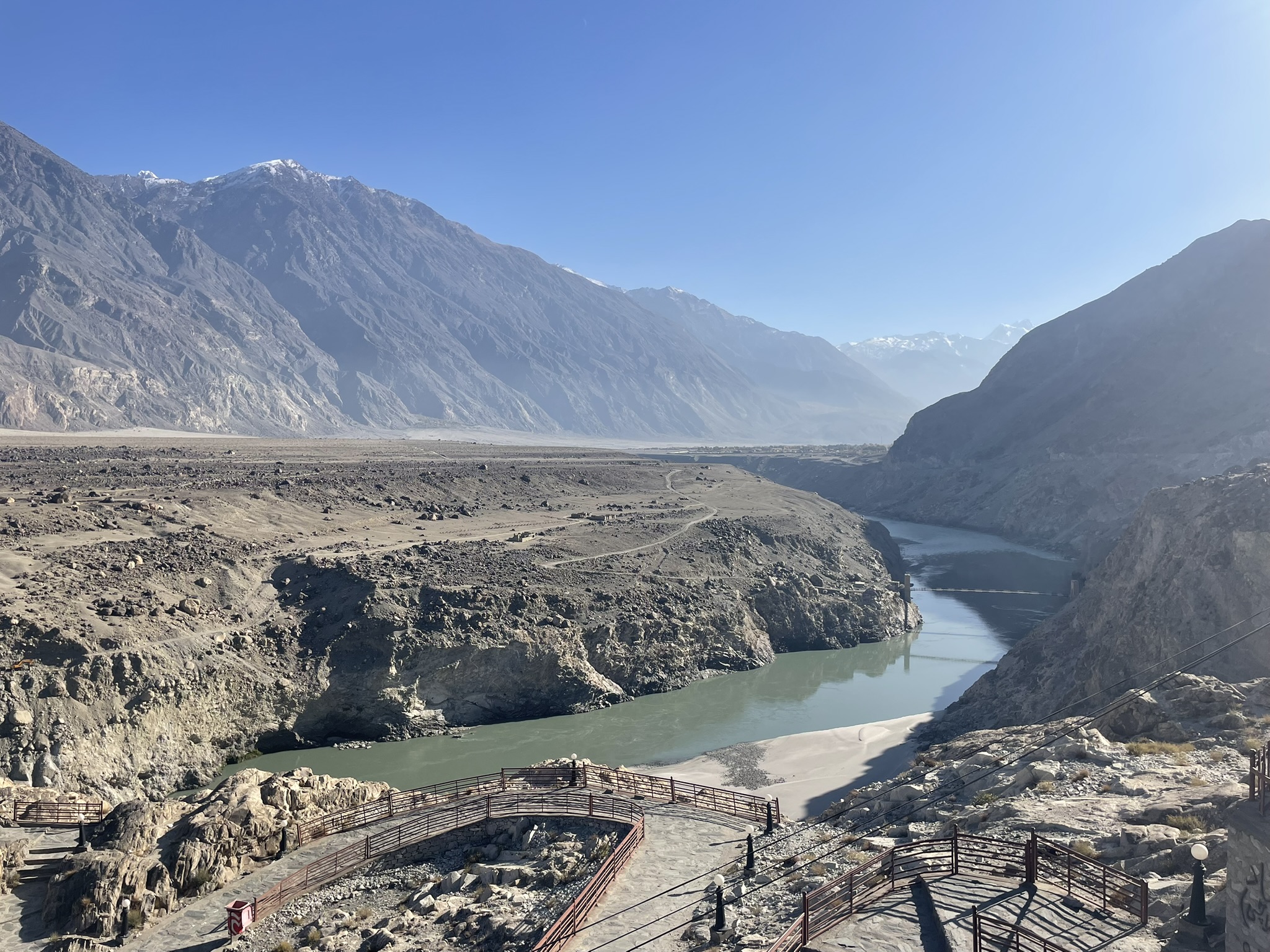
Our next stop on route is the JSR Zero Point, which is a significant landmark and road junction before Jaglot town. This is where the Himalayas, Karakoram and Hindu Kush mountain ranges converge. This is also the point where the Karakoram Highway splits towards Gilgit and Skardu. From this point, the 100-mile journey to Skardu takes more than three hours, whereas Gilgit is 45 minutes away.
Jaglot
We arrive into Jaglot town at 2pm and eat lunch at Mawlānā Tawṣīf’s house. The purpose of visiting Jaglot is that Global Reach has supported some Masjid construction and renovation projects in Jaglot and surrounding areas in addition to supporting some poor families. The charity has only recently started to work in this region, so the wider purpose is to understand the needs of the people and identify ways in which they can be addressed.
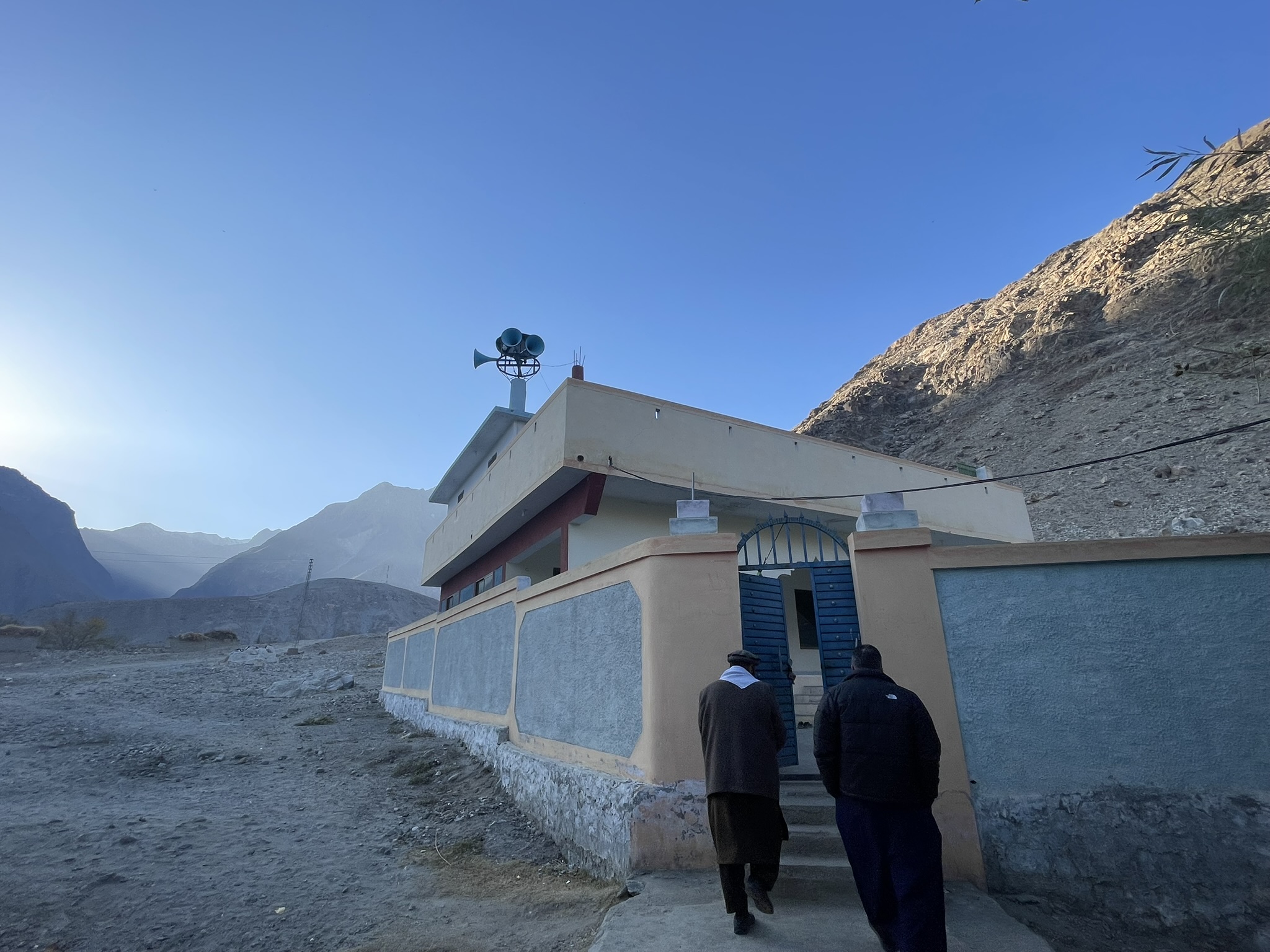
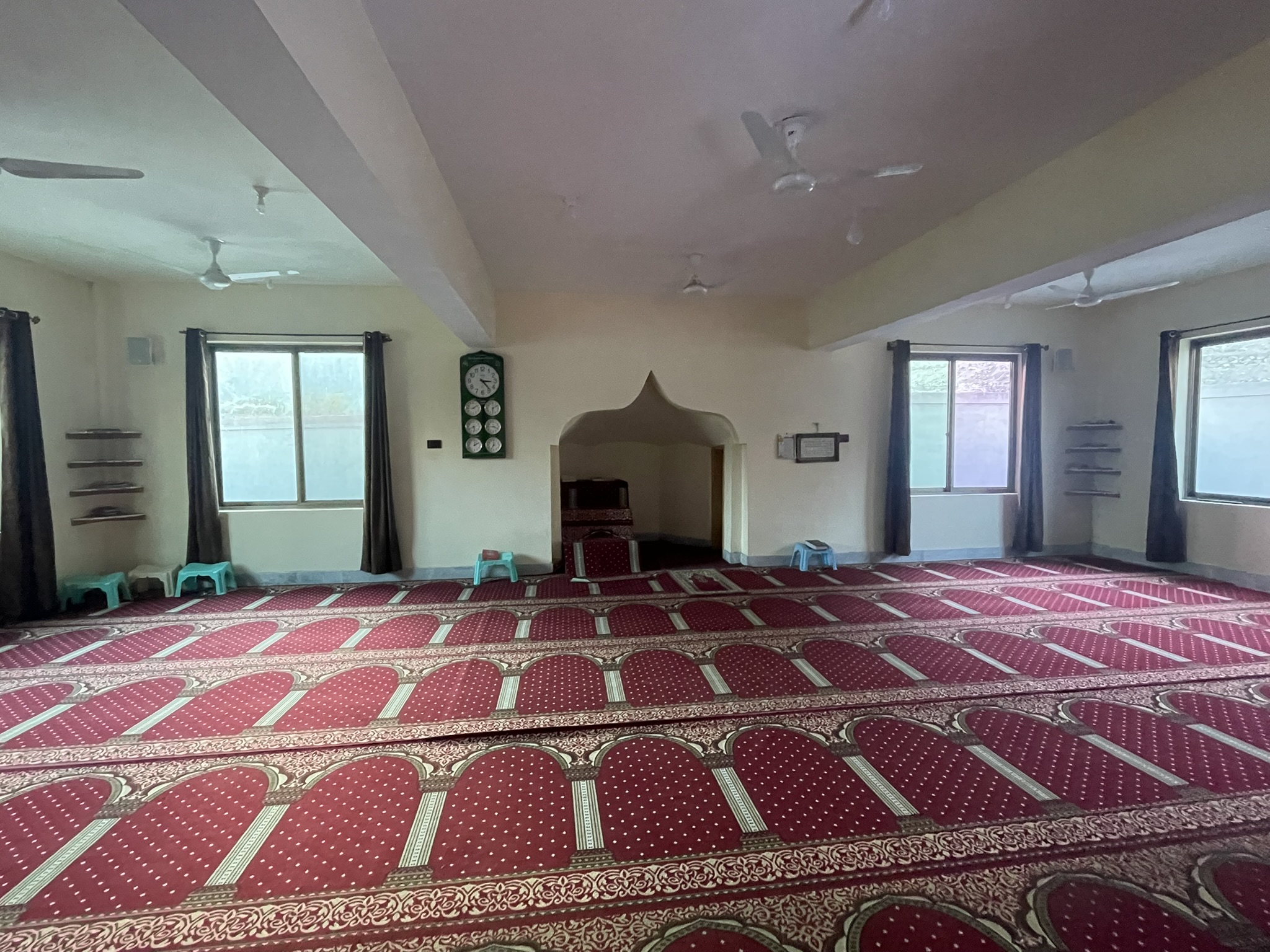
After lunch, we visit Masjid Quba in Jaglot Sai where Global Reach contributed 2.2 million PKR (£5900). The total cost of the Masjid was 5 million PKR (£13,400). We perform ʿAṣr Ṣalāh here and also observe the Maktab where the class is ongoing. Currently, there is no Jumuʿah Ṣalāh taking place here, as the local custom is to perform Jumuʿah Ṣalāh at the larger Masjid of the town. I suggest to Mawlānā Tawṣīf Ṣāḥib who is the Imām here to start Jumuʿah Ṣalāh here if he feels that there are some local residents who are not attending the Jumuʿah Ṣalāh in the larger Masjid due to the distance. We also distribute some funds here to the local needy people.
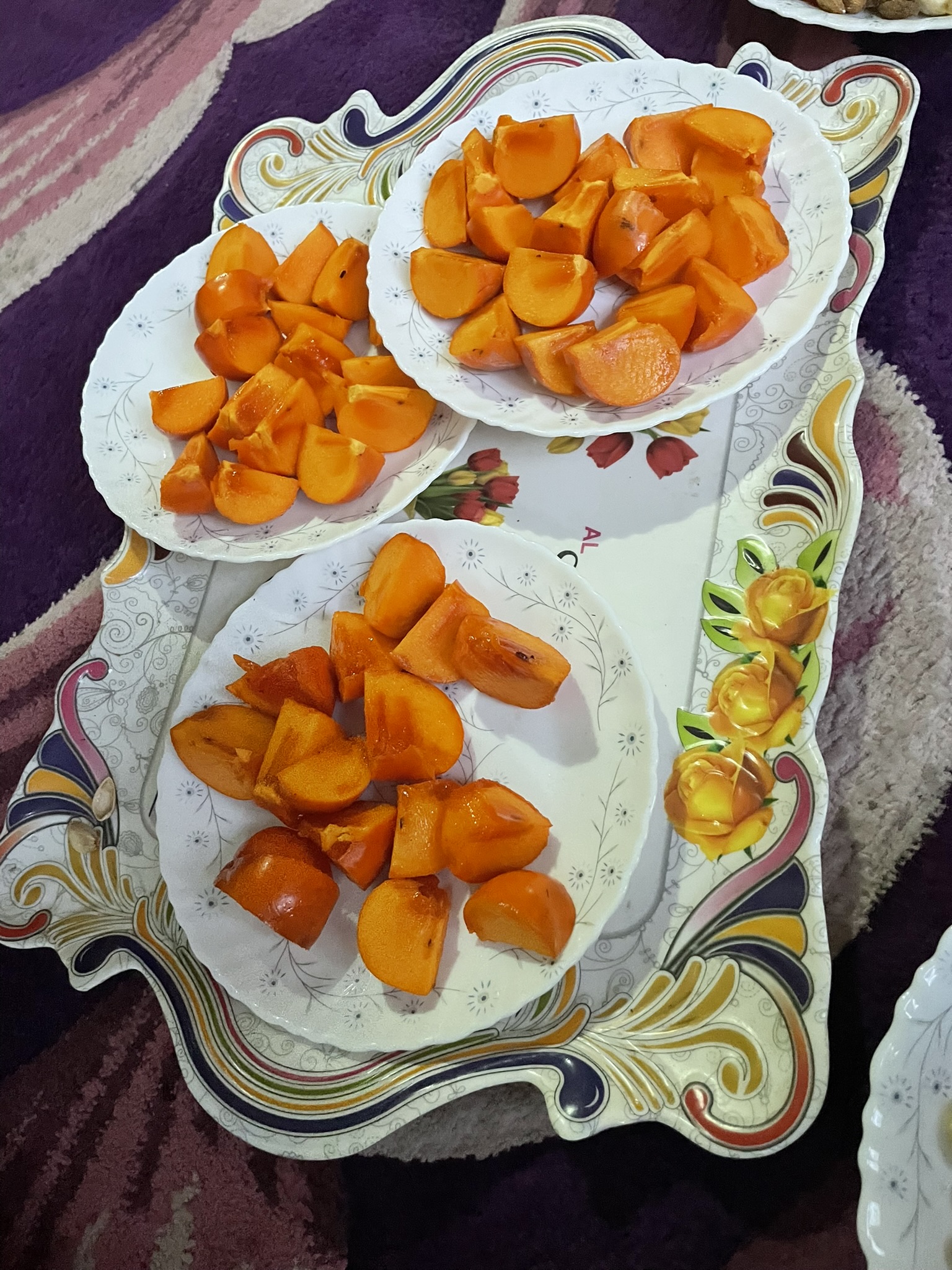
Our next stop in Jaglot is the residence of Mawlānā Zubayr where he has gathered approximately 20 widows and poor ladies. We distribute 5000 PKR (£14) to each person. He also serves us fresh persimmon which is extremely sweet and juicy.
Thereafter, we visit the following four Masjids:
- Masjid Bilal in Das Mahalla, Jaglot Sai, established in 2018, to which Global Reach recently donated 100,000 PKR (£270).
- Masjid Musa in Pathan Mahalla, Jaglot Sai, to which Global Reach contributed 1.1 million PKR (£2950). The total budget is 15 million PKR (£40,000). Mawlānā Zubayr is the Imām here.
- Masjid Umar Faruq in Kohistan Colony, Jaglot Sai, to which Global Reach contributed 540,000 PKR (£1450). This Masjid is located on a mountain and it is not straightforward to reach here. The Masjid needs additional funds for ablution facilities. In the winter months, the weather can become quite cold, with temperatures plummeting to minus 15 and minus 20 degrees Celsius at night.
- Masjid Farooqia in Sherbaz Mahalla, Jaglot Sai, to which Global Reach has donated 340,000 PKR (£910). This is a large project. The external stones are beautifully carved by a local resident.
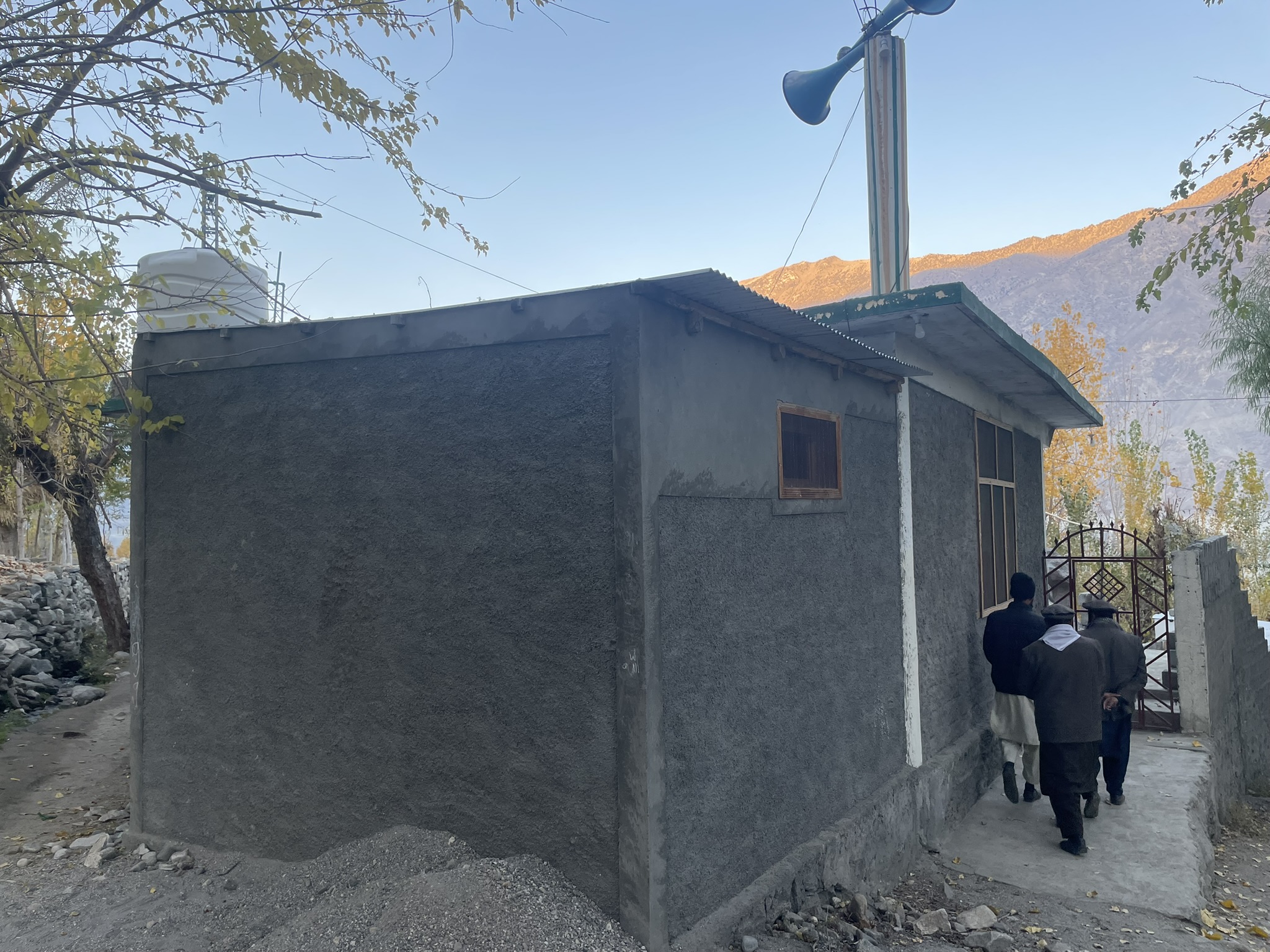
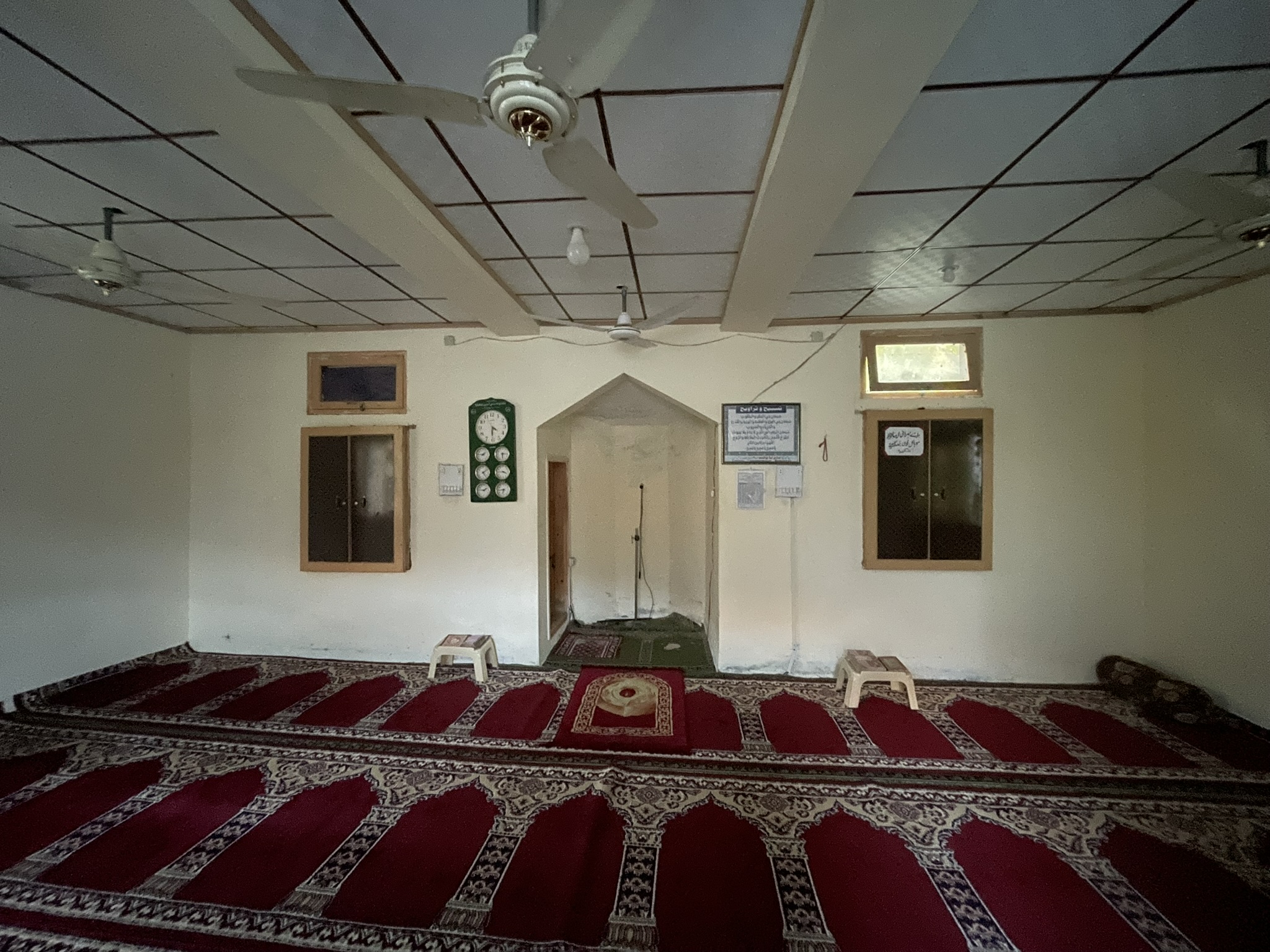
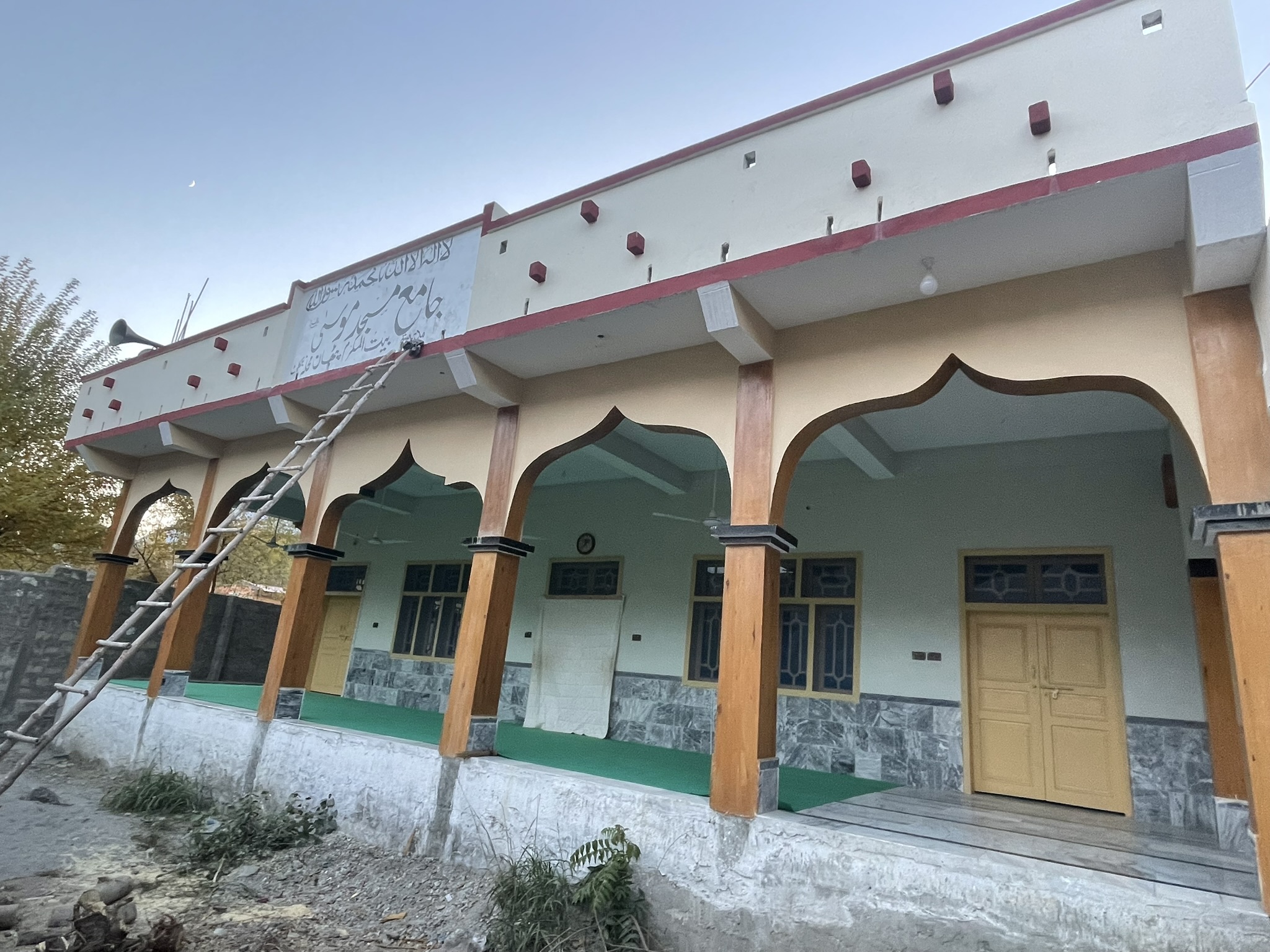
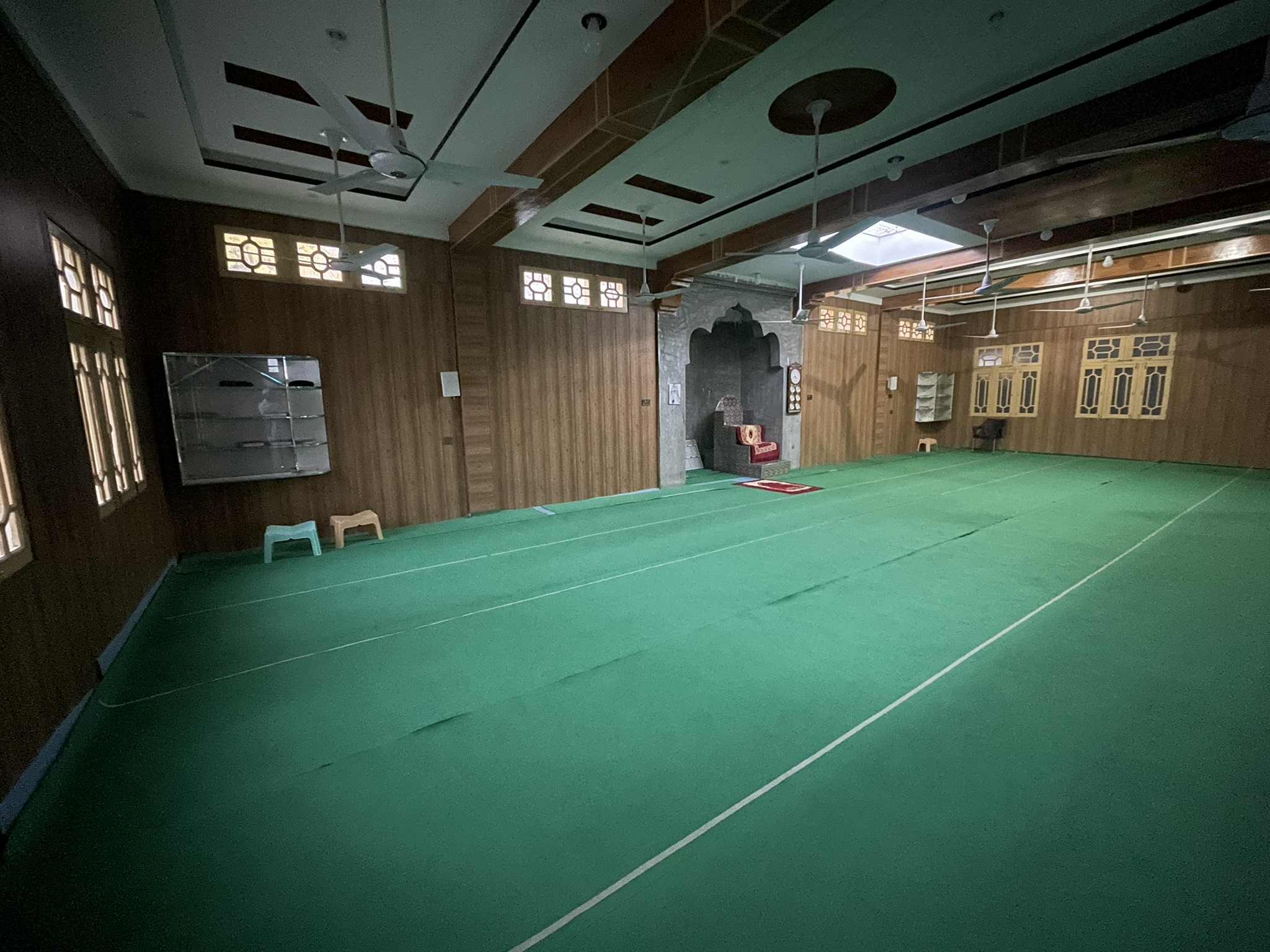
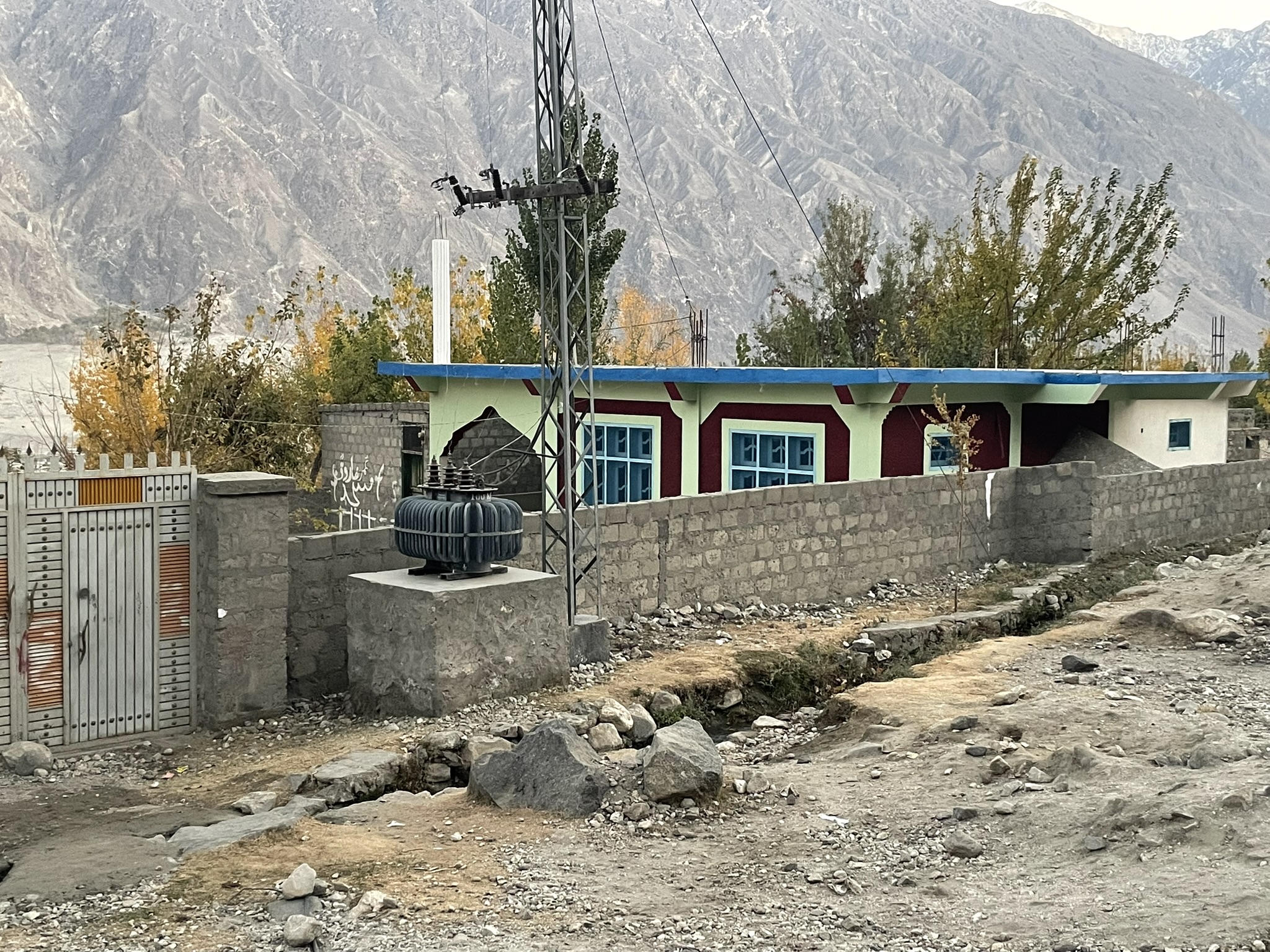
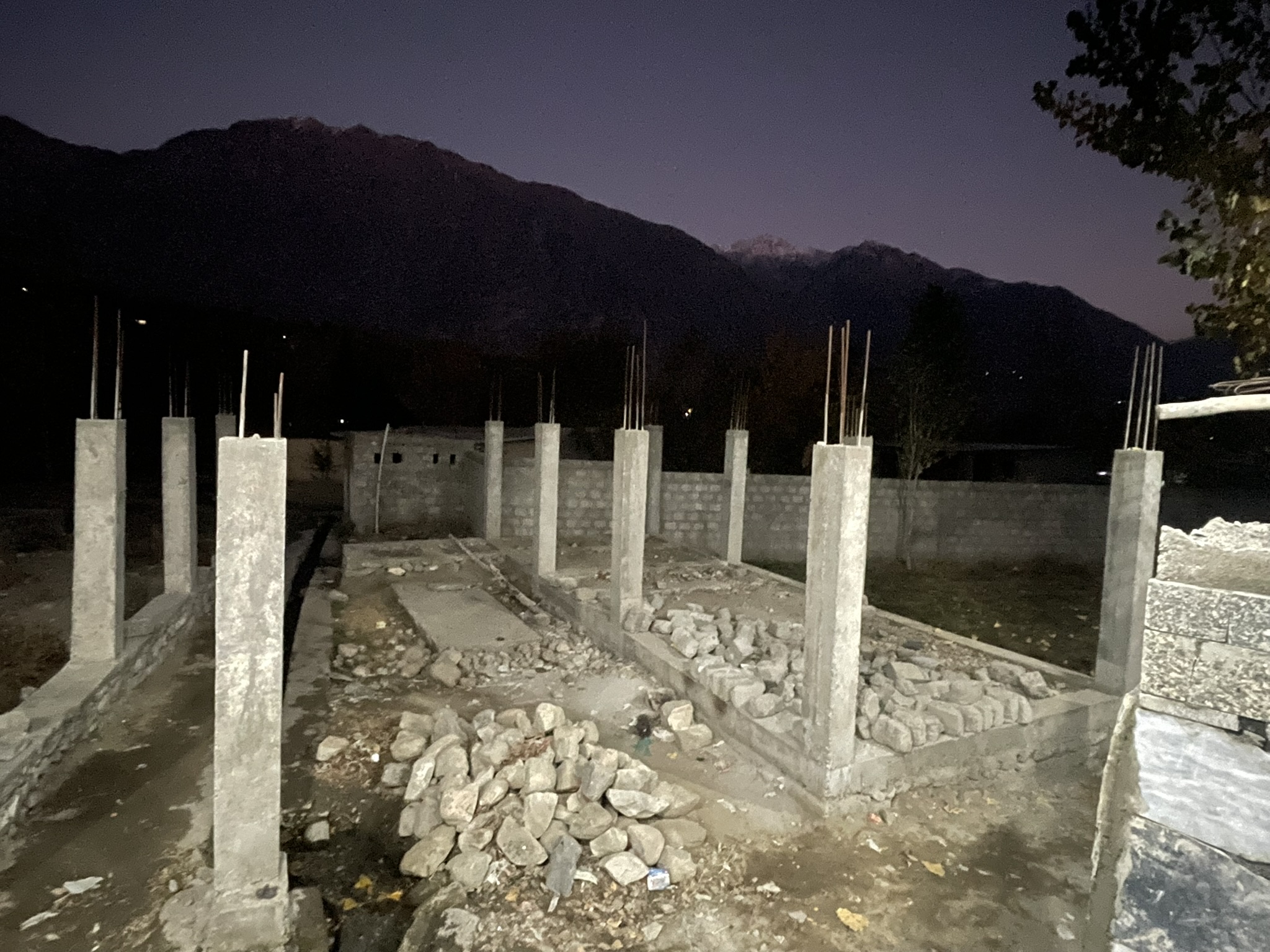
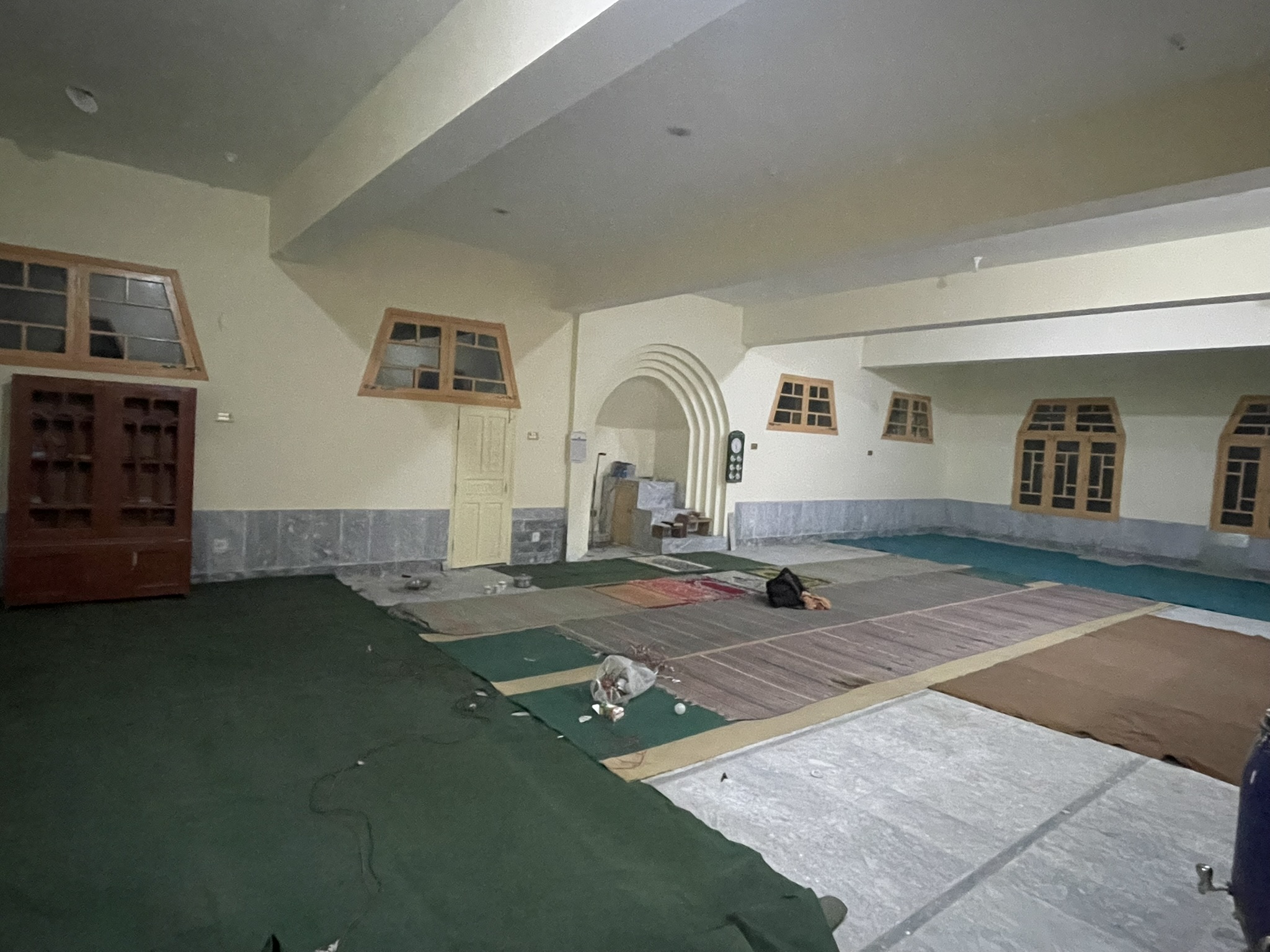
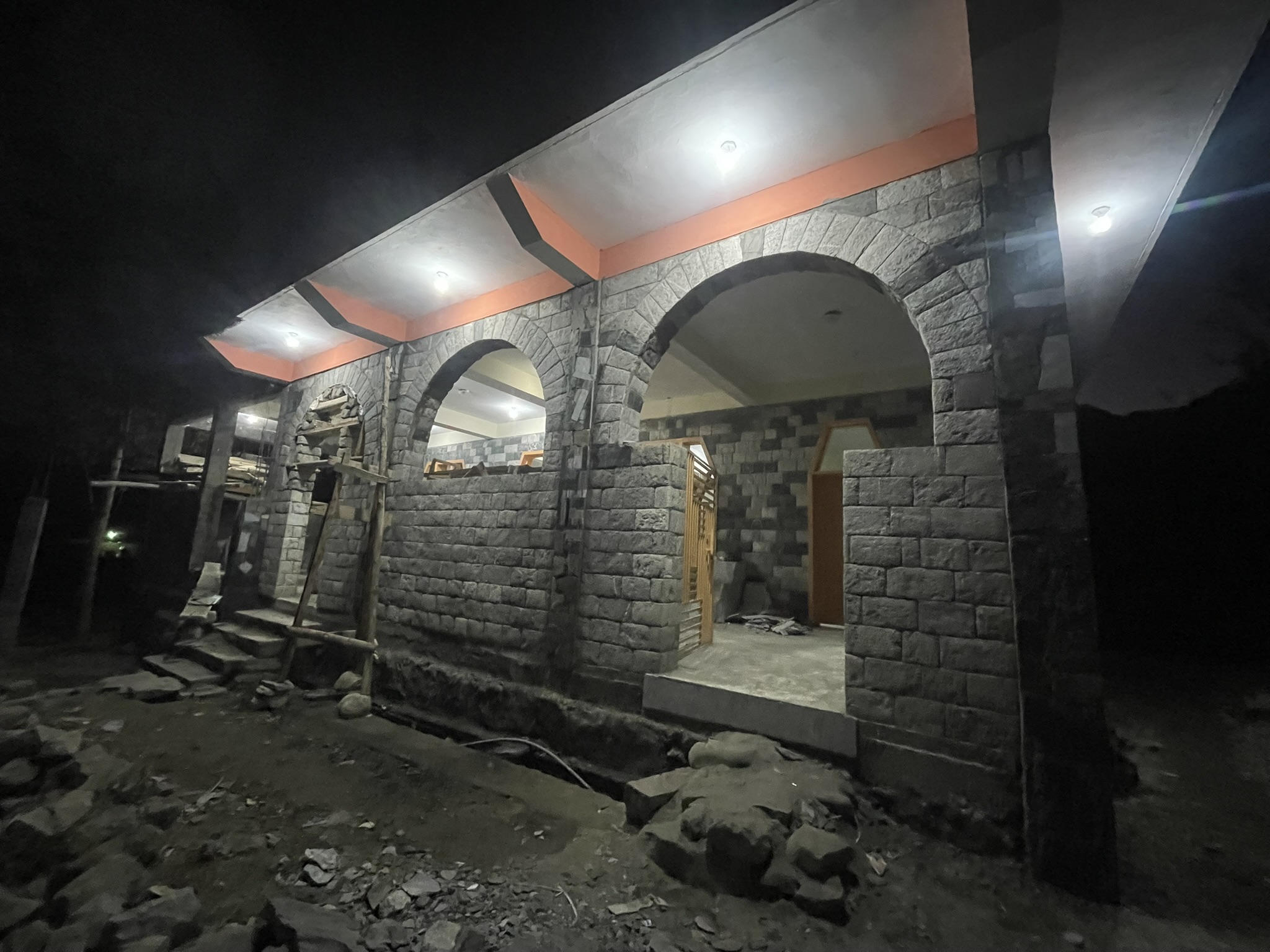
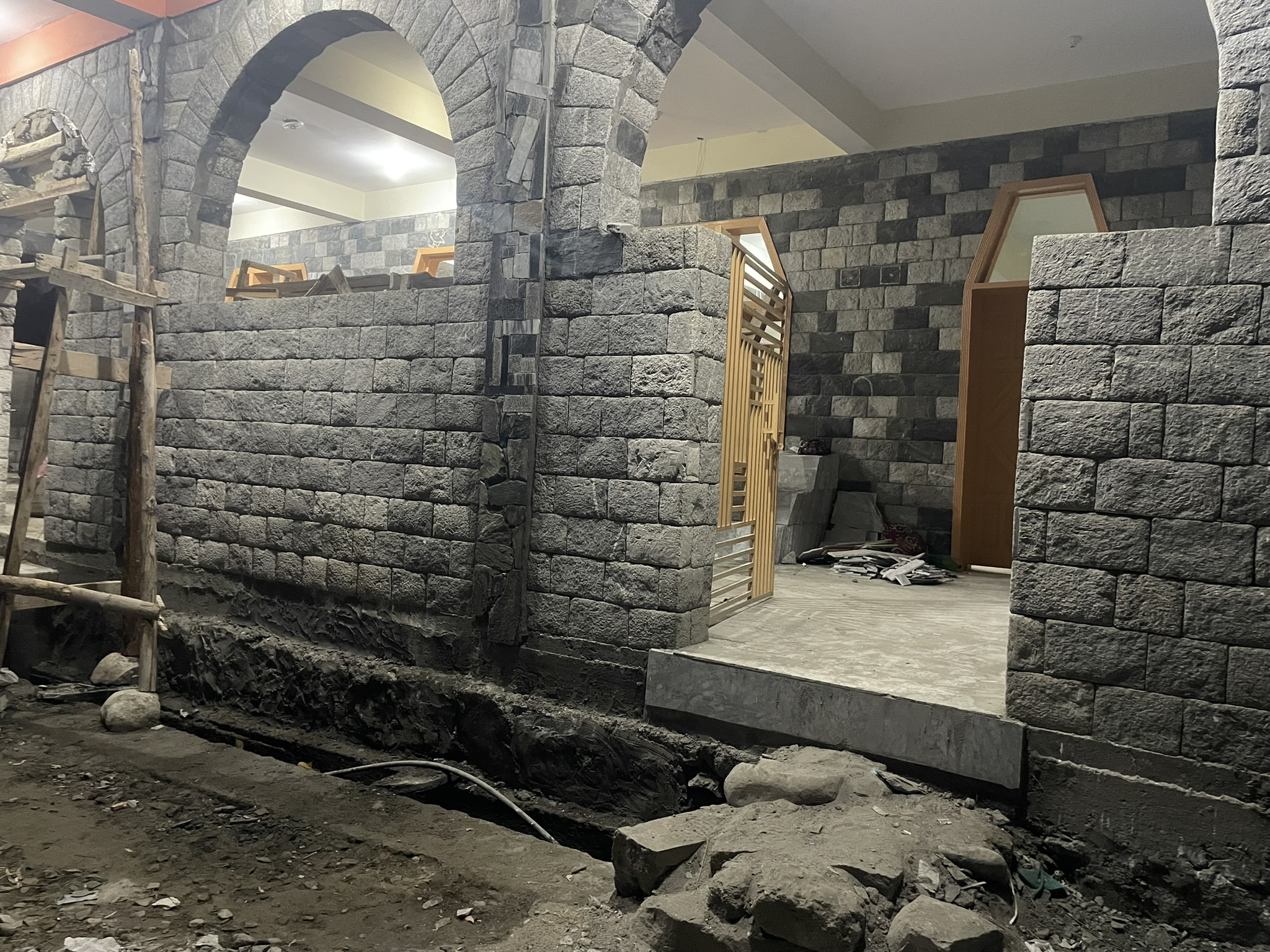
There is also a sixth Masjid named Masjid Ameer Muawiyah in Jamadar Mahalla, Soniar Jaglot which we did not visit. With all these Masjid projects, the local community attempted to raise as much funds locally, and thereafter requested Global Reach for support to help complete the projects.
Car breakdown
It is approximately 6pm, and our car breaks down between Jaglot and Gilgit. There is no network on our mobile phones, and this is a common problem throughout this region. Mawlānā Zubayr stops a car and travels with them to a nearby village and brings another taxi. After a 30-minute wait, we eventually return to Gilgit and check in at the Serena Hotel. The normal cost is £70-80 per night; however, we manage to obtain the rooms for £40 per night via booking.com. The hotel has a good buffet.
Gilgit to Hunza
The next morning, Wednesday 26 November 2025, we hire a car from AVIS which has an office at the hotel, and travel towards Hunza. Mawlānā Tawṣīf and Mawlānā Zubayr accompany us as does brother Munīr. Brother Munīr is a civil engineer who also met us at Gilgit Airport yesterday on the instruction of Sayyid Mufti Mukhtāruddīn Shāh Ṣāḥib (b. 1370/1950) and his son Mawlānā Zubayr Ṣāḥib. We were not aware of this in advance. We suggested to him to join us on the journey today and he kindly agreed. He works for the government and also does some private work. He explains that the region has many minerals including copper and lithium. His company proves to be extremely fruitful.
As we depart from Gilgit, we pass the Aga Khan hospital. The Aga Khan community has many schools, hospitals and other charitable projects in this region.
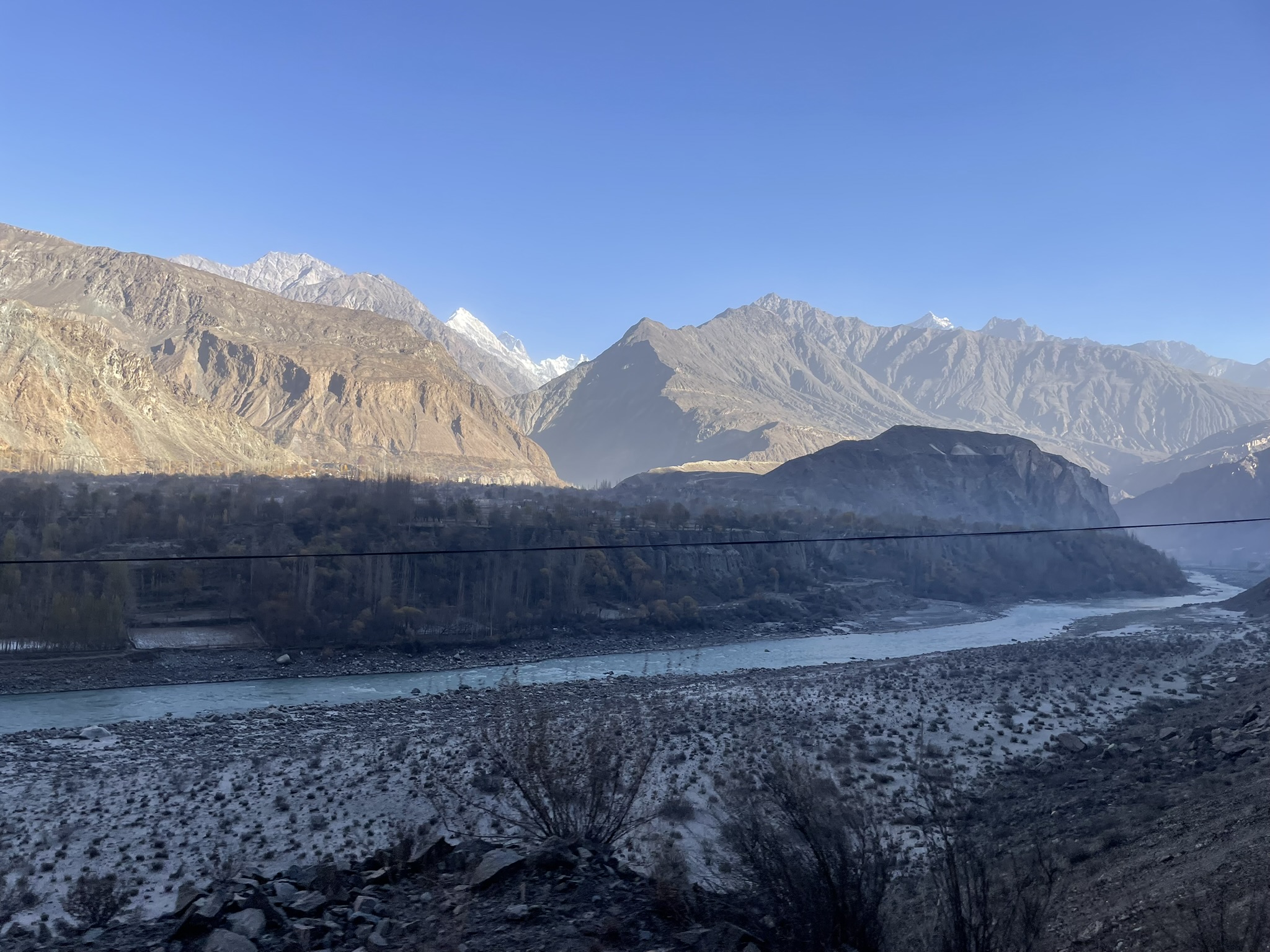
We travel on the N35 highway, the only road to Hunza, that goes all the way to the Pakistan-China border. This is also known as the Karakoram Highway (KKH). The distance between Gilgit and the central area of Hunza is 65 miles, and the distance from the central area of Hunza to the border is approximately 100 miles. It is a single road and very scenic.
Old Silk Road
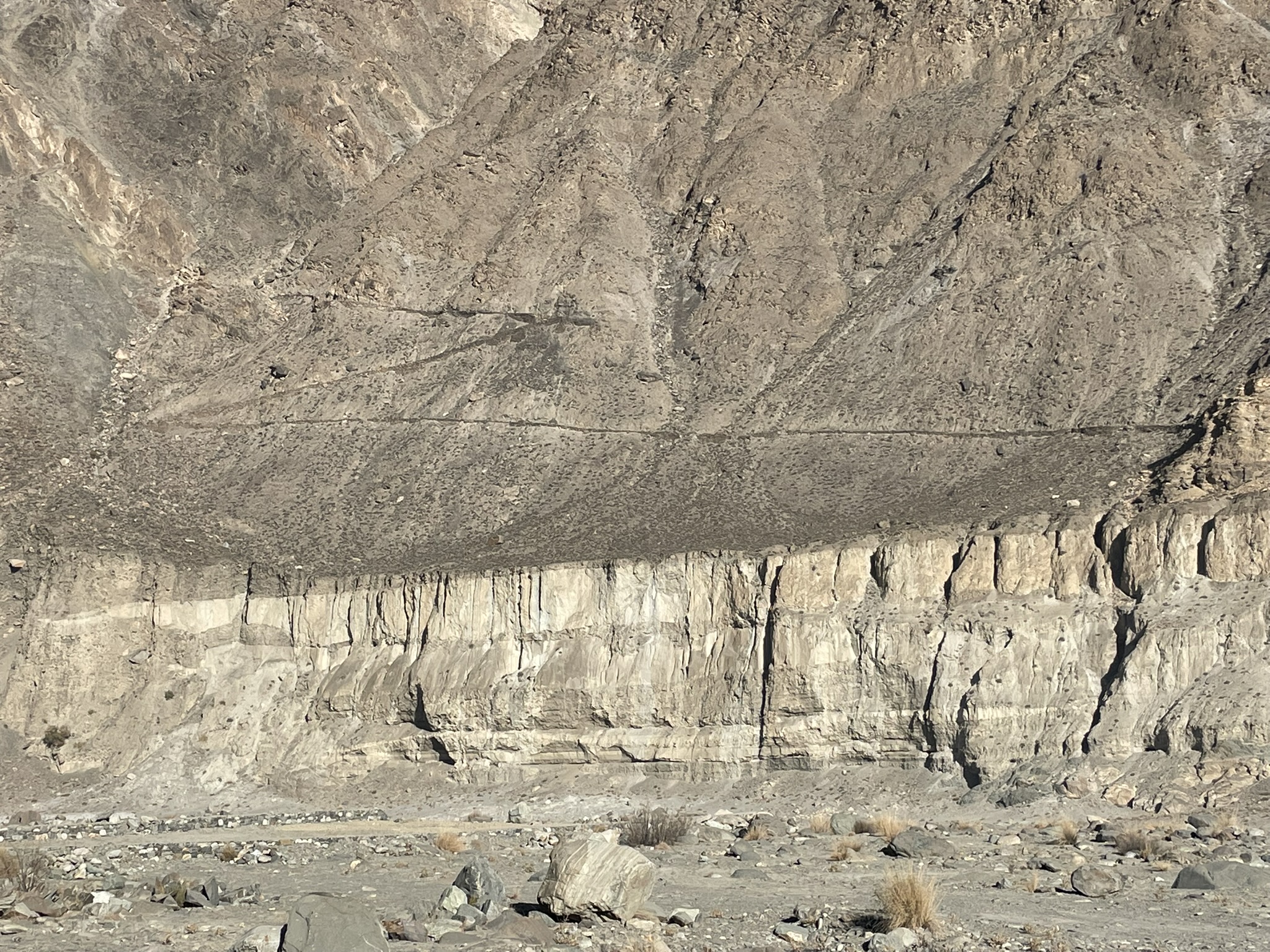
At 9.20am, we pass a visible part of the Old Silk Road, that was part of the ancient trade route, linking China with the West, from the second century BCE until the mid-15th century. The large sign on the road pointing to the road states:
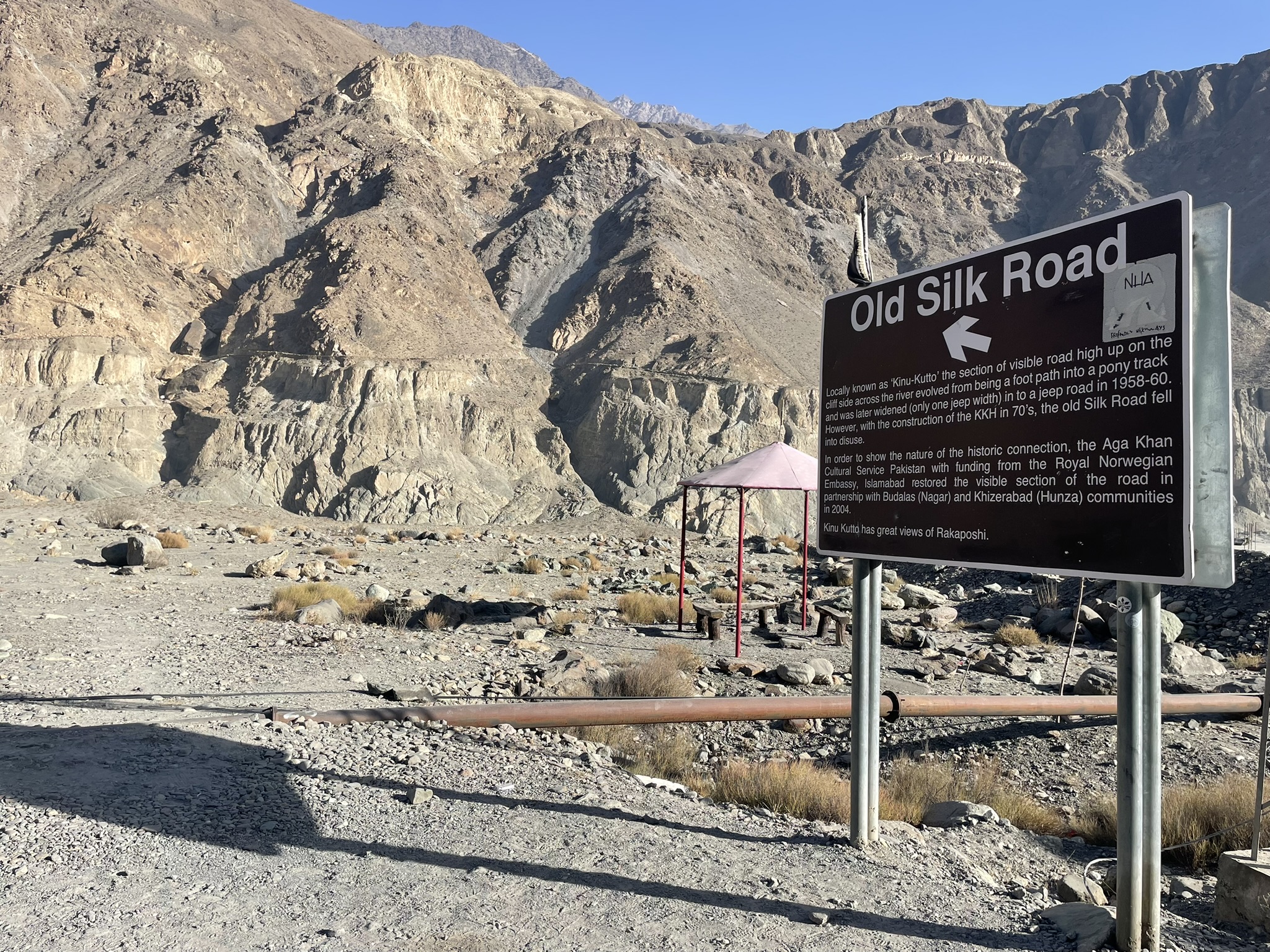
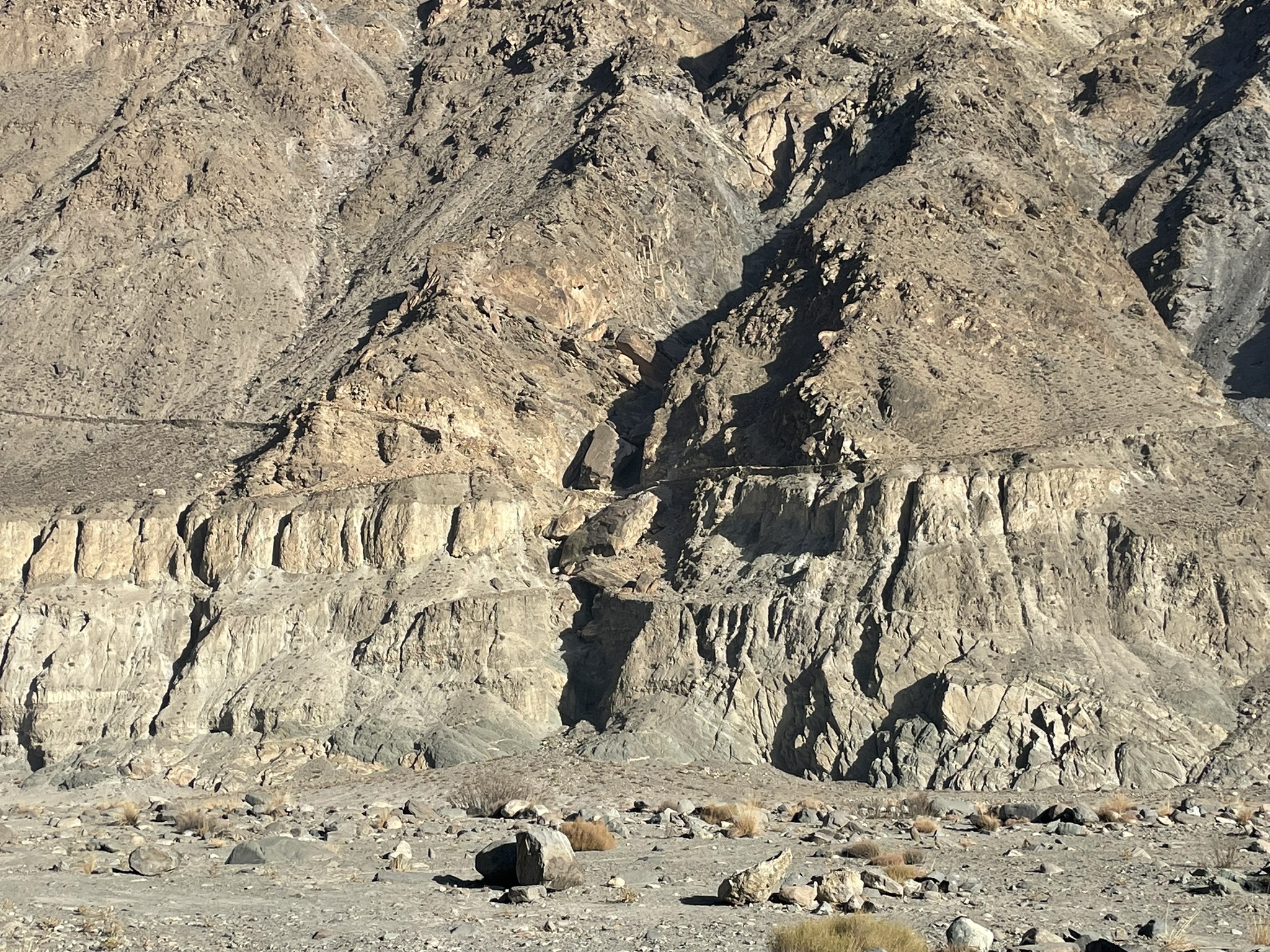
“Locally known as ‘Kinu-Kutto’, the section of visible road high up on the cliff side across the river evolved from being a foot path into a pony track and was later widened (only one jeep width) in to a jeep road in 1958-60. However, with the construction of the KKH in 70s, the old Silk Road fell into disuse. In order to show the nature of the historic connection, the Aga Khan Cultural Service Pakistan with funding from the Royal Norwegian Embassy, Islamabad restored the visible section of the road in partnership with Budalas (Nagar) and Khizerabad (Hunza) communities in 2004. Kinu Kutto has great views of Rakaposhi.”
Rakaposhi viewpoint
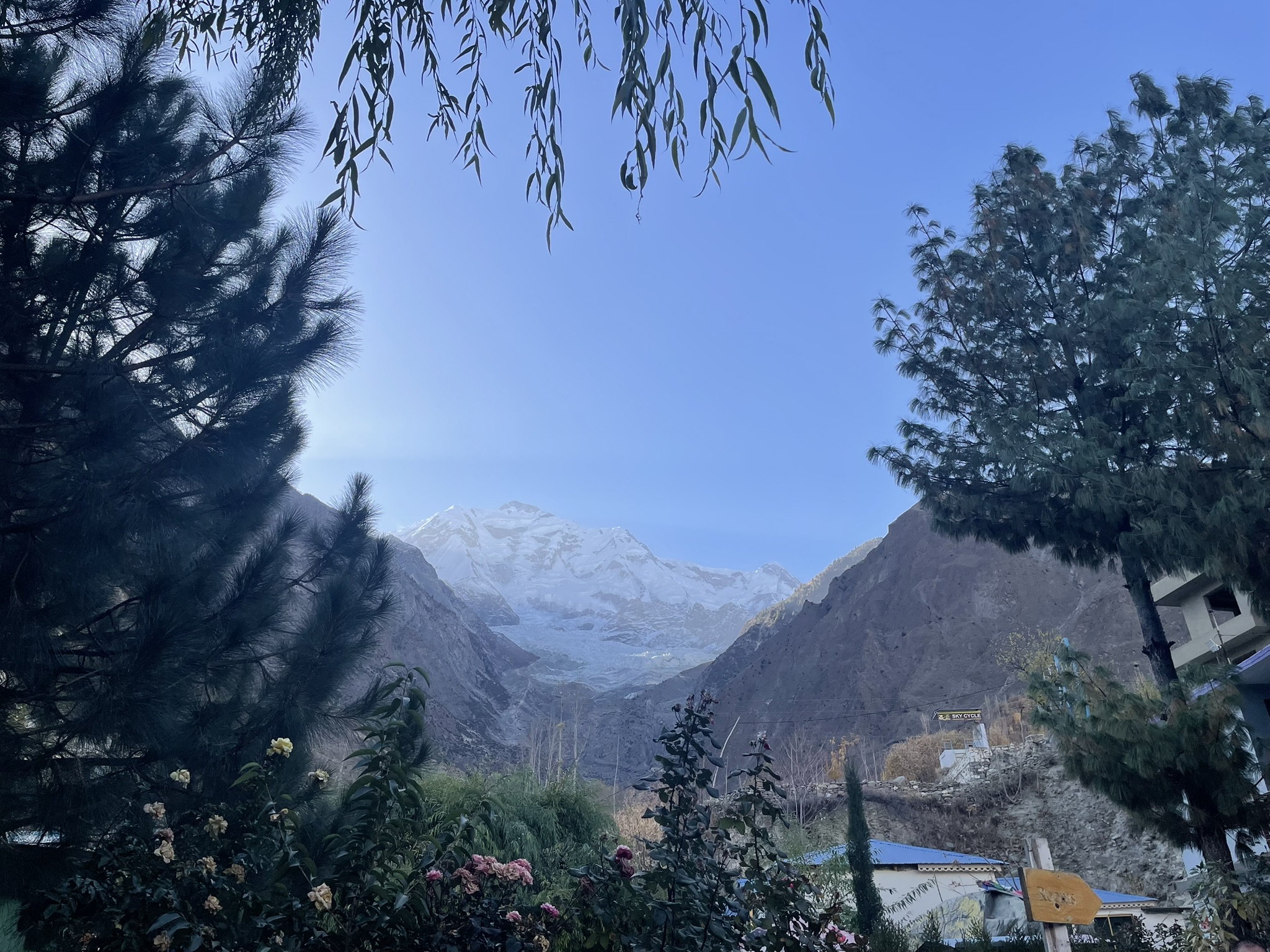
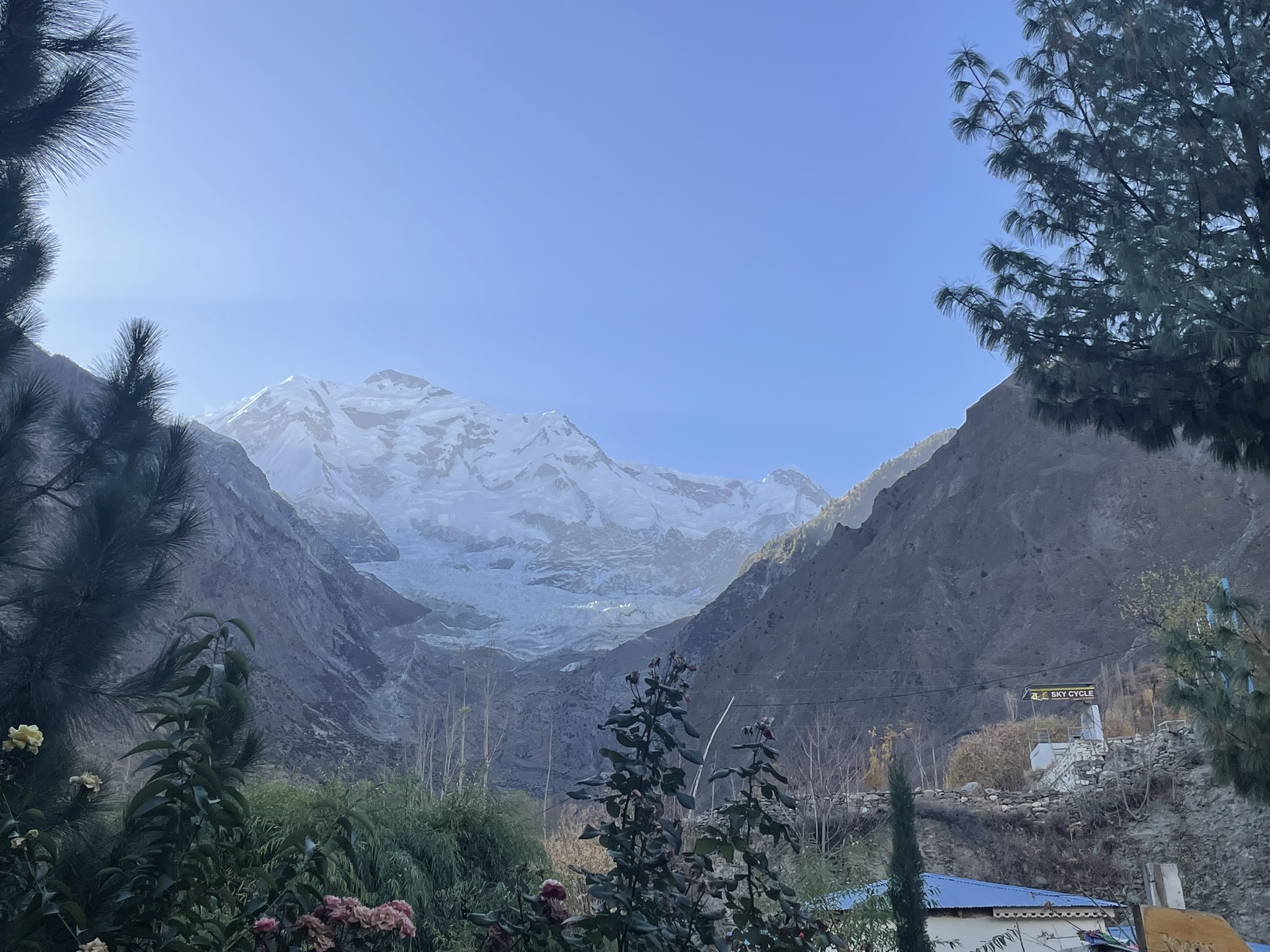
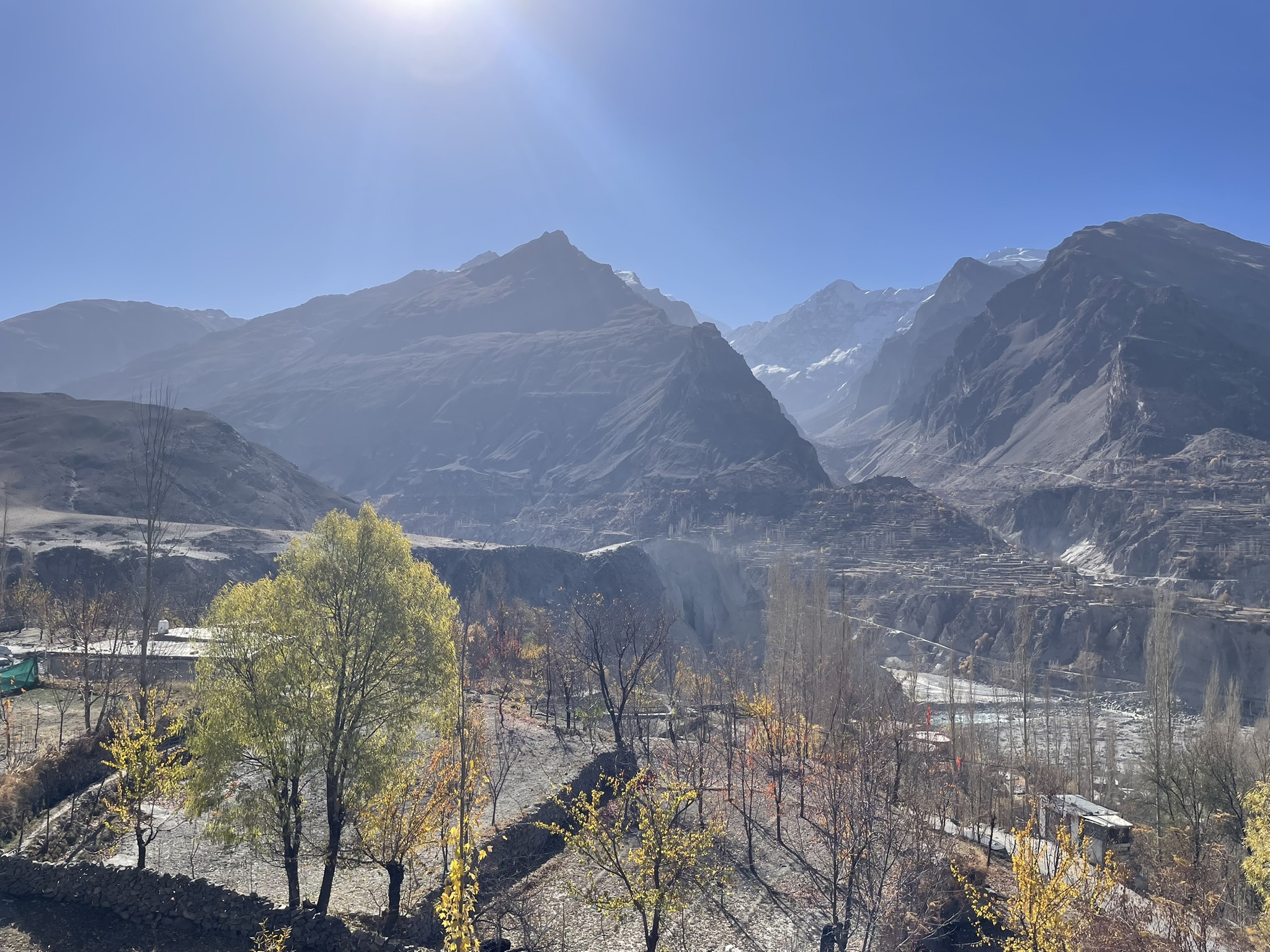
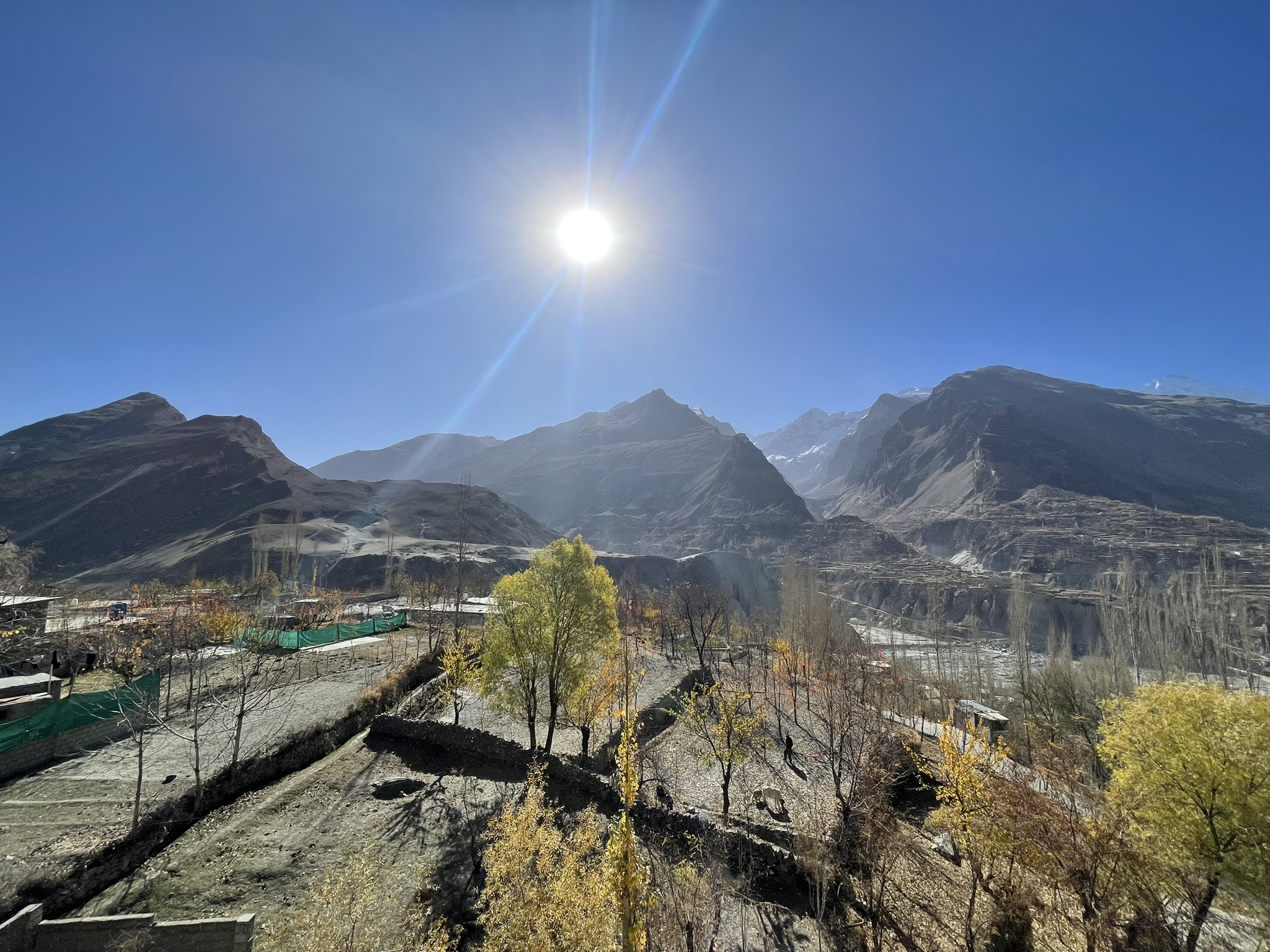
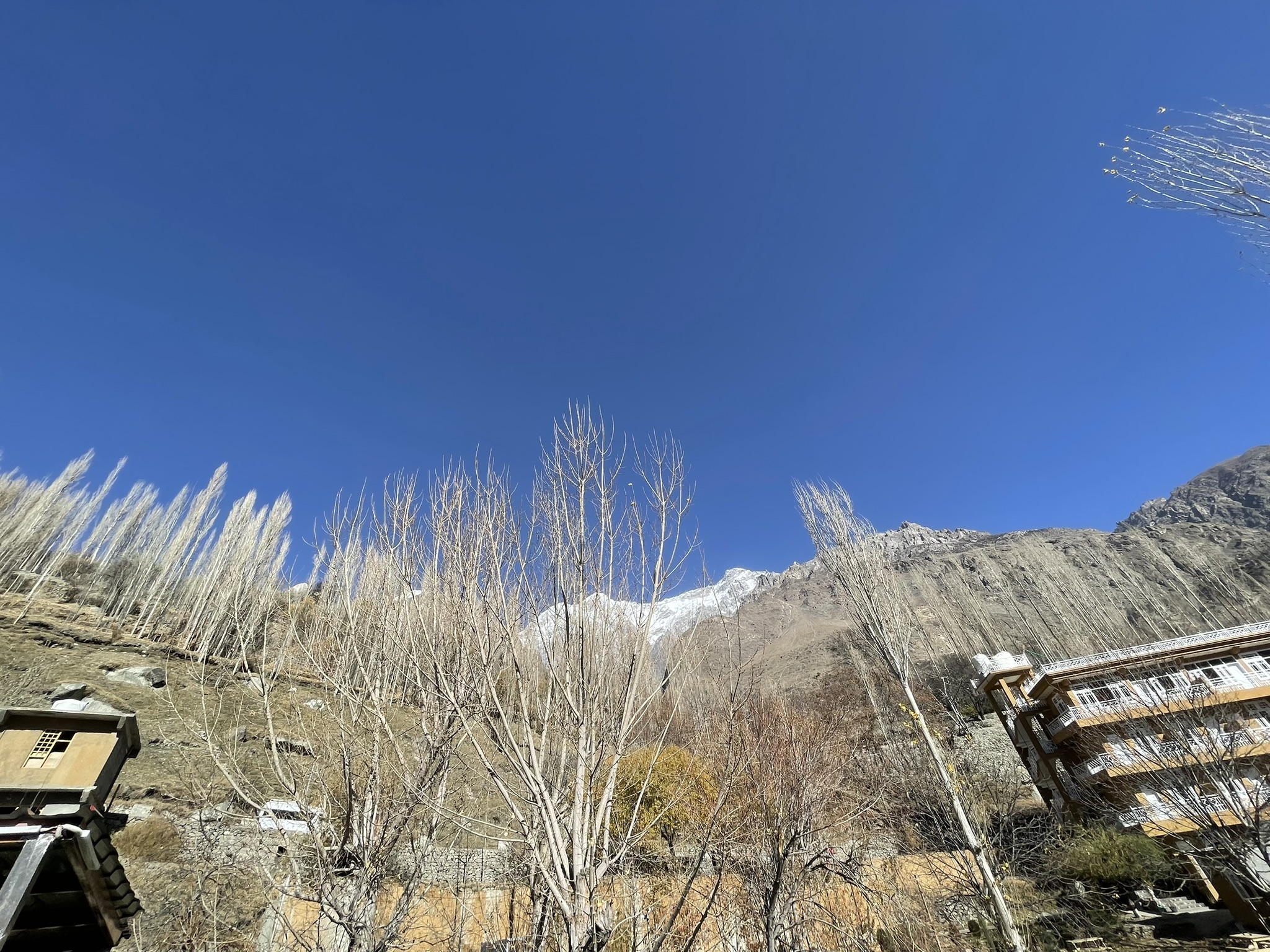
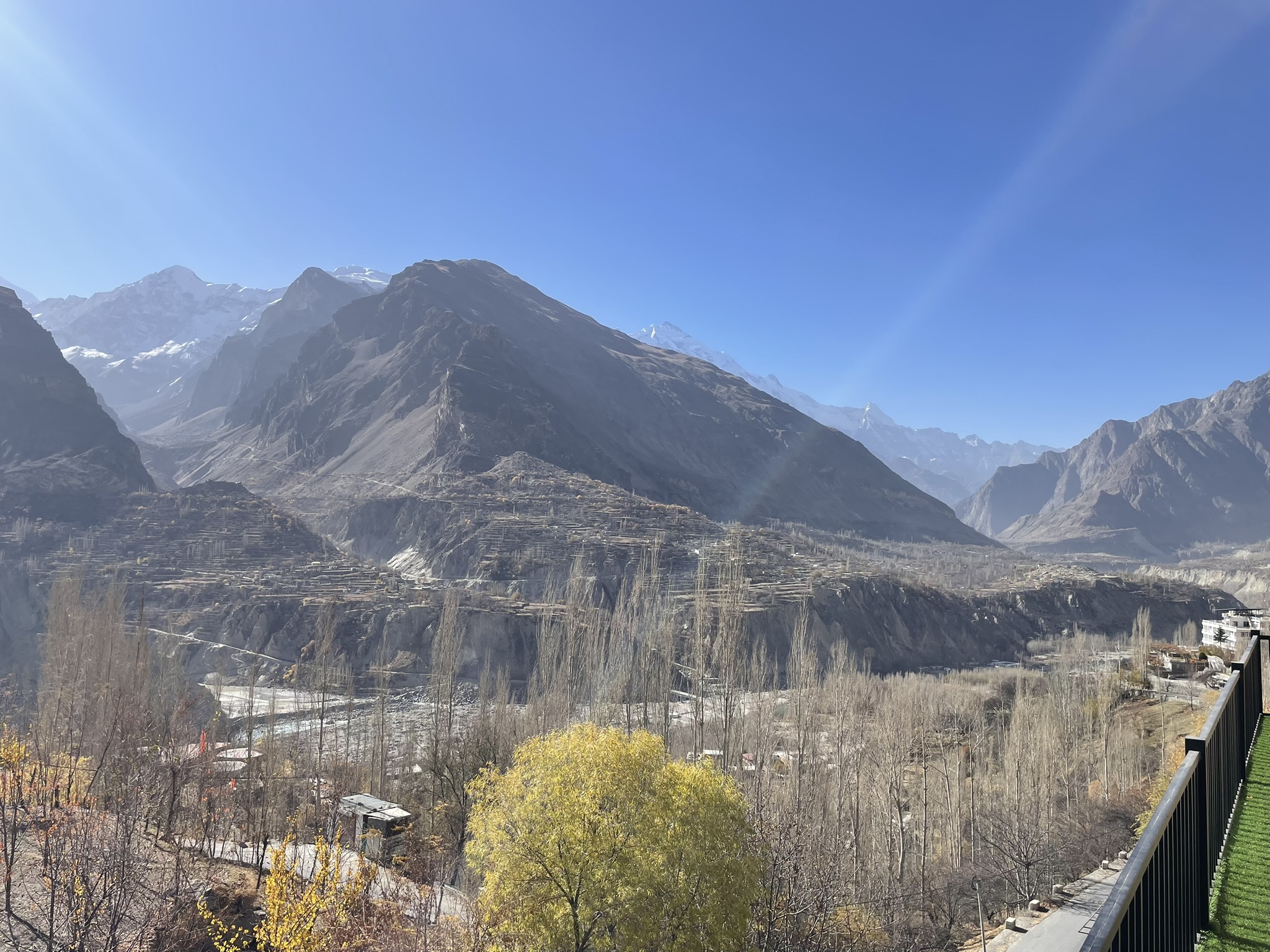
Our next stop at 9.40am is the Rakaposhi viewpoint in Ghulmet village of Nagar Valley. This is a mountain of Karakorum that touches eight thousand meters high. The current temperature during the day is 15 degrees whilst at night the temperature drops near zero degrees. Snow is visible on the peak of the mountains. There are some shops at this viewpoint and also small terraces along the water flowing down from the glacier where tourists can sit and eat. During the summer, there is much more water and tourists enjoy dipping their feet in the cold glacier water and taking pictures of the scenic views.
Jami Masjid Quba, Aliabad
At 10.15am, we enter Aliabad, which is the administrative and commercial centre of Hunza district, and arrive at Jami Masjid Quba. This, we understand, is the only Masjid of the Ahl al-Sunnah in the Hunza District. The total number of families in the district is approximately 1,200. Of these, there are only ten Muslim families from the native people of Hunza, and a further twenty Muslim families of labourers. The majority here are Aga Khani who have a strong hold here and there is a small Ithnā ʿAsharī Shiite community.
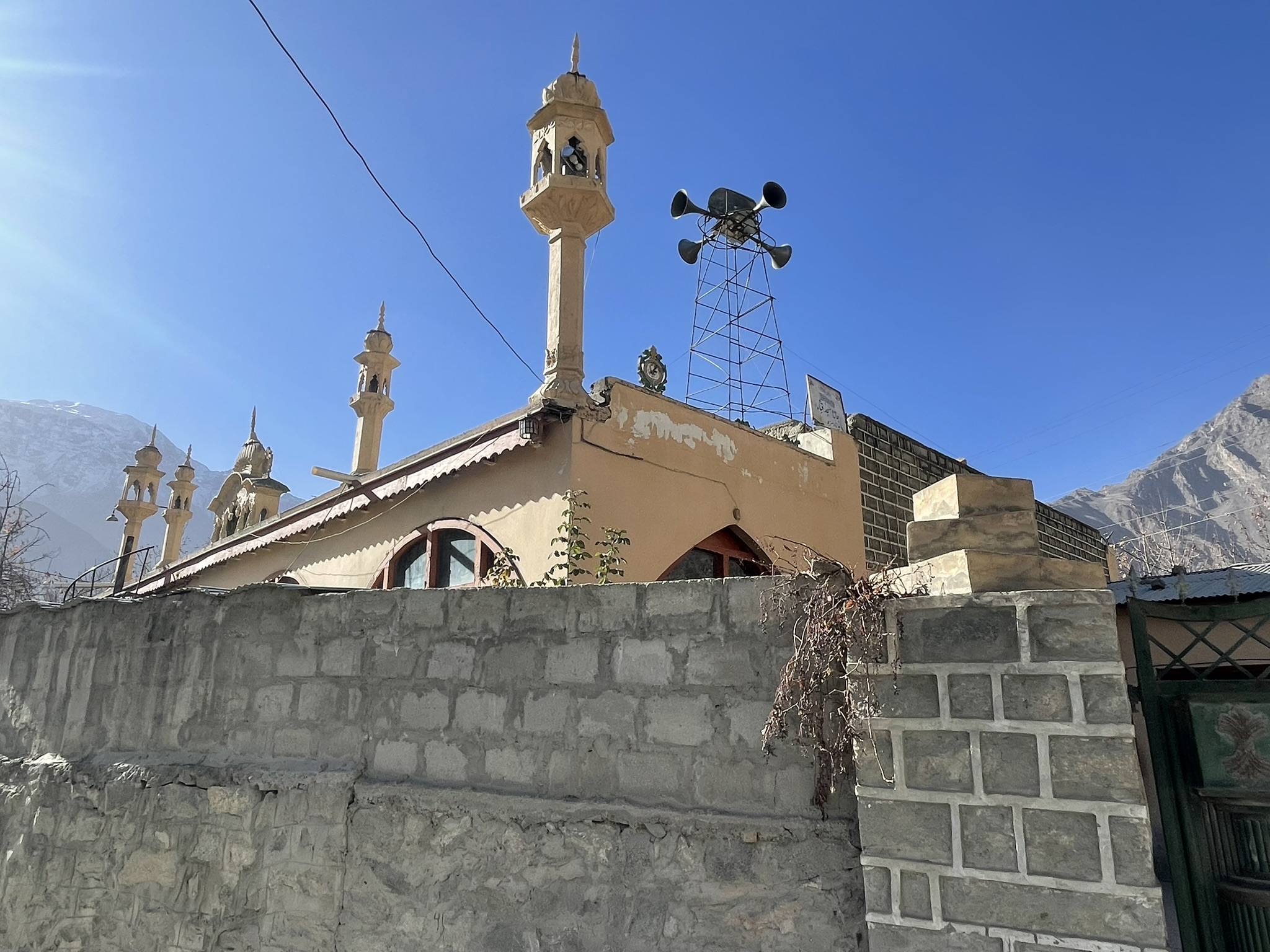
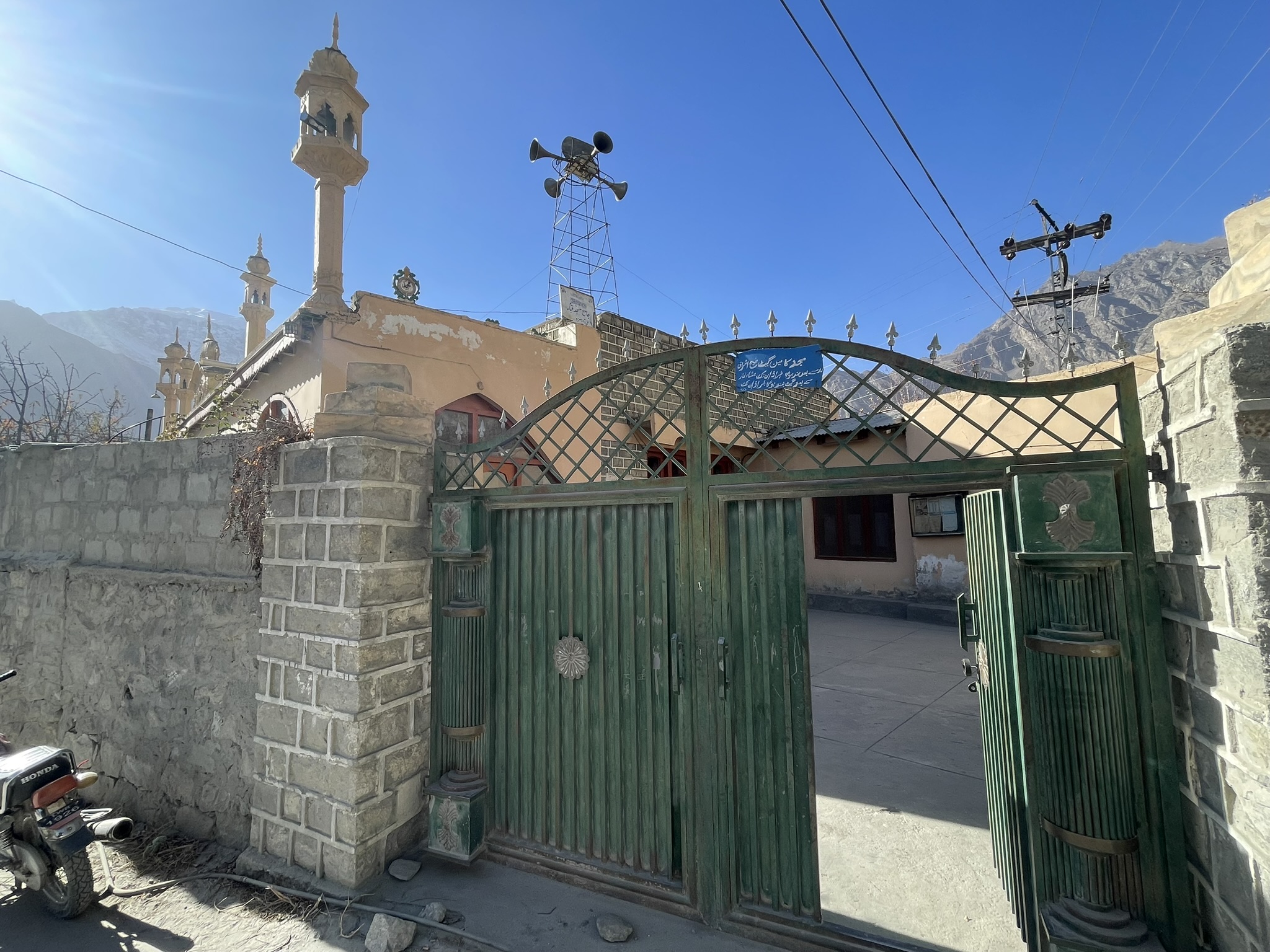
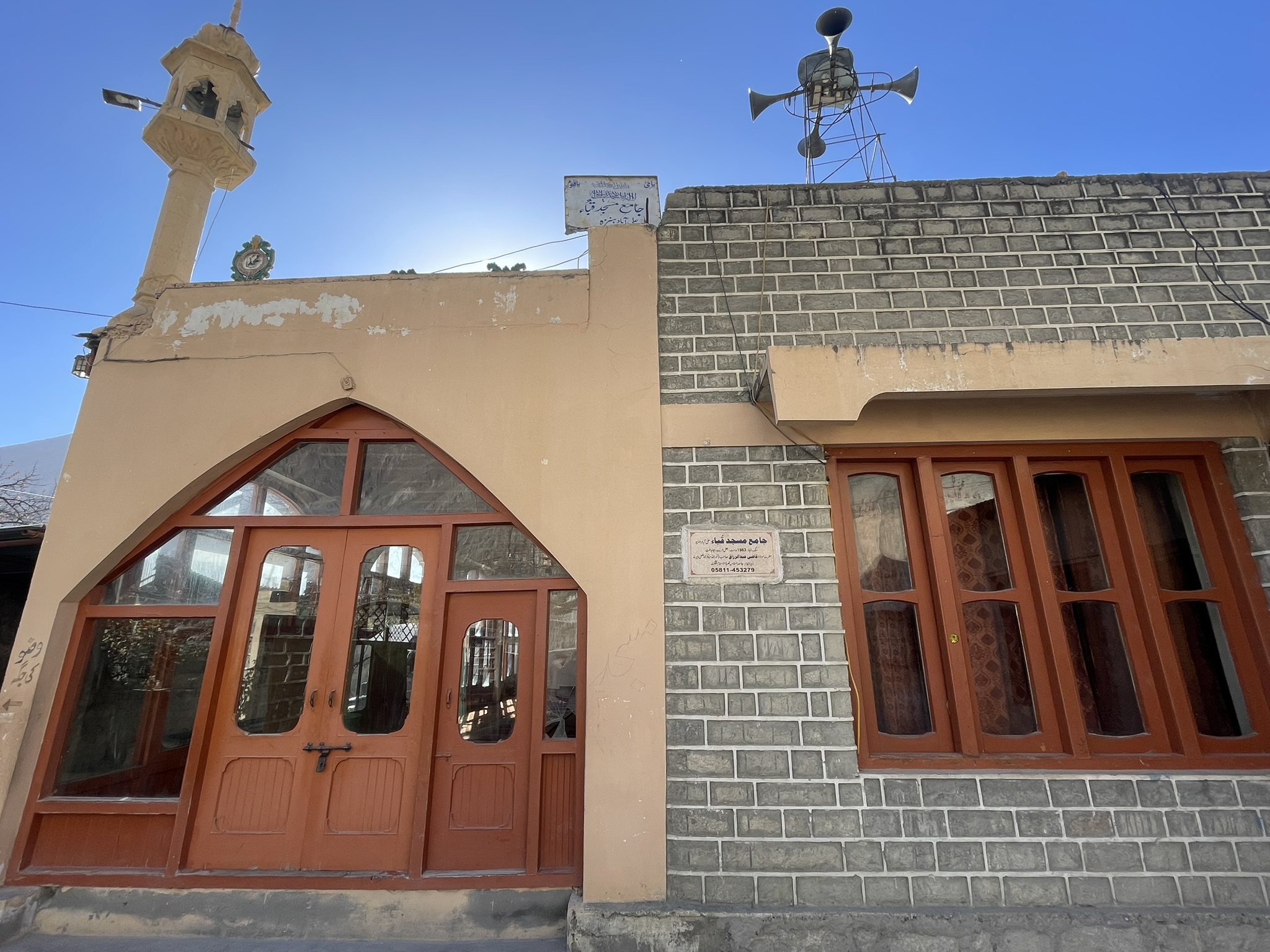
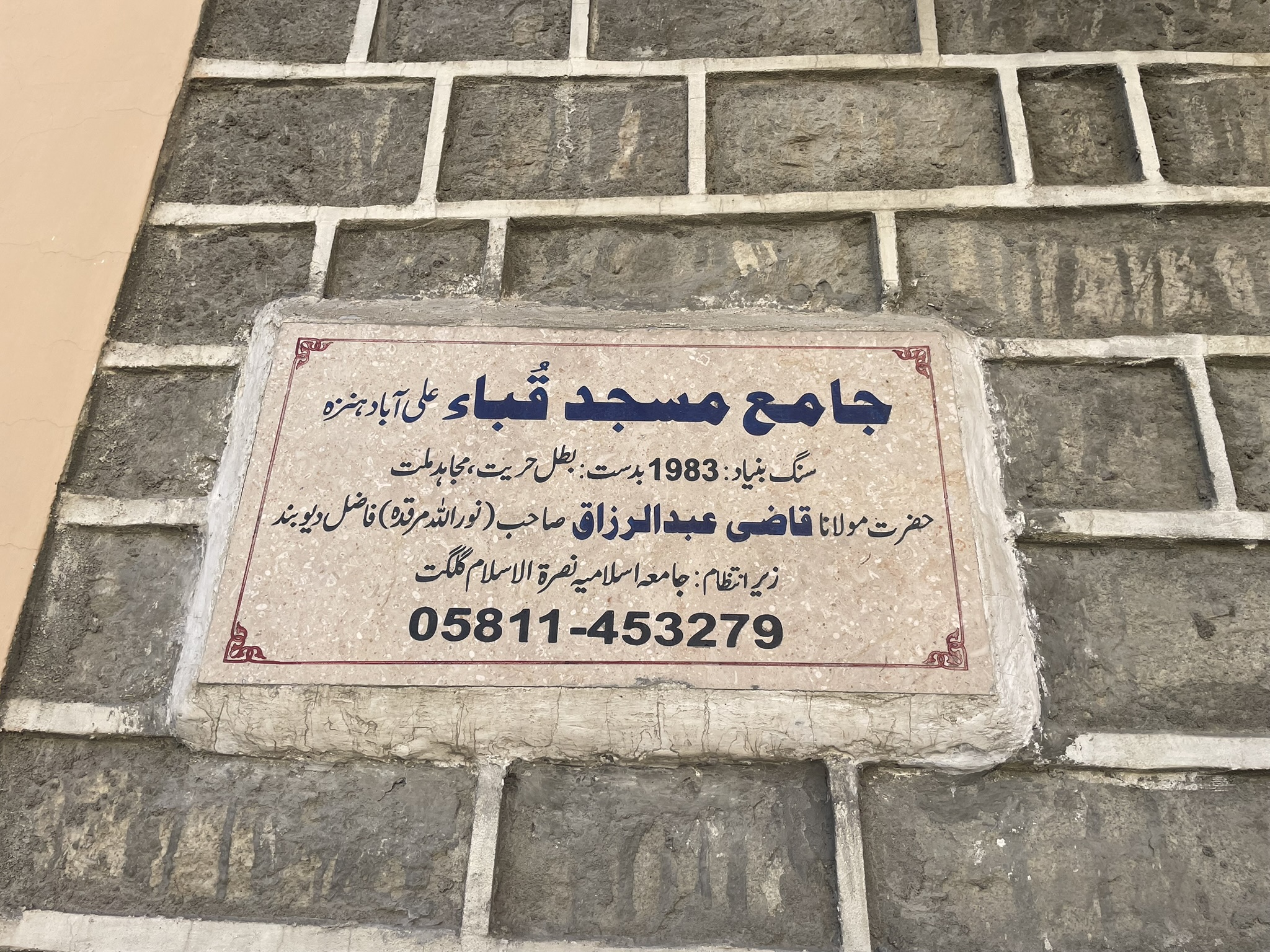
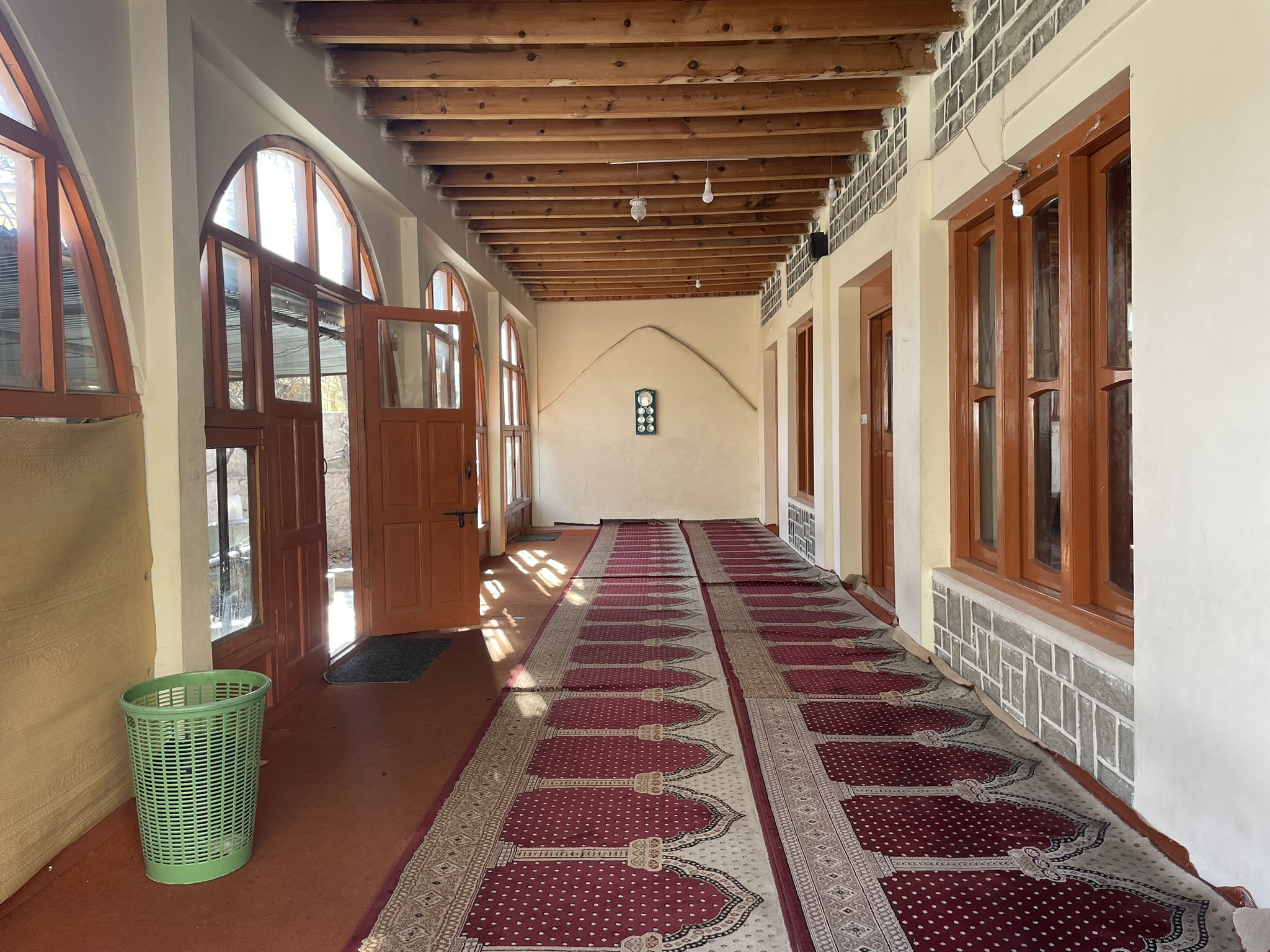
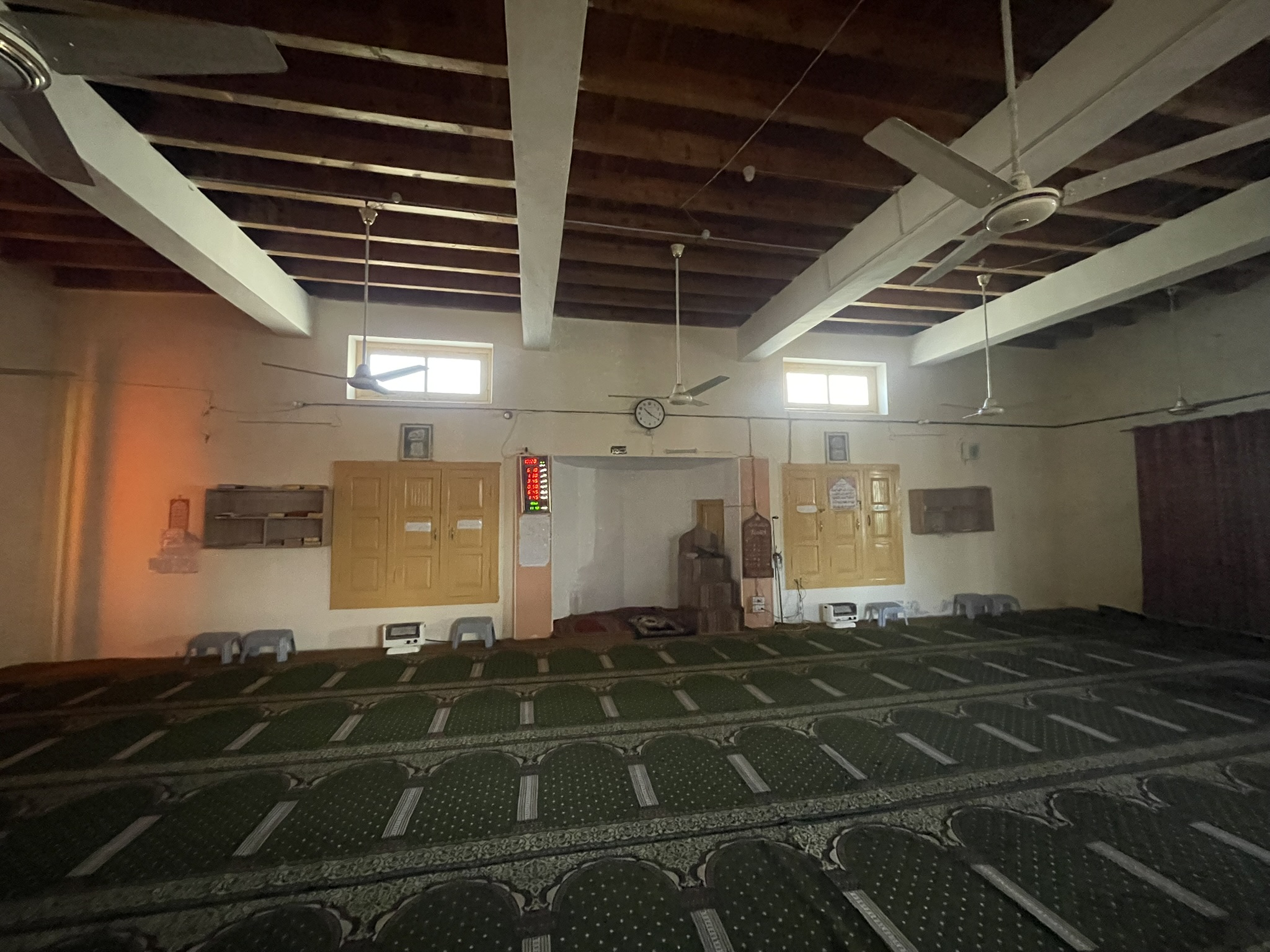
We meet with Qārī Aʿẓam Ṣāḥib, the Imām who explains that 250 Muslims attend Jumuʿah Ṣalāḥ and 32 children study in the Maktab. A stone plaque on the Masjid wall mentions that it was established by Qāḍī ʿAbdurrazzāq Ṣāḥib (a graduate of Darul Uloom Deoband) in 1983, and that it runs under the guidance and direction of Jamia Islamia Nusratul Islam Gilgit. Qārī Ṣāḥib mentions that few from the Aga Khani community convert to Islam, and that if they do, they face difficulties.
Historically, before Islam came to this region, the people were followers of Buddhism. Thereafter, Islam came to this region but the Aga Khani Mir dominated the Hunza area and ruled for many years. The current Mir of Hunza is Ghazanfar Ali Khan, the son of the last ruling Mir, Mohammad Jamal Khan (d. 1396/1976), whose state was dissolved by Pakistan in 1974. While the title is now ceremonial, the prince continues to enjoy some privileges including a stipend from the government and special car license plates, and is very rich.
Karimabad
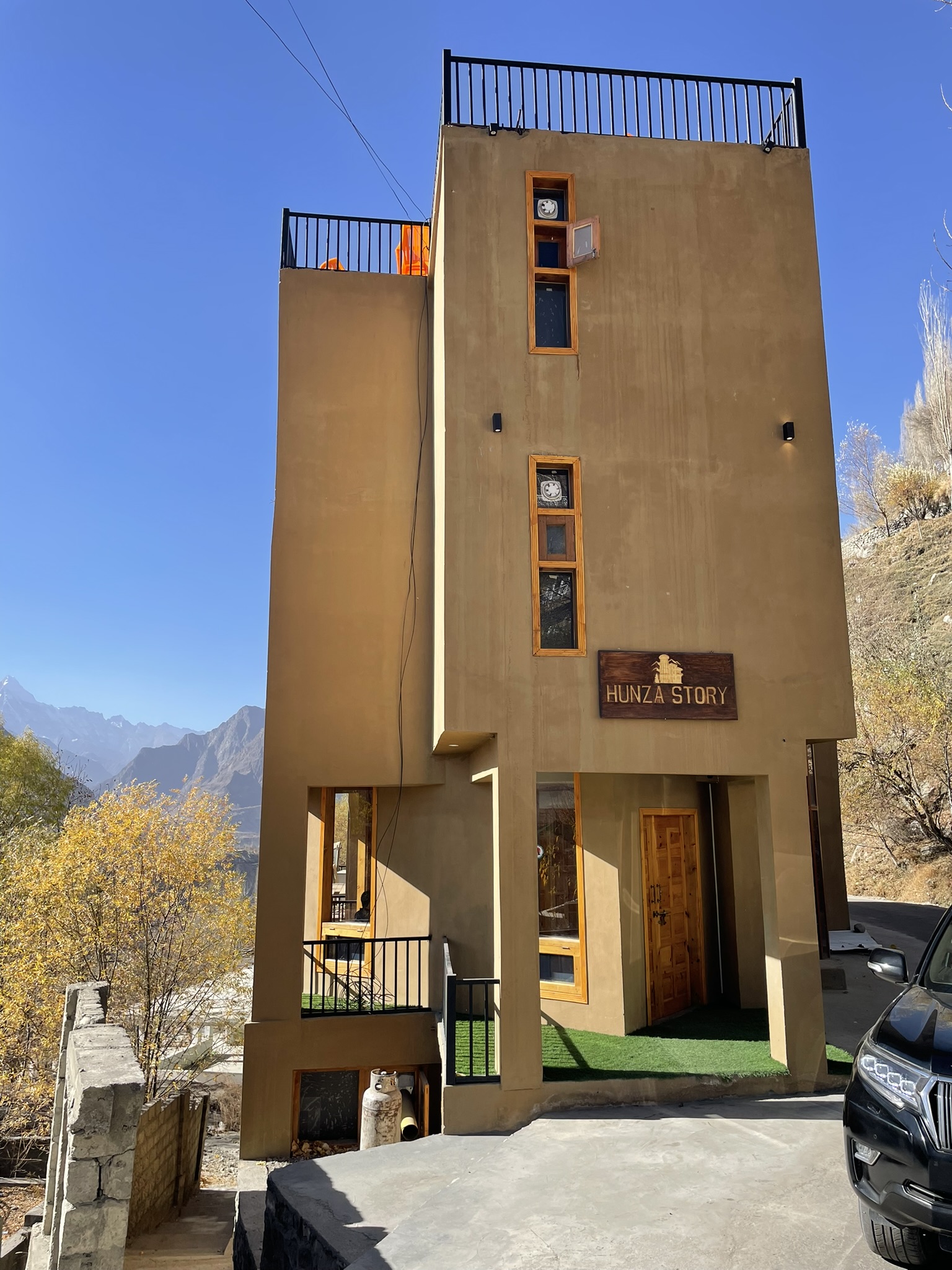
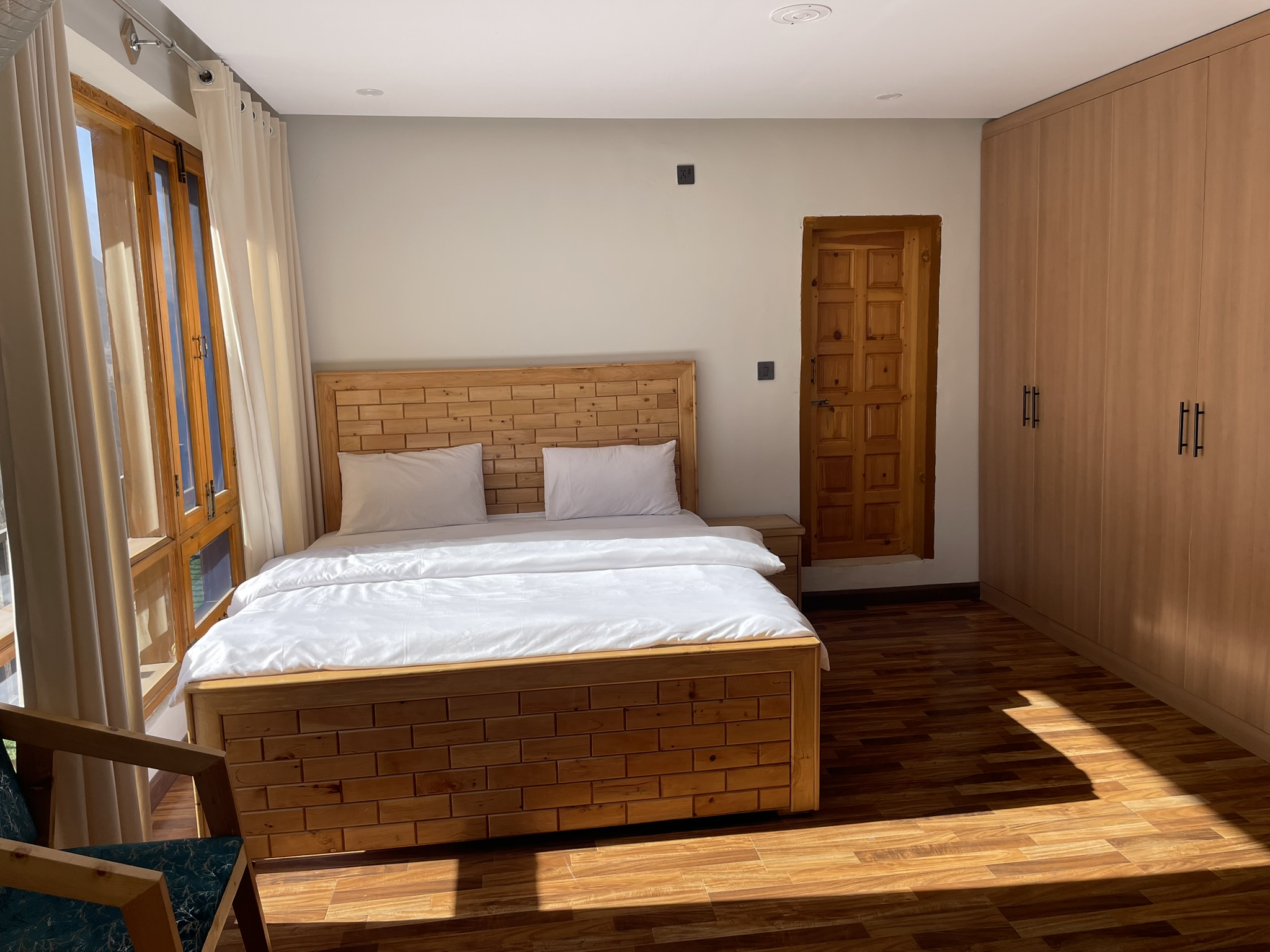
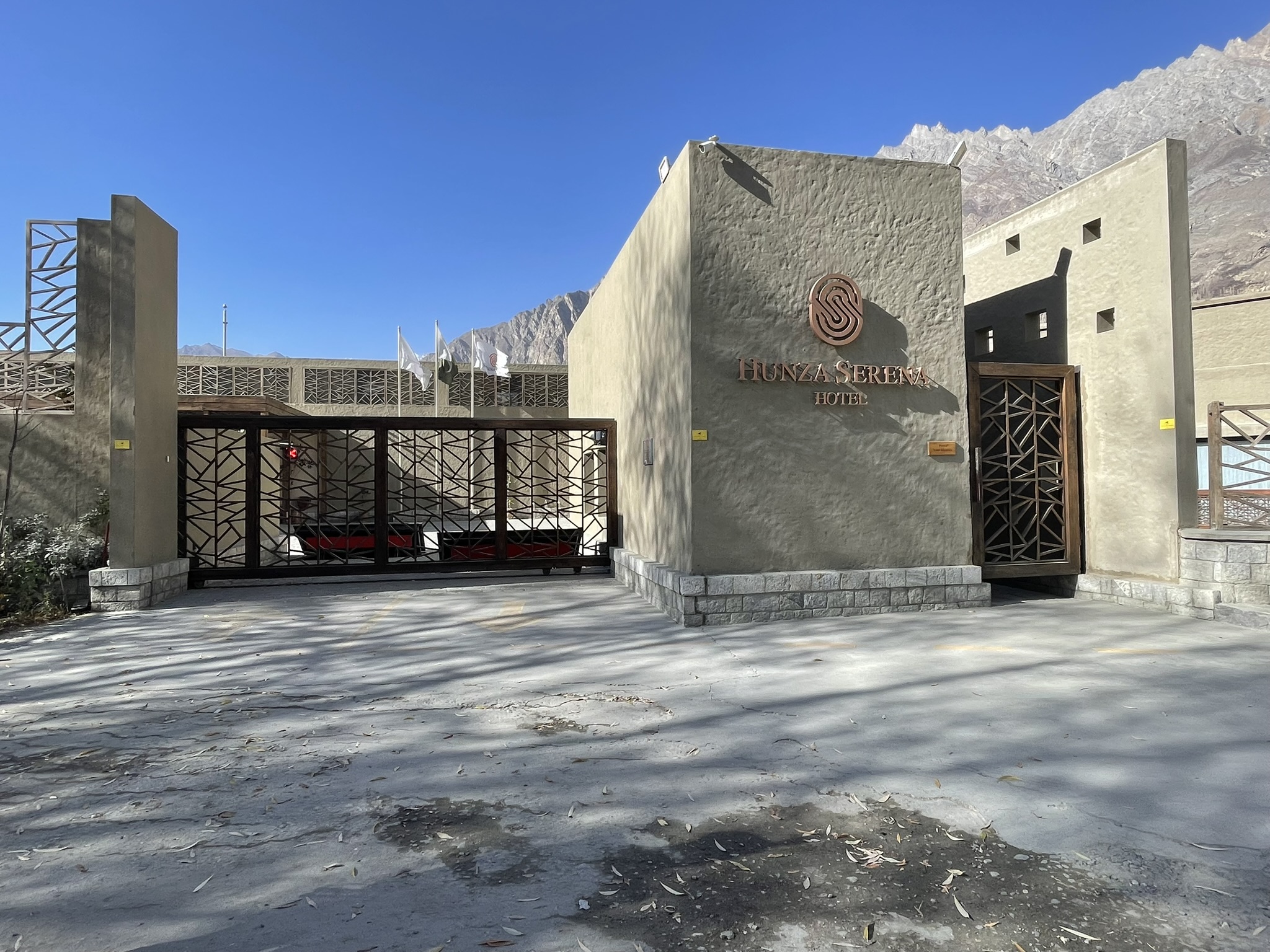
We proceed to the nearby town of Karimabad, which is the capital of Hunza district. We had planned to eat some yak meat here for which Hunza is famous. It is suggested that yak meat is better than beef, both from a taste and health perspective. However, we are cautioned against eating meat here, because the majority of the local population are not Muslim. A local hotel here, the Hunza Story Hotel, is managed by a Sunni Muslim. We stop here for some coffee but he does not have any Ḥalāl yak meat and cannot recommend anyone else. The rooms are modest here but expensive at 30,000 PKR (£80) per room including breakfast. Hunza is a popular tourist destination and other hotels are more expensive.
Baltit Fort
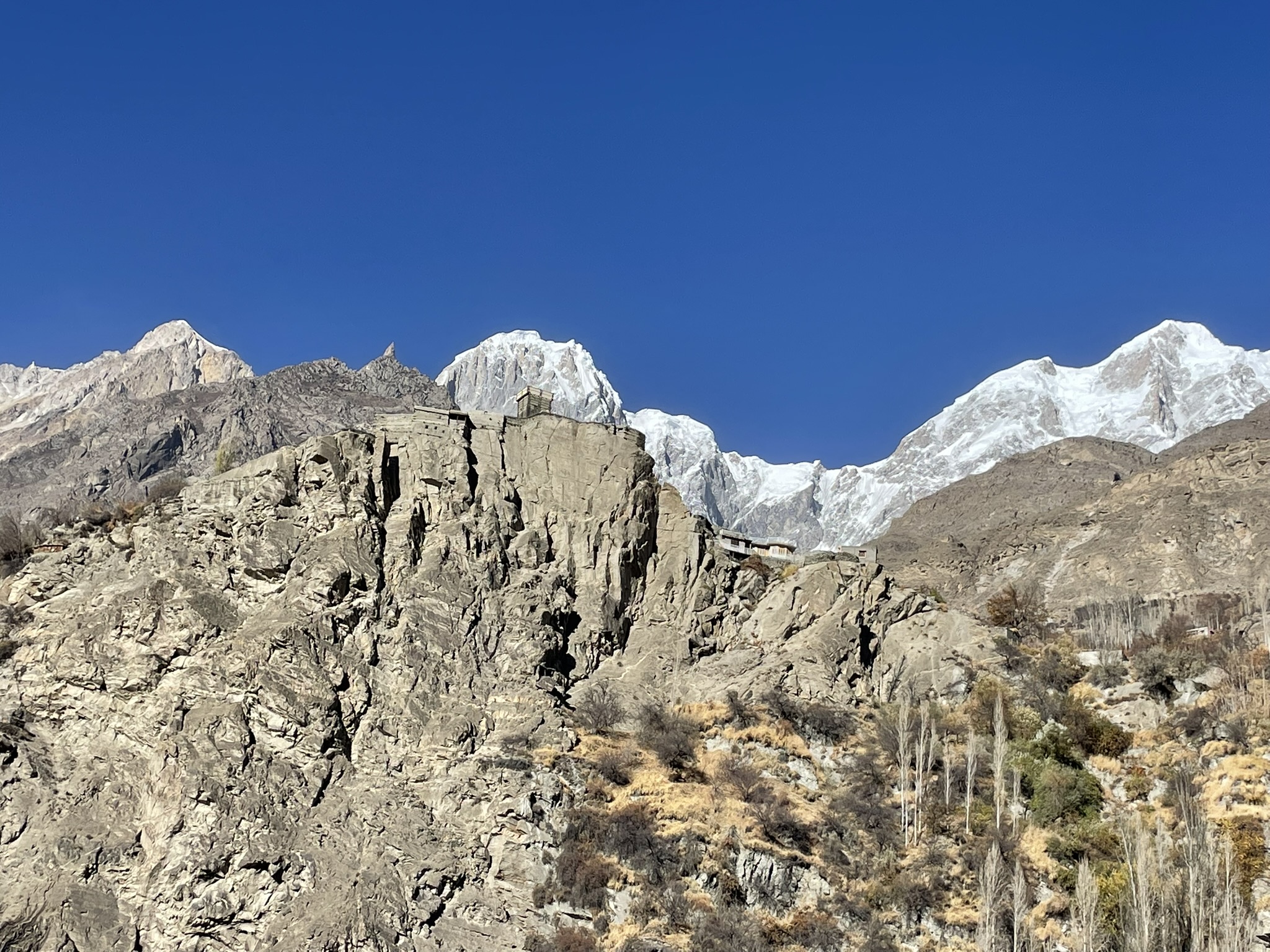
We pass the Serena Hotel of Hunza and ascend to the Baltit Fort, one of two forts in this region, the other one is the Altit Fort.
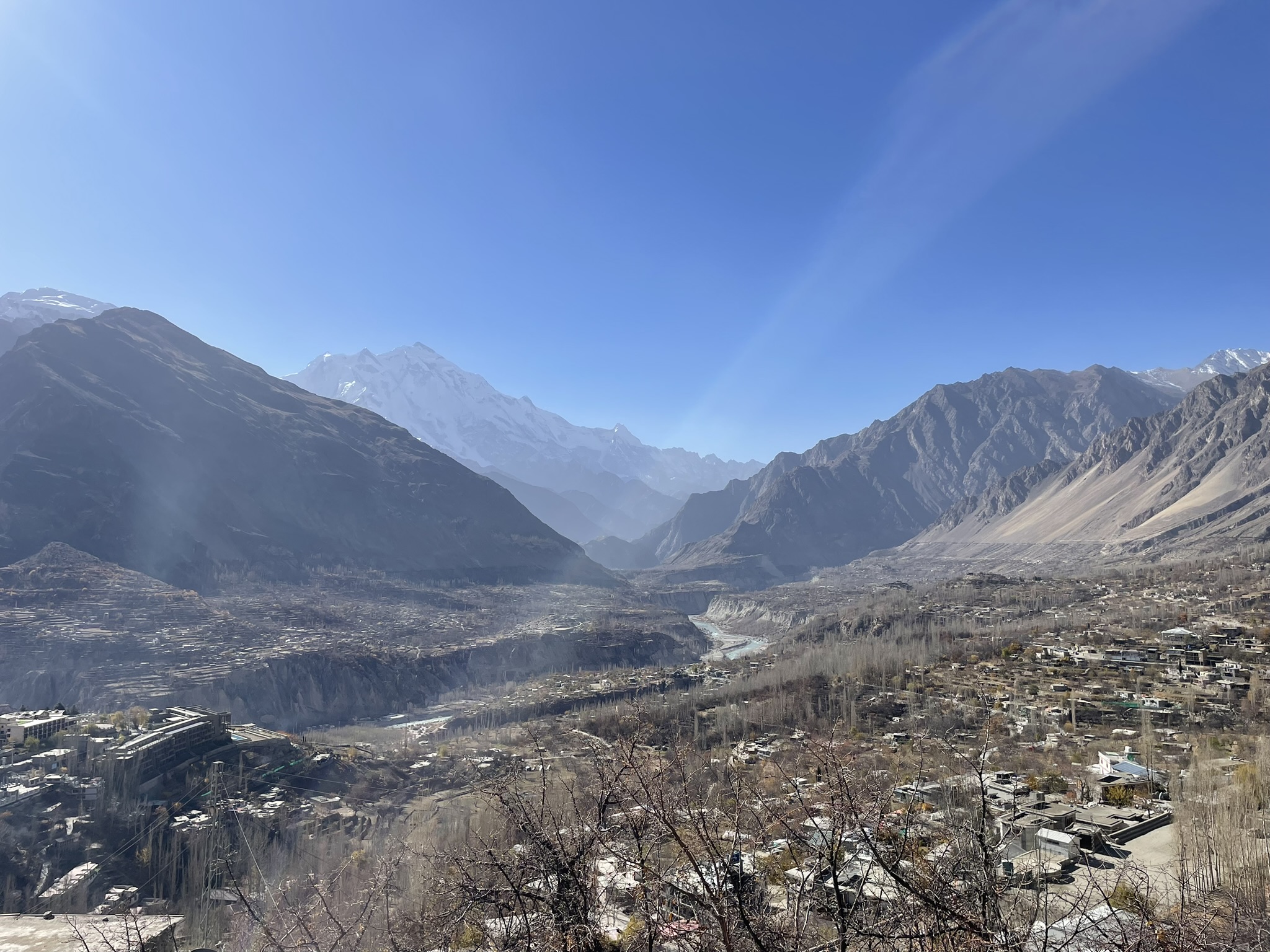
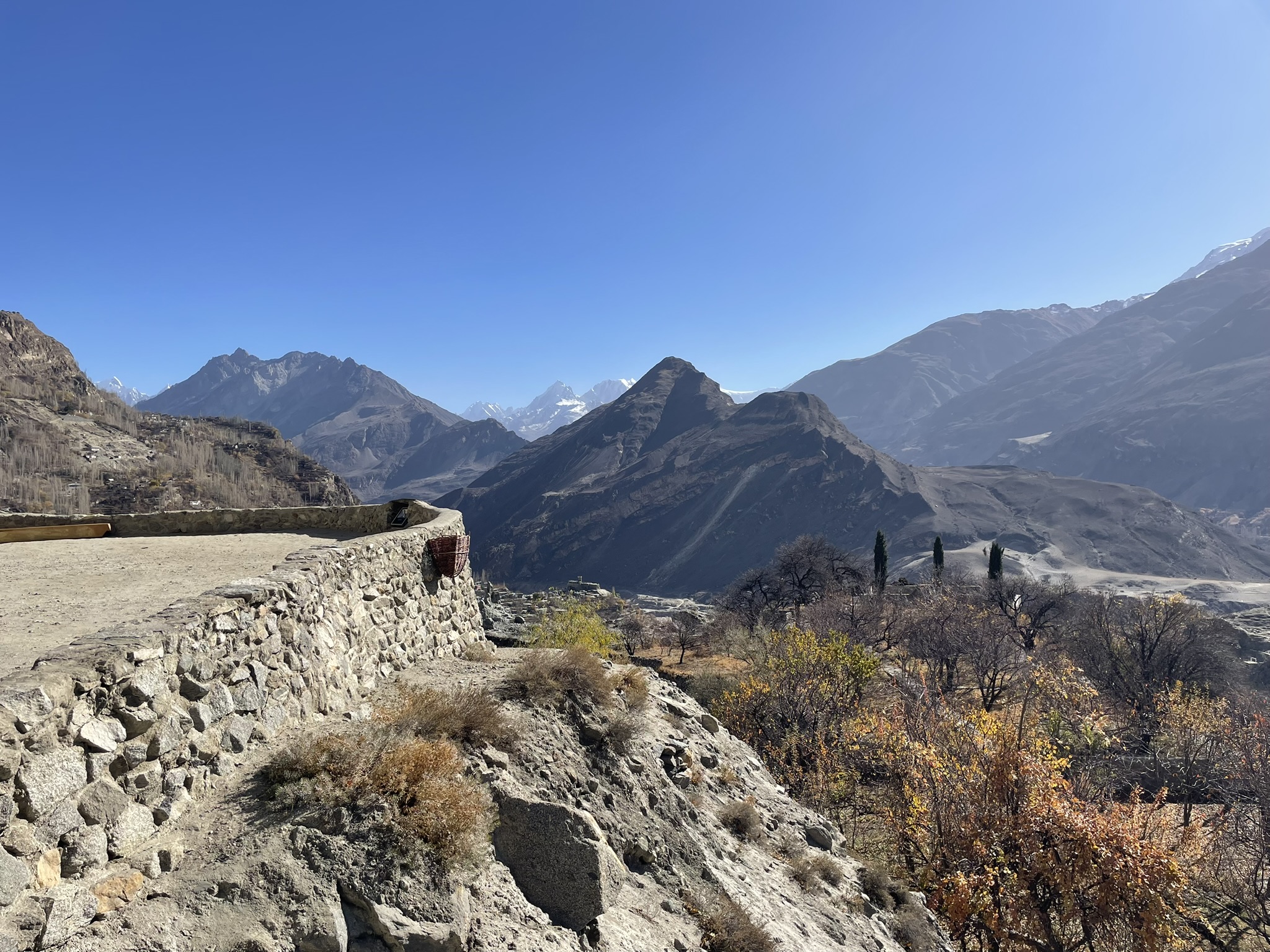
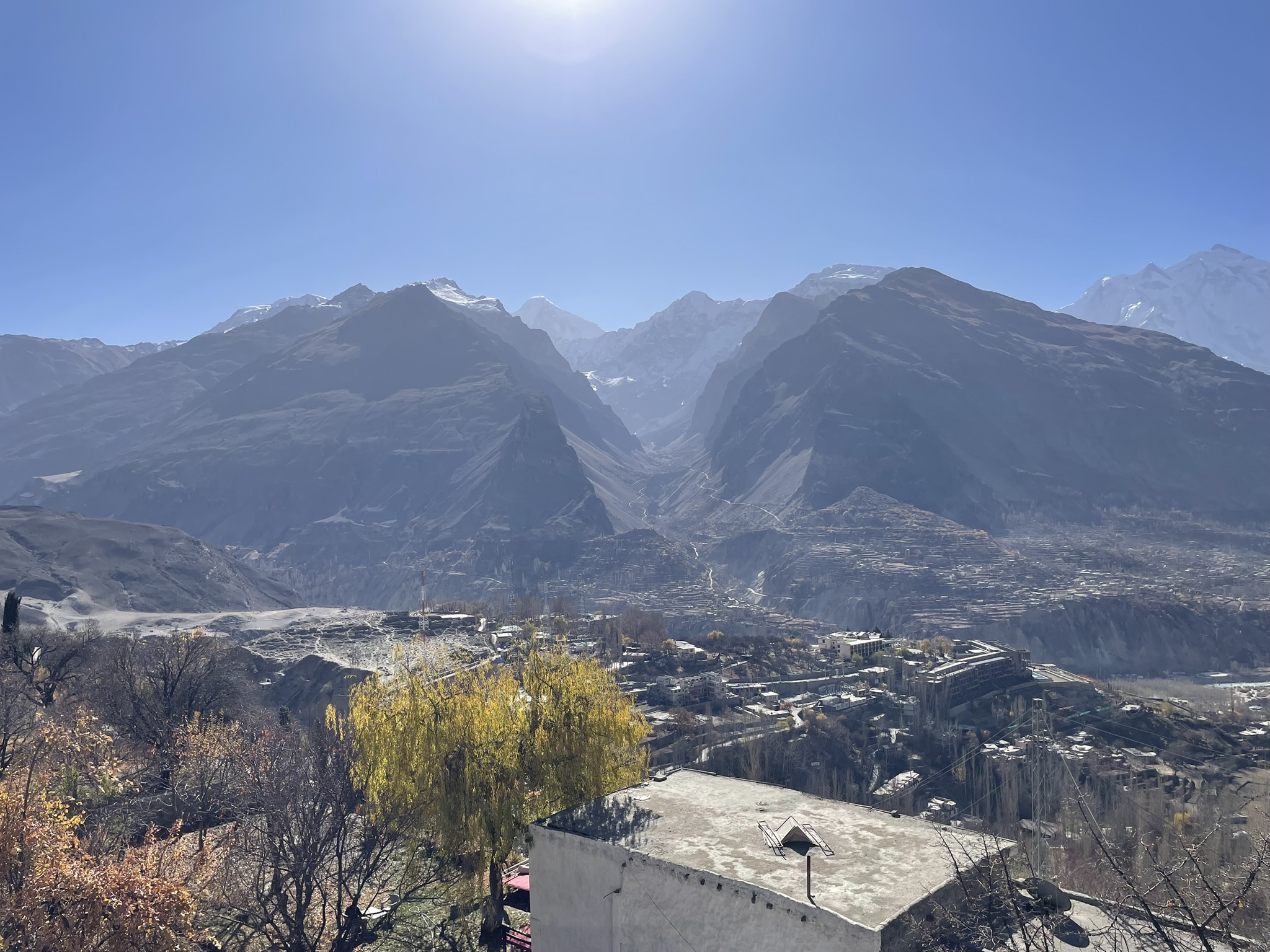
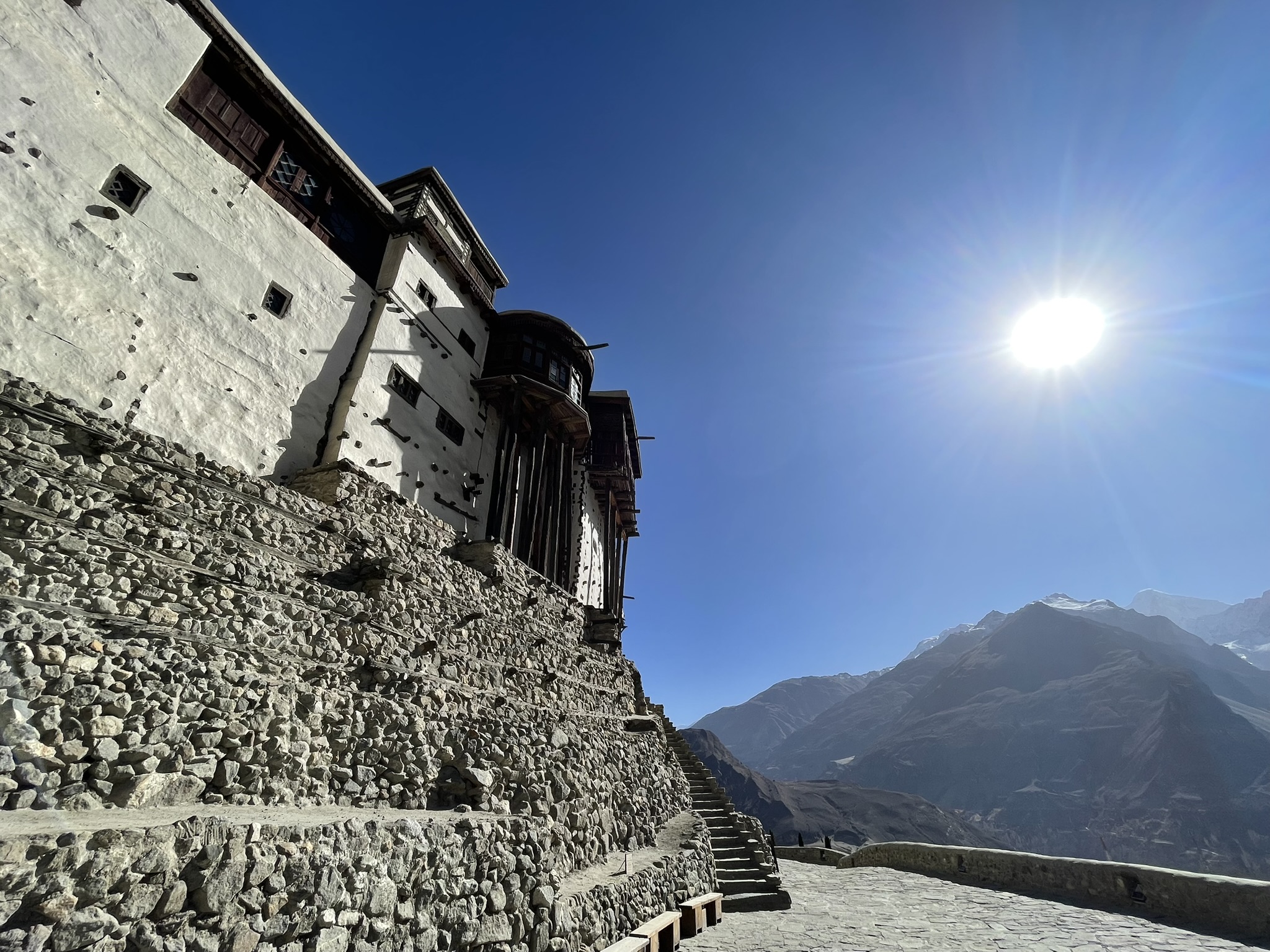
The Baltit Fort stands at 2500 metres high. The entrance fee for locals is 300 PKR (£0.80), 600 PKR (£1.60) for other Pakistanis and 2000 PKR (£5.50) for foreigners.
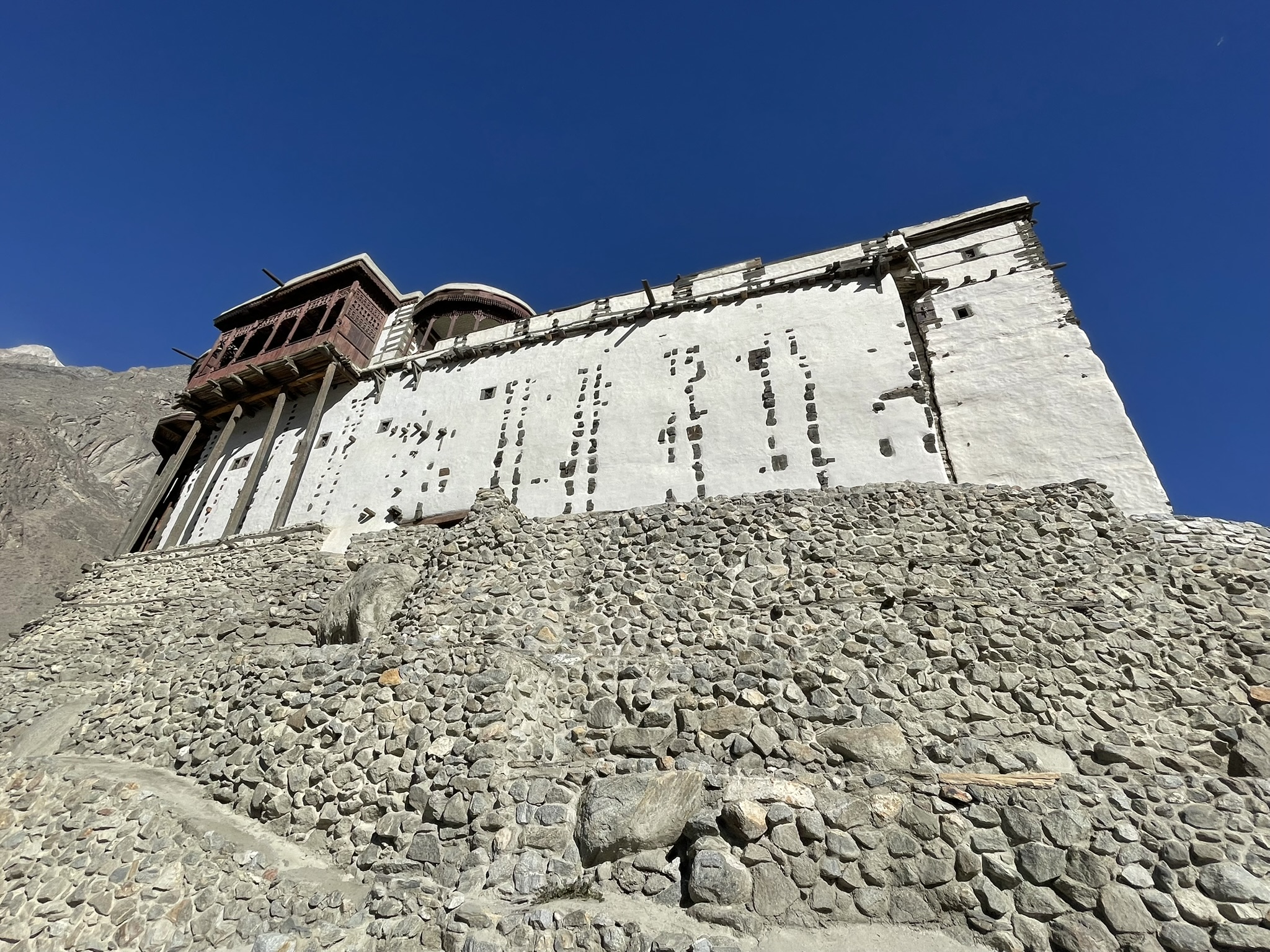
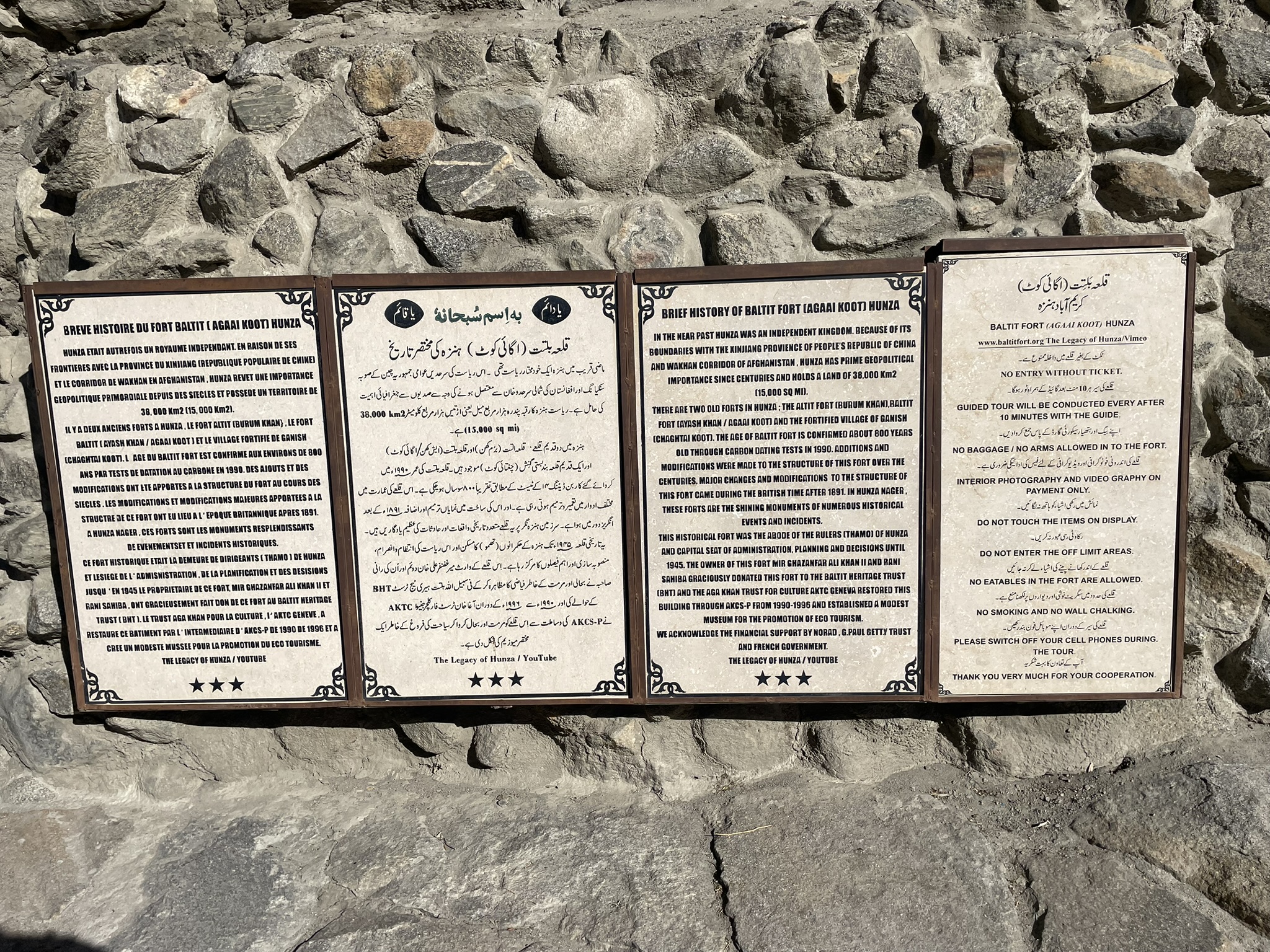
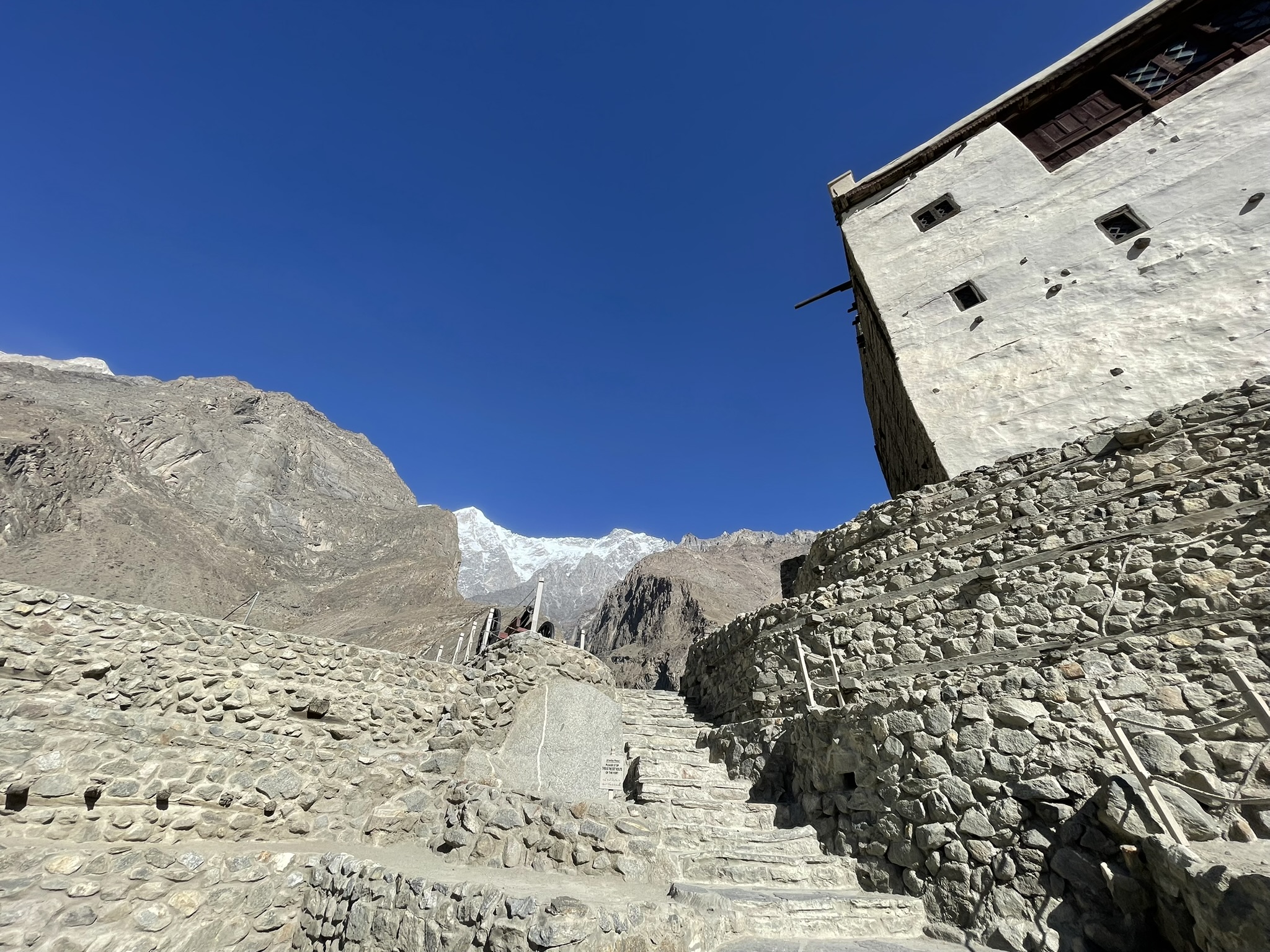
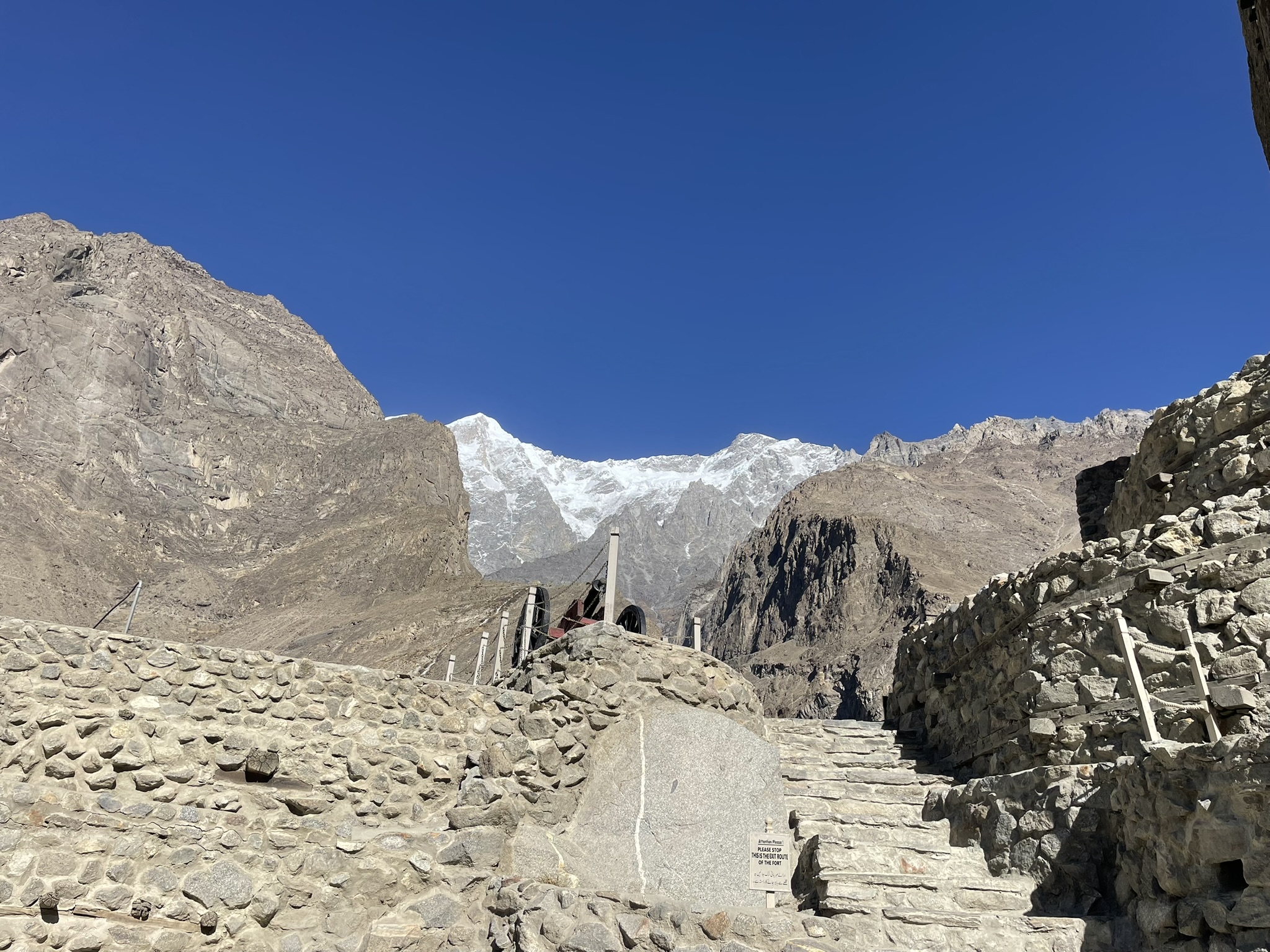
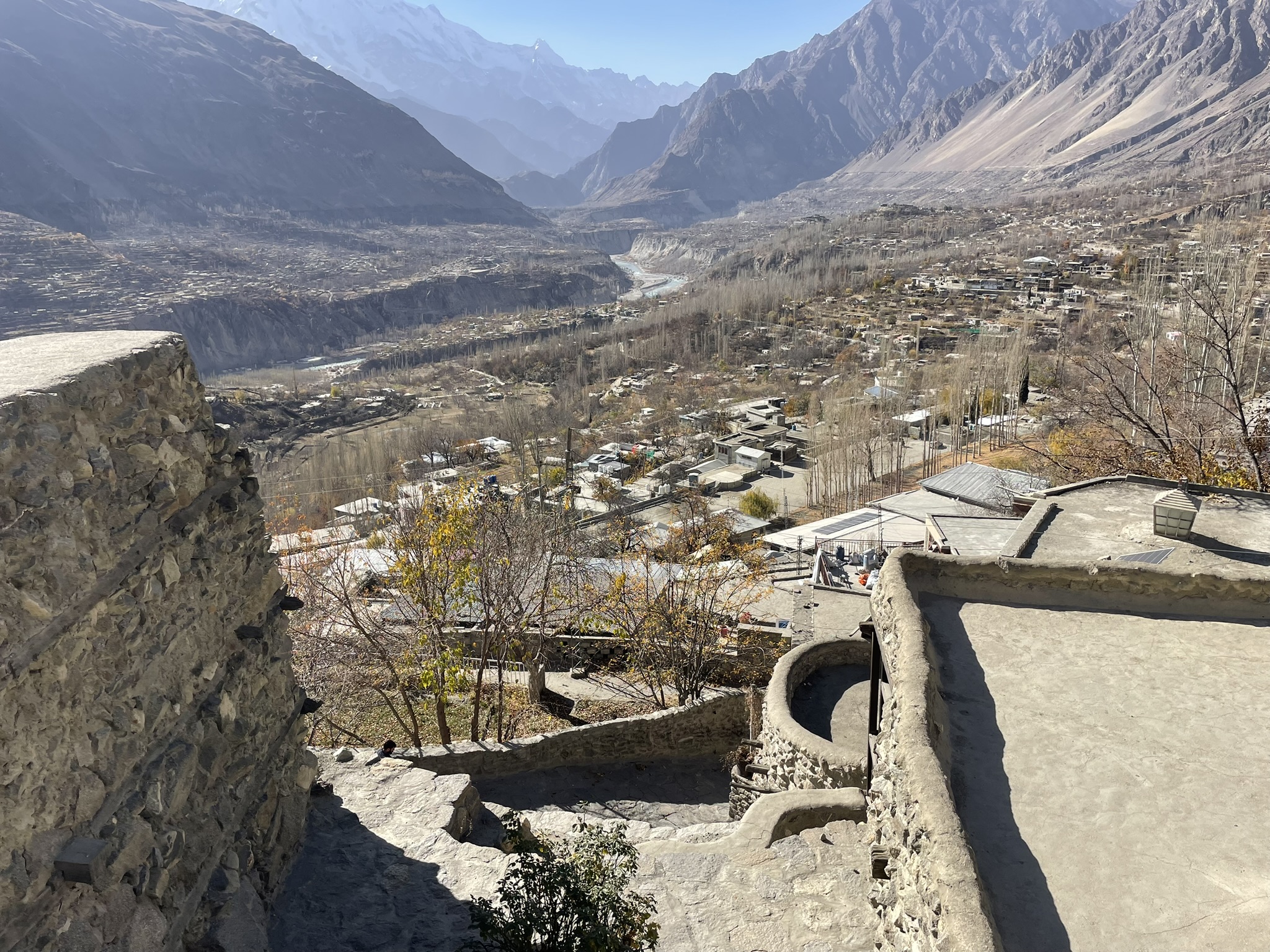
It was established in the 8th century and was the residence of the Mirs of Hunza for many centuries. In 1945, it was abandoned and the Mirs moved to a new palace down the hill. The Aga Khan Trust for Culture renovated it and it has been on the tentative list of UNESCOs world heritage sites since 2004. The UNESCO website states:
“Baltit Fort is situated in Karimabad, once was capital of the state of Hunza, now Tehsil Headquarter of District Gilgit. It is approached by Karakoram Highway from Gilgit, the capital of Northern Areas, Pakistan. The Baltit Fort stands on an artificially flattened spur below the Ultar Glacier. Strategically located with a commanding view of the Hunza Valley and its Tributaries, its inhabitants controlled the seasonal Trans-Karakoram trade between south and Central Asia. The Baltit Fort is rectangular in plan with three floors and stands on a high stone plinth. Whilst the ground floor consists mainly of storage chambers, the first floor is oriented around as an open hall. A staircase leads to the second floor which was mainly used during the winter months and contains an audience hall, guest room, dining hall, kitchen and servants’ quarters. A further staircase leads up to the third floor which is partly open to the elements and contains the summer dining room, audience chamber, bedroom and reception hall. Inhabited by the Mir, or ruler of Hunza until 1945. The conservation work carried out in the 1990 indicated that the core of the structures, a single defensive timber and stone tower, had been built in the eight century A.D. This tower was augmented by additional towers and linked by a single-story construction consisting of small rooms and sub-surface storage chambers. The complex was then later expanded by the addition of a second, and then a third floor. The structure’s stone walls, built in an area of frequent seismic movements, were provided with a traditional internal framework of timber for greater stabilisation.”
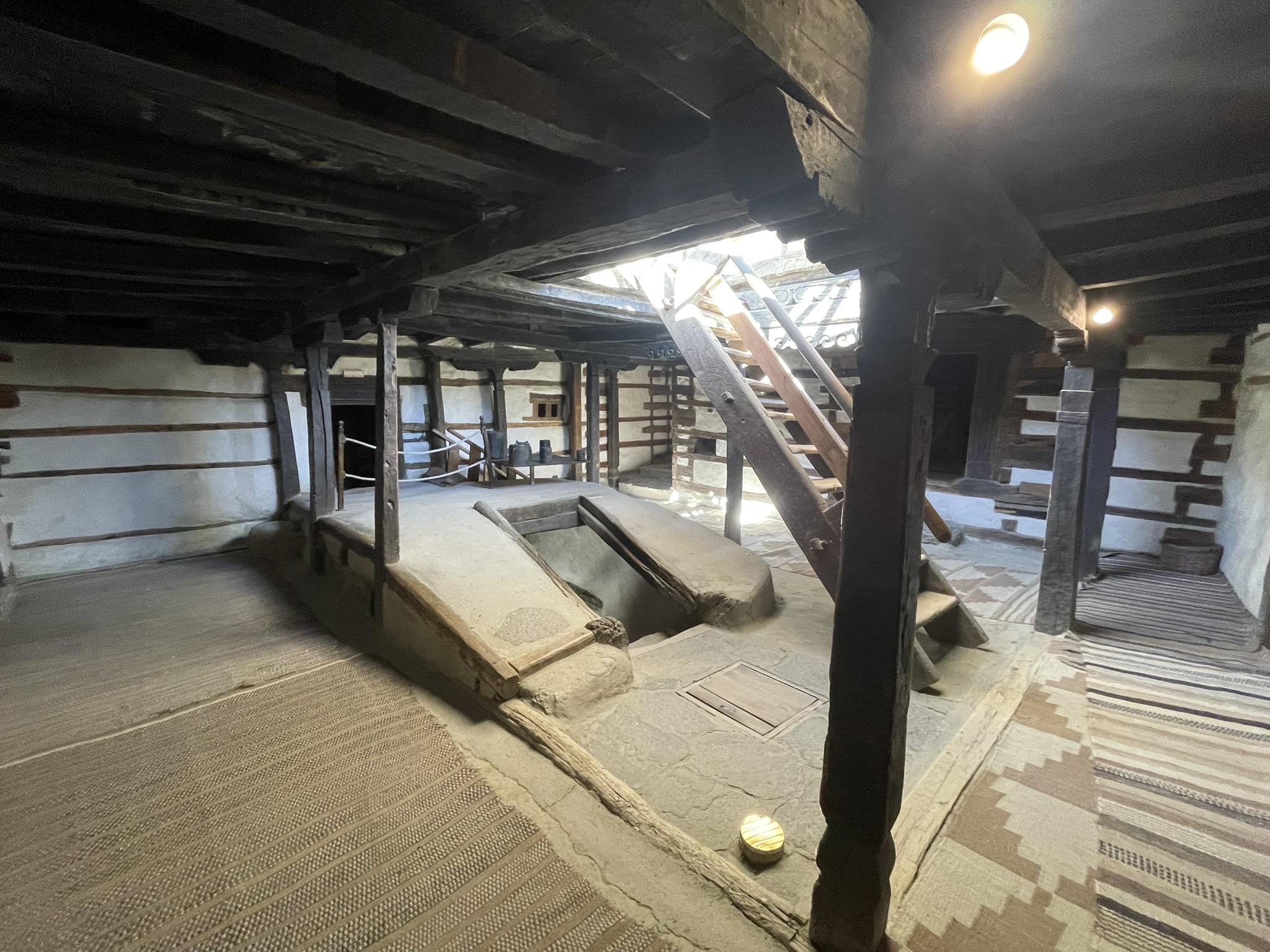
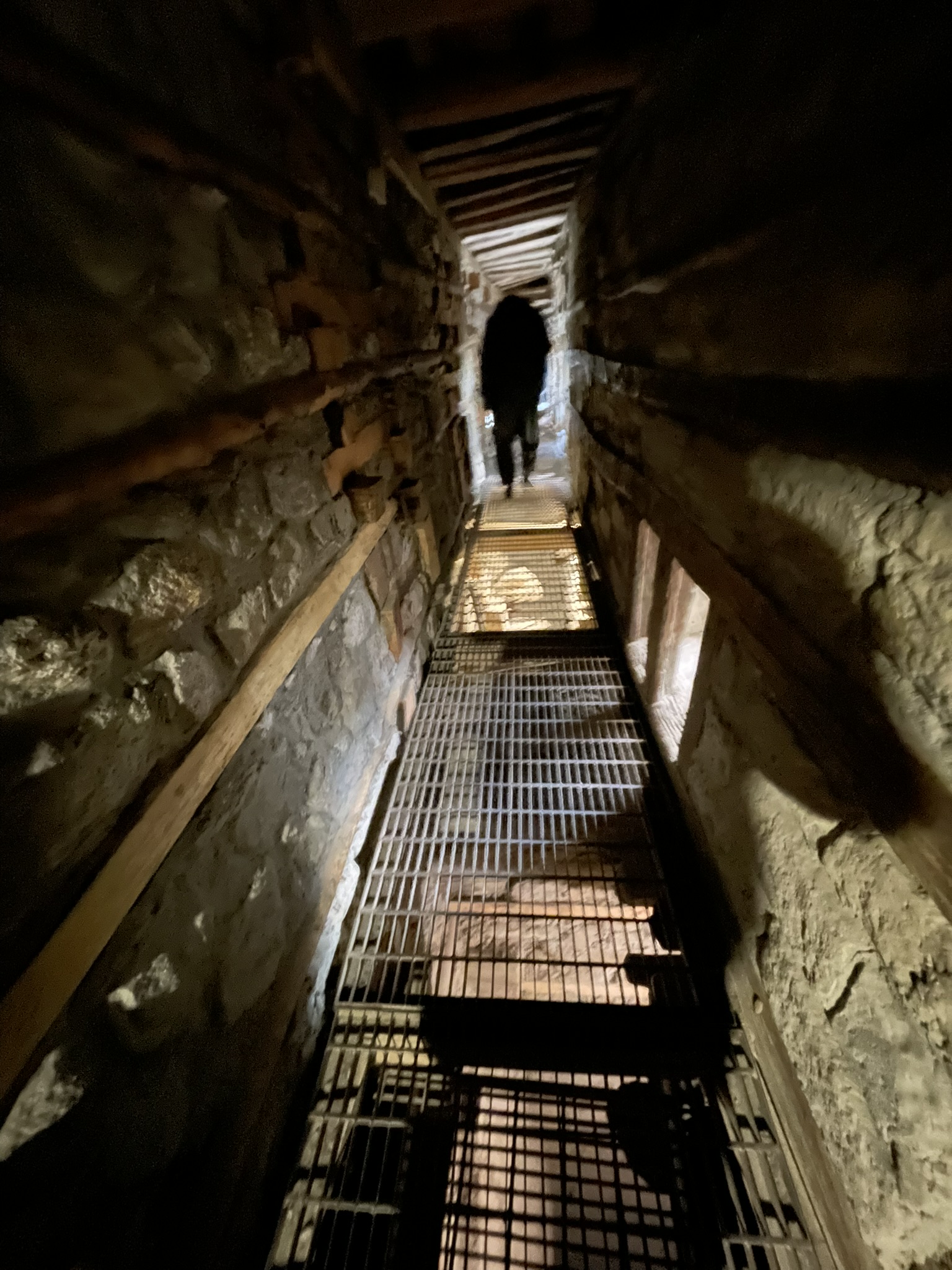
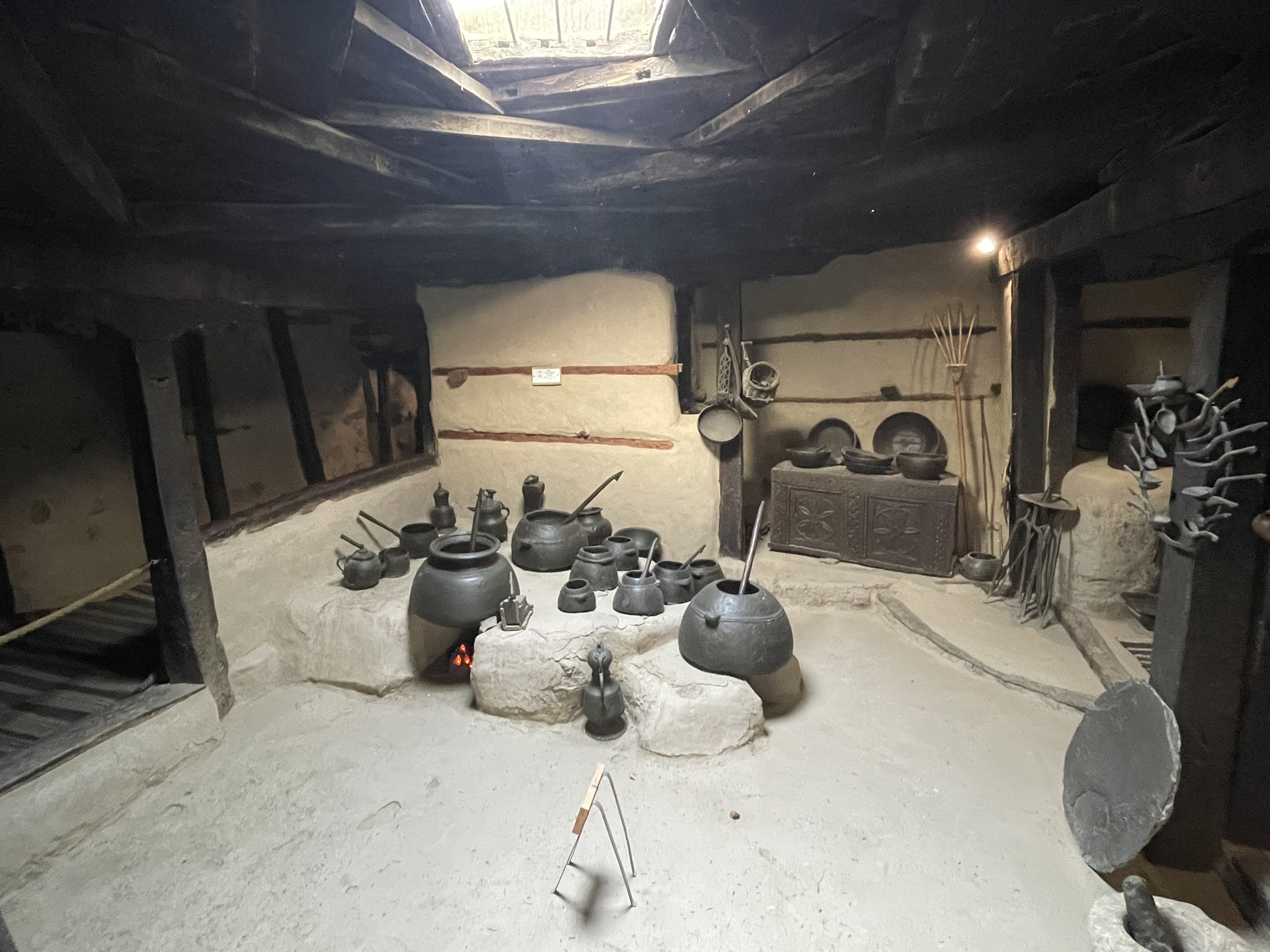
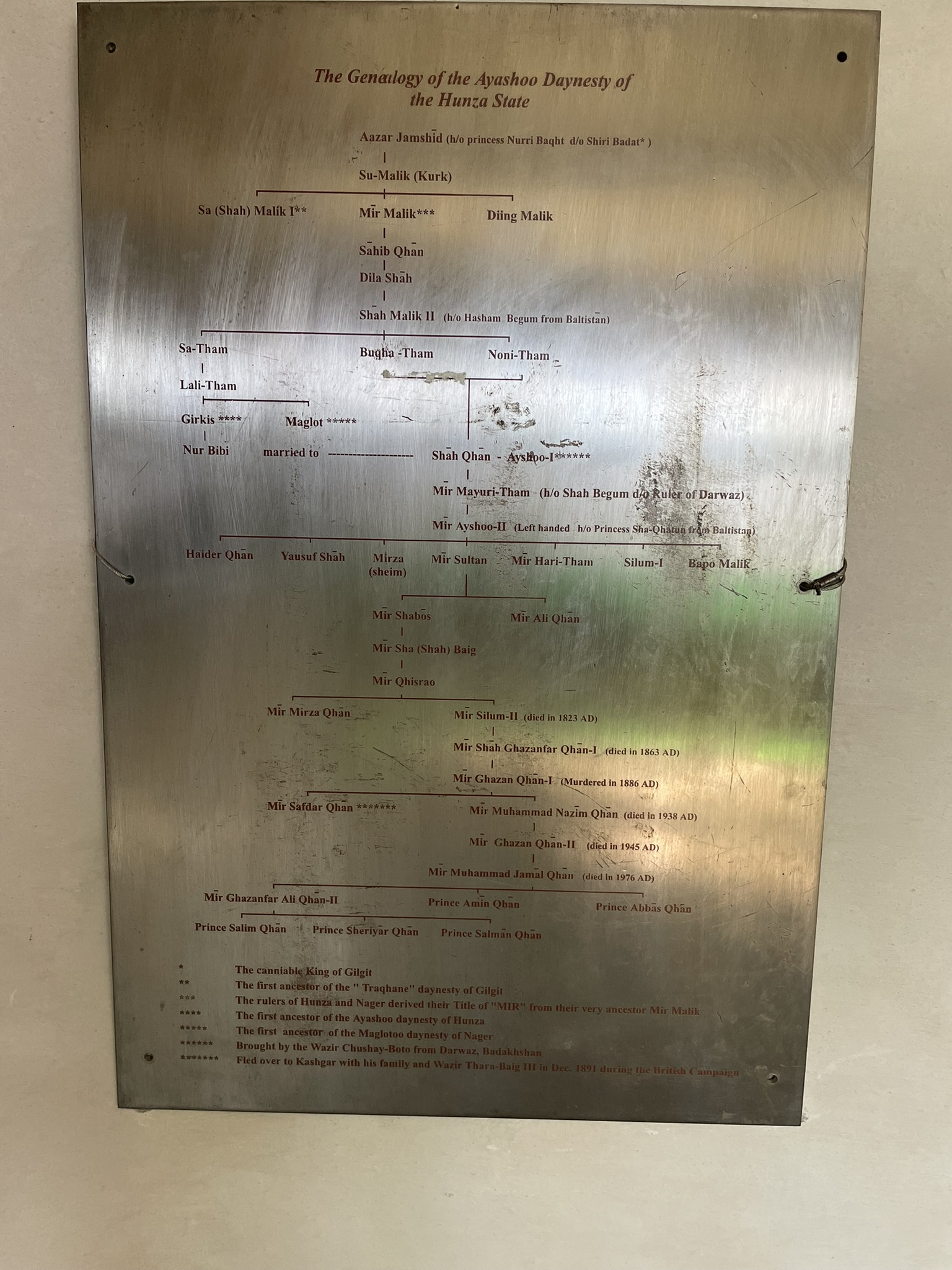
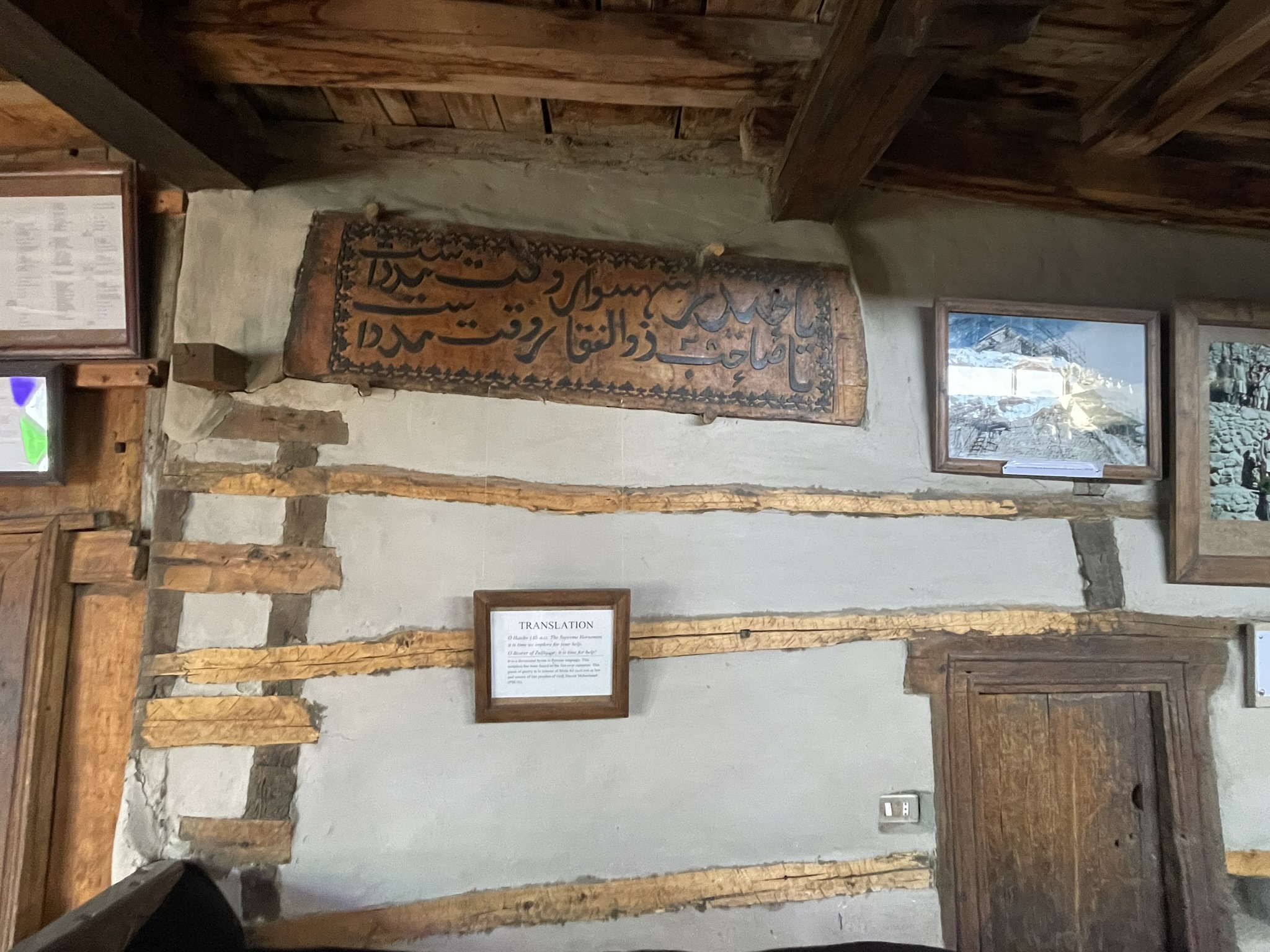
We are given a guided tour of the fort at midday, which provides some good insight into the history and culture of the region. Outside the fort, a local shop keeper is selling pure Shilajet, that is sourced from this region and transported worldwide. Interestingly, he mentions that the people of Hunza do not eat Shilajet and do not need to because the glacier water which they drink contains minerals, so much that it outweighs the benefits of Shilajet. The water in this region does taste different. One of our local colleagues suggest that along with the water, the apricot has anti-ageing qualities. It is not apricot season at the moment.
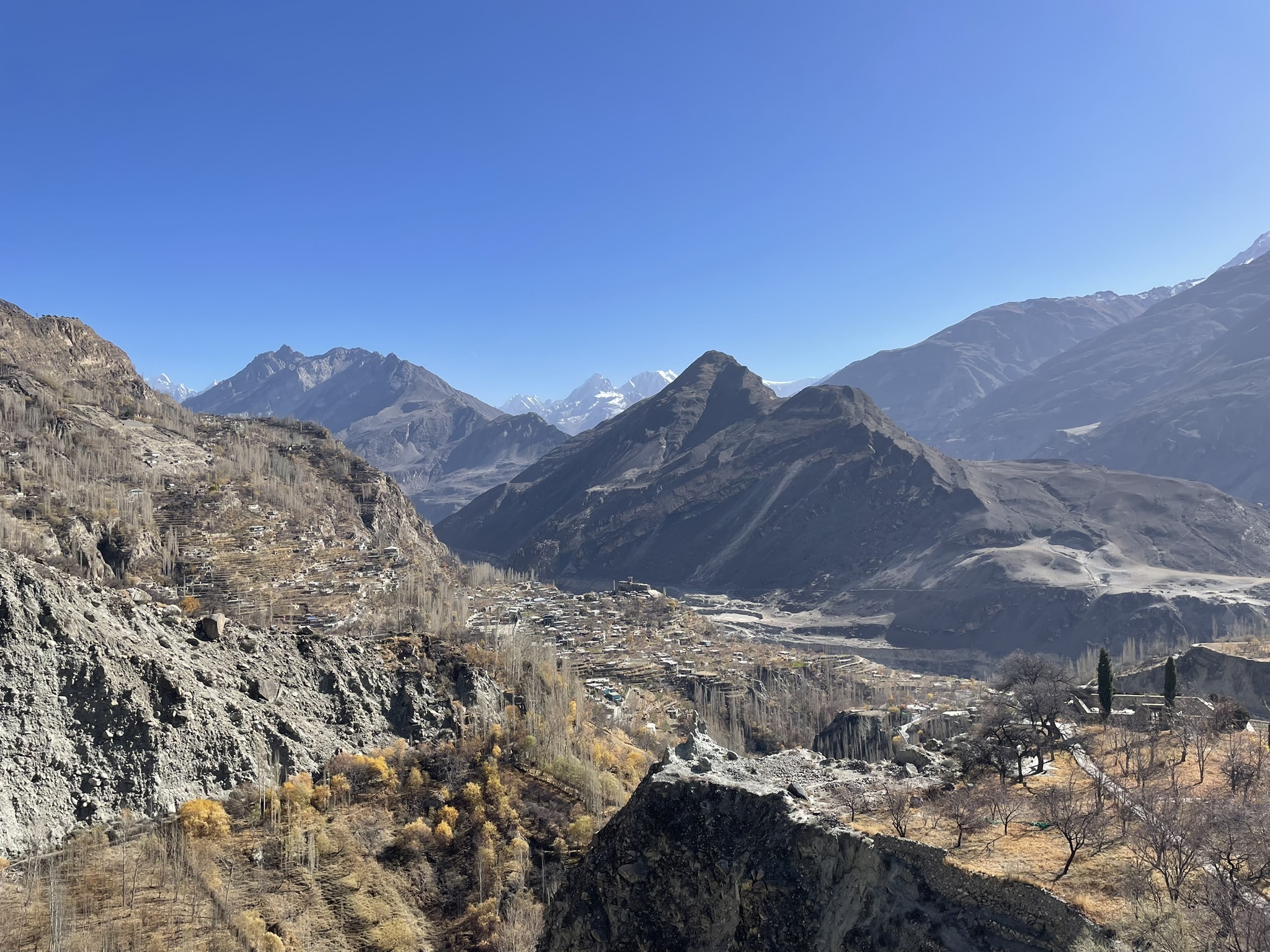
Attabad Lake
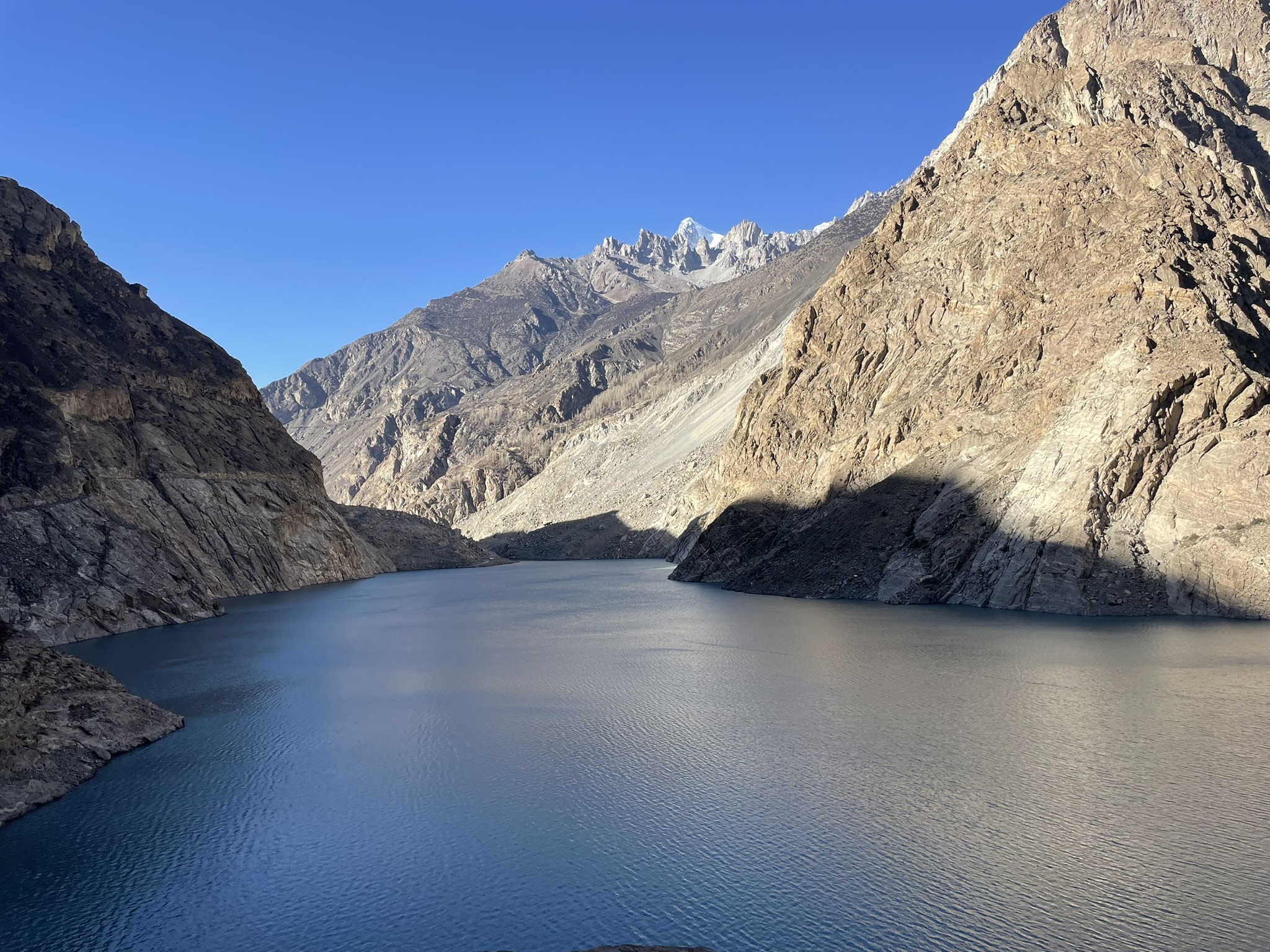
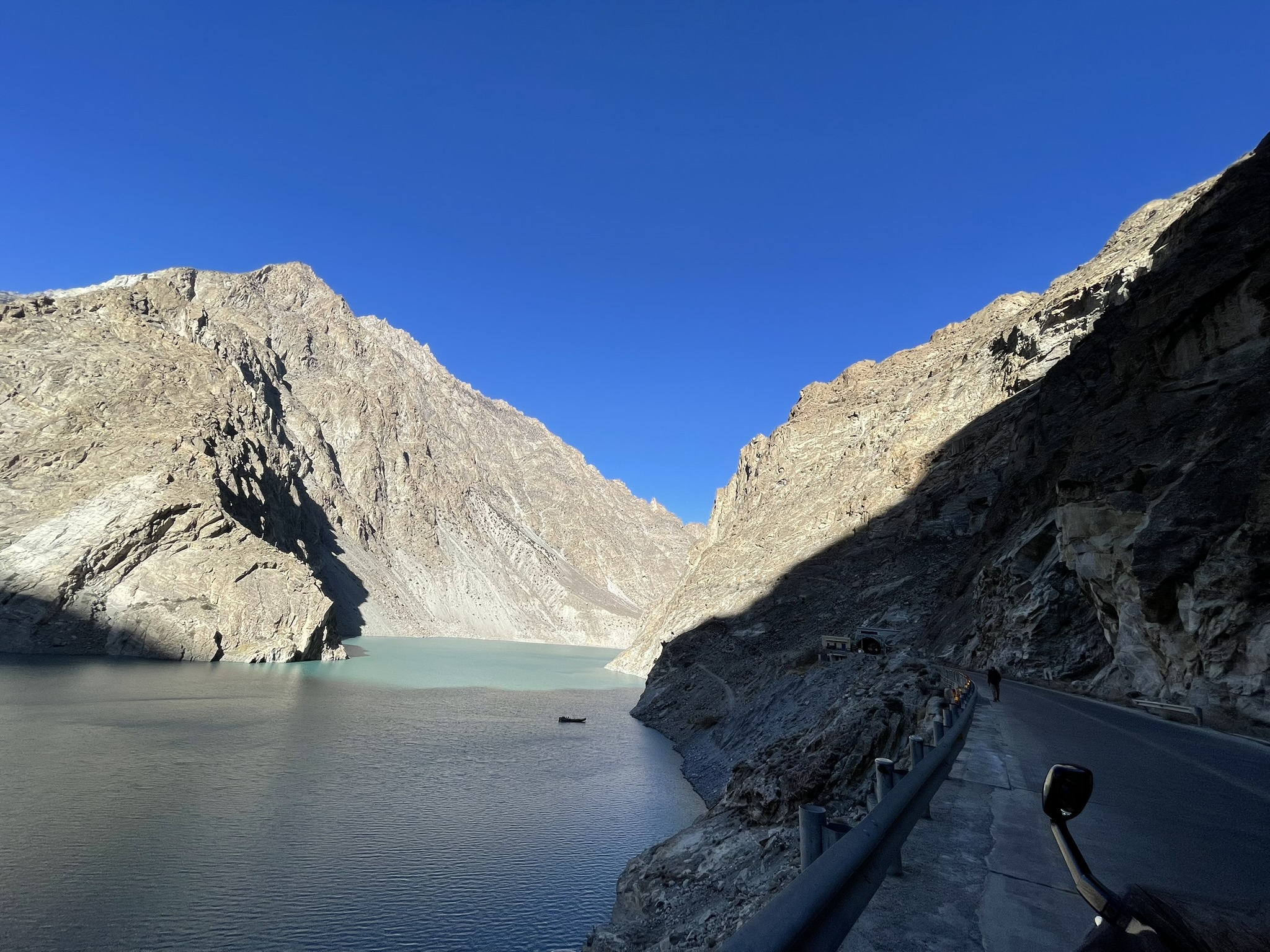
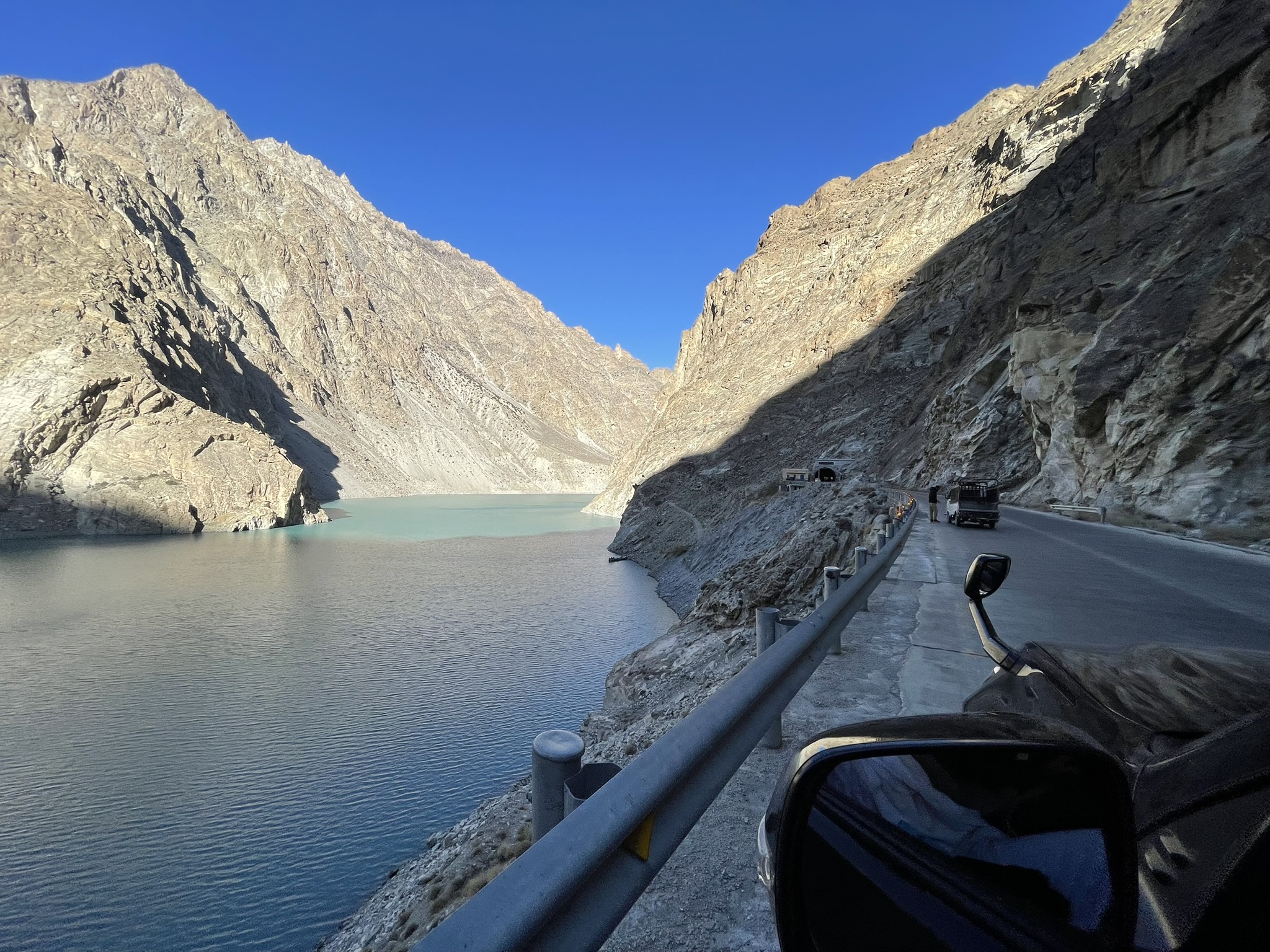
We continue our journey on the N35 Highway, pass the Altit Fort from a distance and thereafter the Attabad Lake. This lake was formed in January 2010 when a significant landslide impounded the water in the Hunza River in Attabad village, and took the lives of twenty people. Several villages were drowned under the water and thousands were displaced. A part of the N35 Highway was also submerged due to this landslide. In 2015, the realigned 24km patch of the Highway containing five tunnels were inaugurated. These five tunnels are known as the Pakistan-China Friendship Tunnels, and are collectively seven kilometres long.
Breathtaking scenery in the Hunza region of Gilgit-Baltistan, Pakistan pic.twitter.com/CvrPhXXfJj
— Dr Yusuf Shabbir (@ibn_shabbir) December 16, 2025
Hussaini Suspension Bridge
We travel all the way to Passu and start the return journey. Generally, it is better to visit these places in the summer as the weather is better and there is much more water.
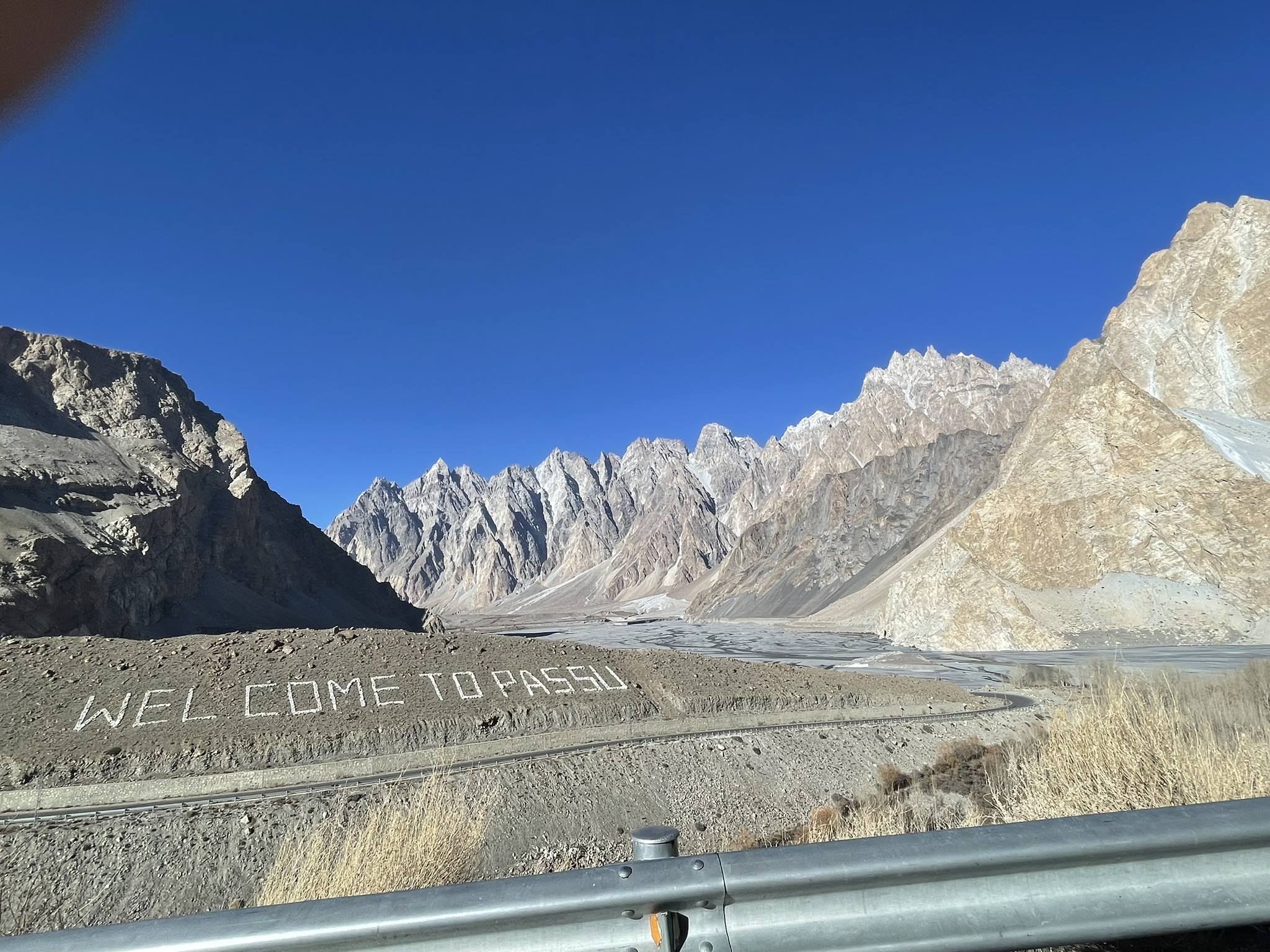
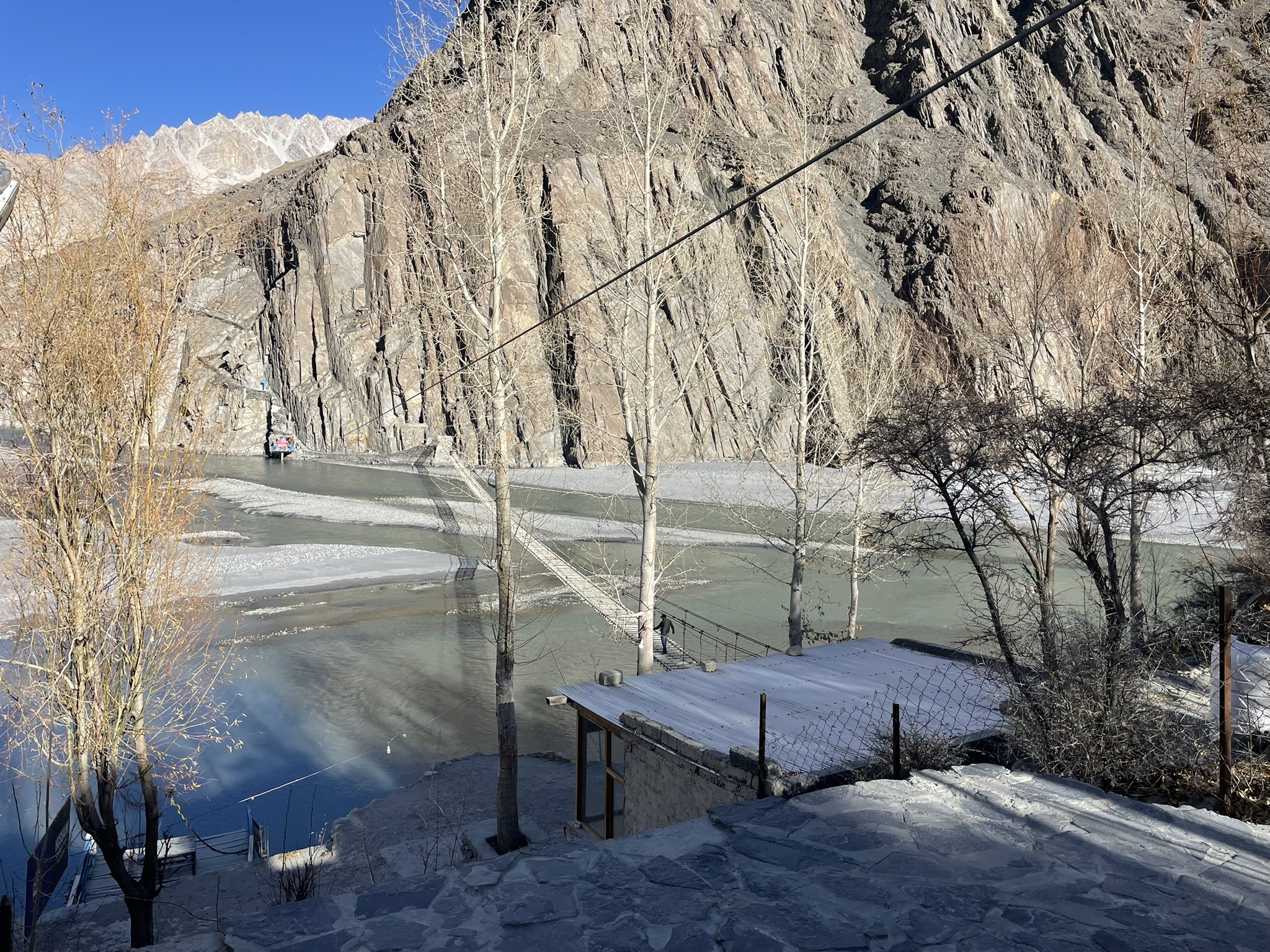
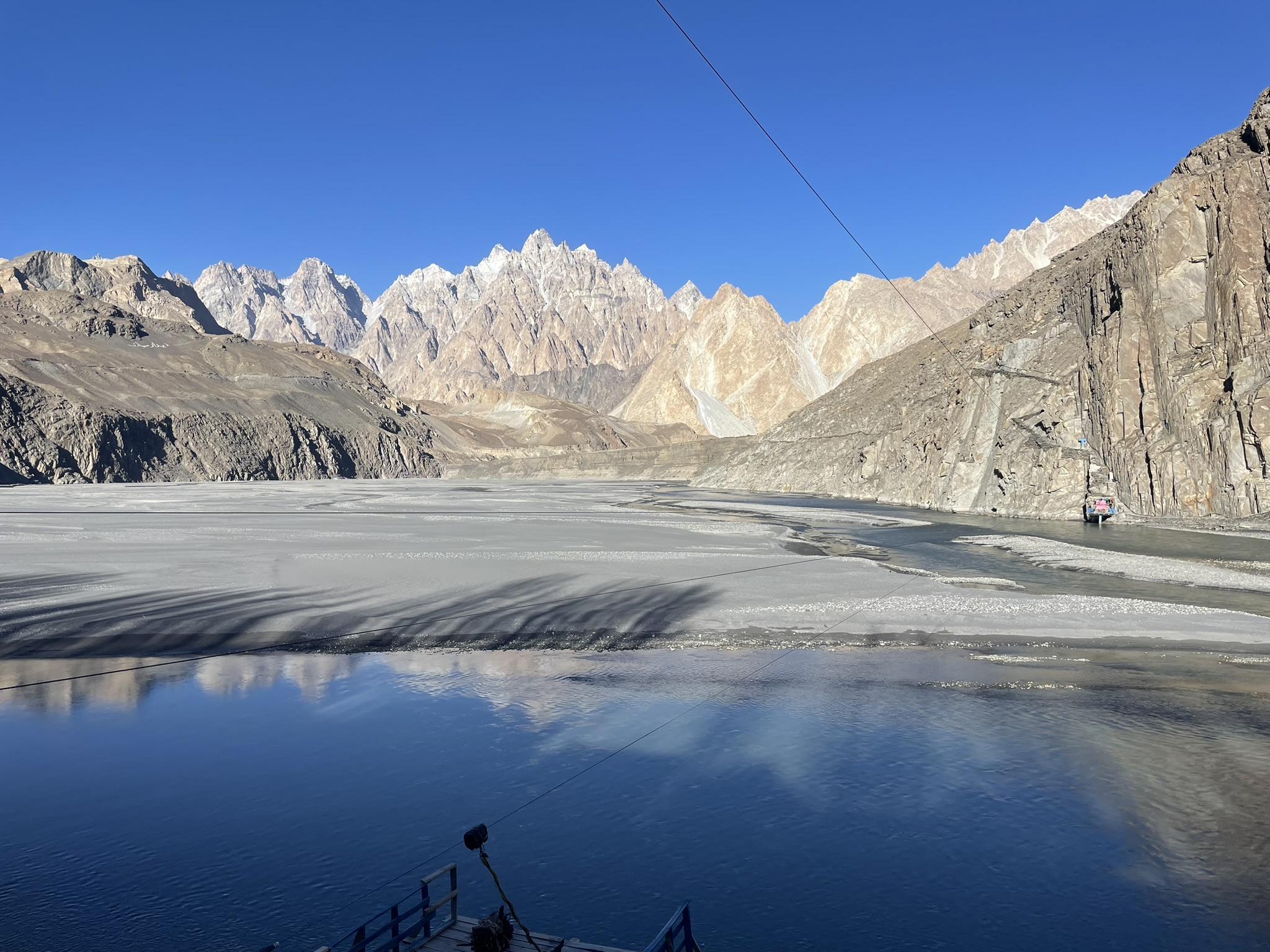
On our return, ten minutes from Passu, we stop at the Hussaini Suspension Bridge in Gojal, which is reached by walking down from the N35 Highway.
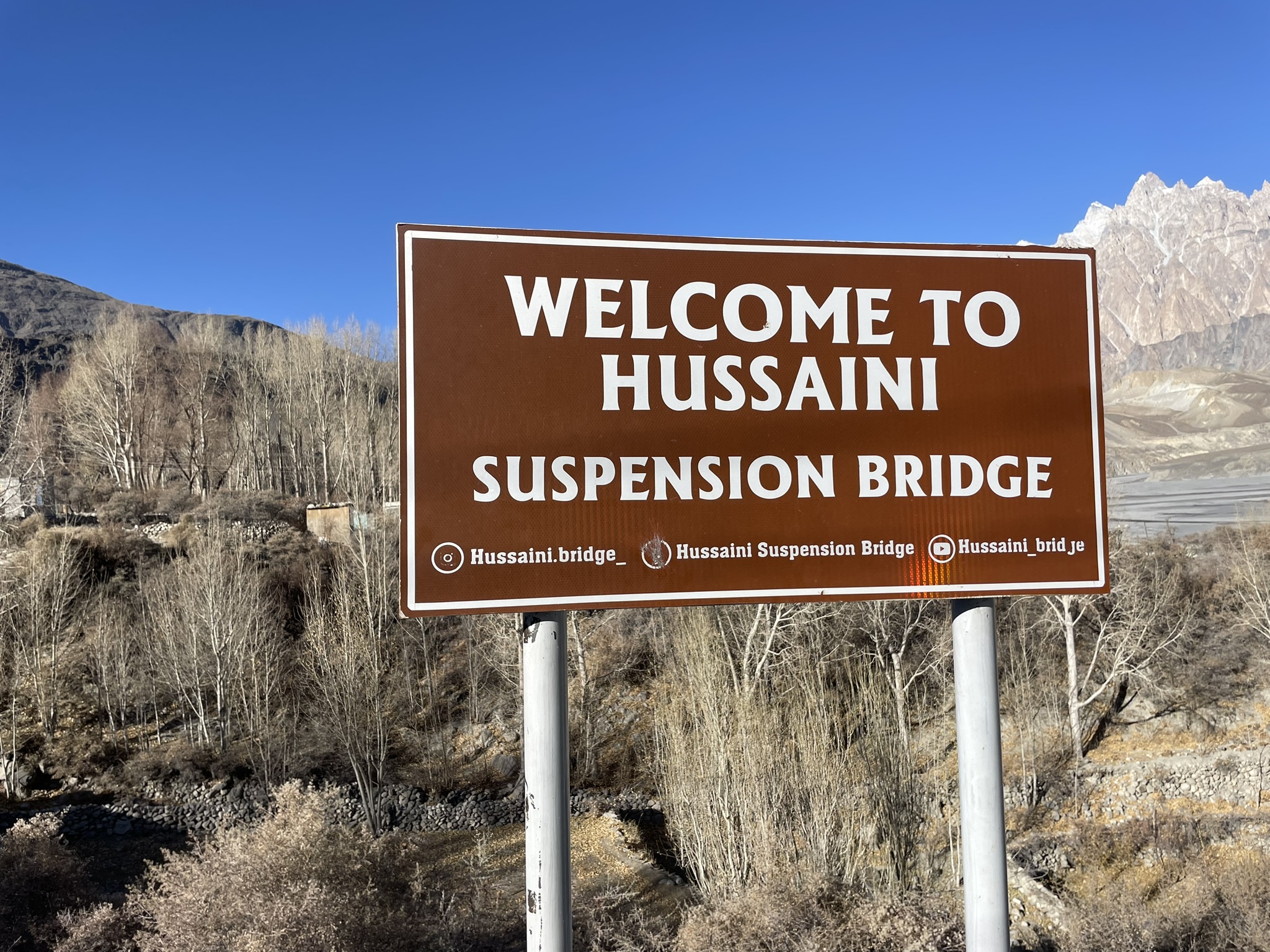
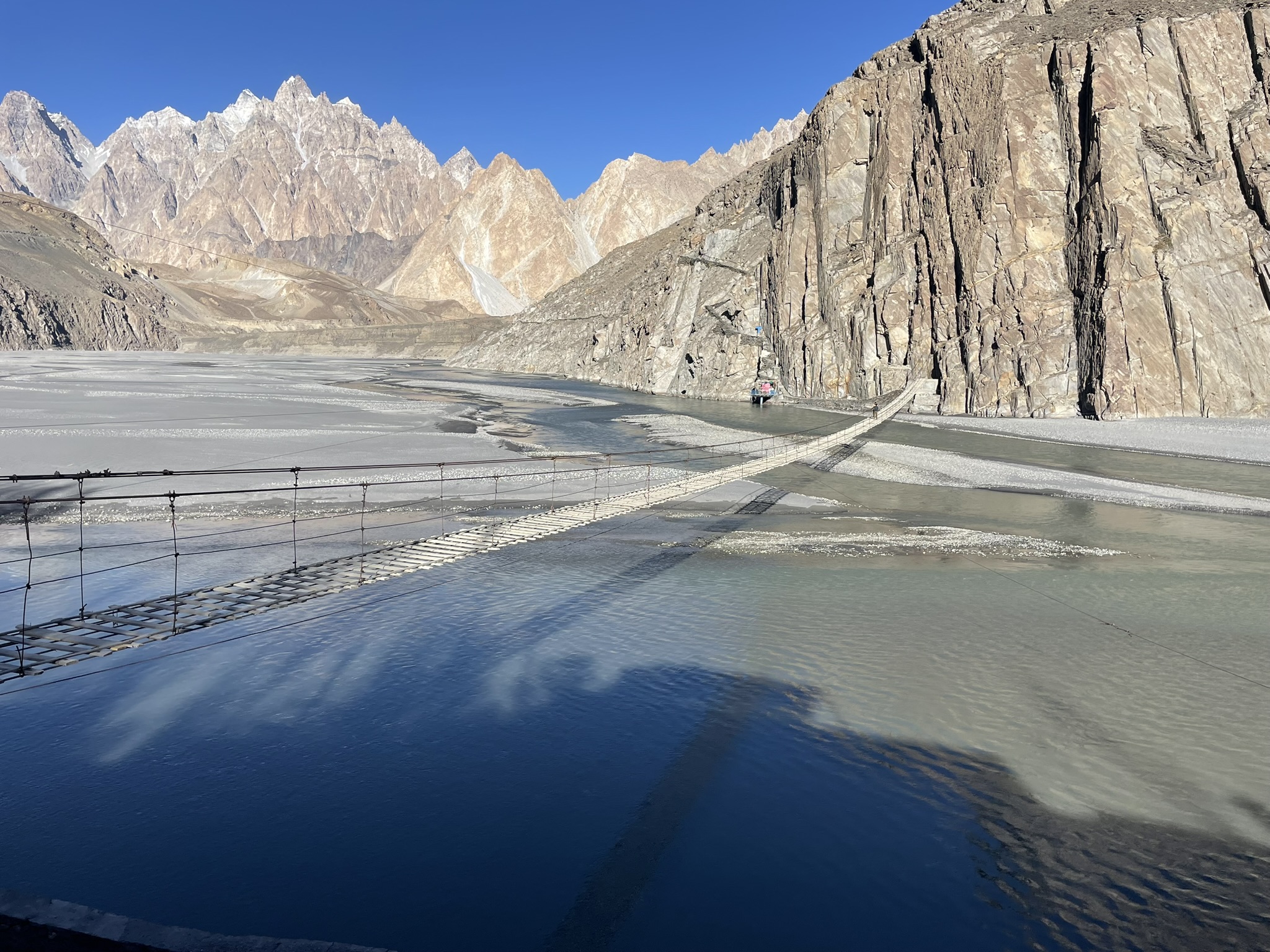
The bridge was originally established to provide locals access between the Hussaini and Zarabod villages over the Borit Lake. It has since become a popular tourist attraction due to its striking structure and dramatic location combined with it being among the world’s dangerous crossings. There is also a zip line that can be used to cross from one side to the other. My colleague Riaz is keen on using the zip line from one side to the other and returning on foot on the bridge. It is a scary experience, certainly not for the faint hearted. The bridge is 194 meter long, and the suspended structure consists of thin rectangular wooden planks held via six main ropes that support the entire length. The large empty spaces between the wooden planks are enough for one to fall down. Currently the water is shallow, however, in the summer, the water levels rise.
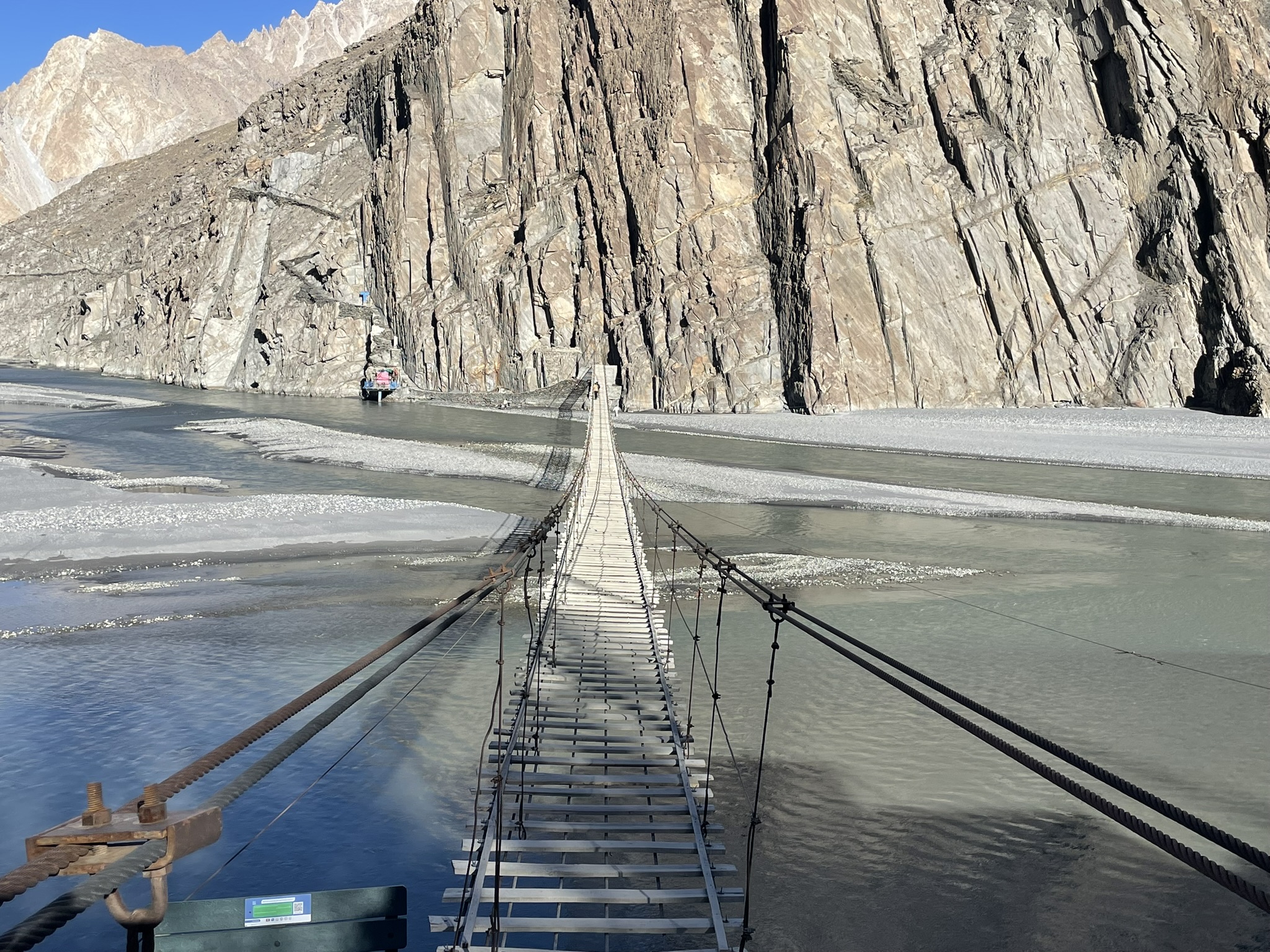
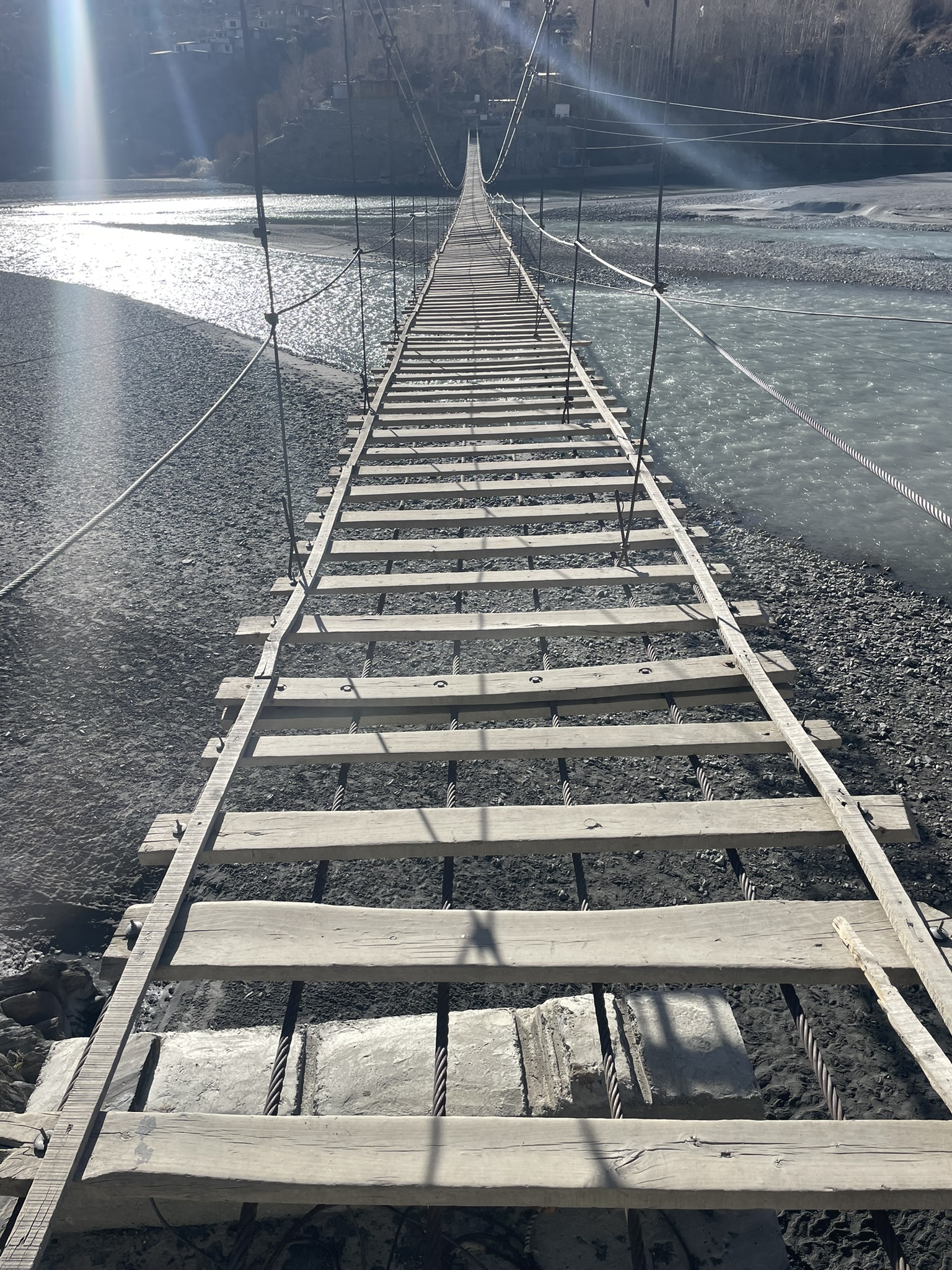
Whilst walking on it, one is reminded of the bridge in the hereafter. May Allah Almighty protect us and enable a swift crossover of that bridge, which is the real test.
Return to Gilgit
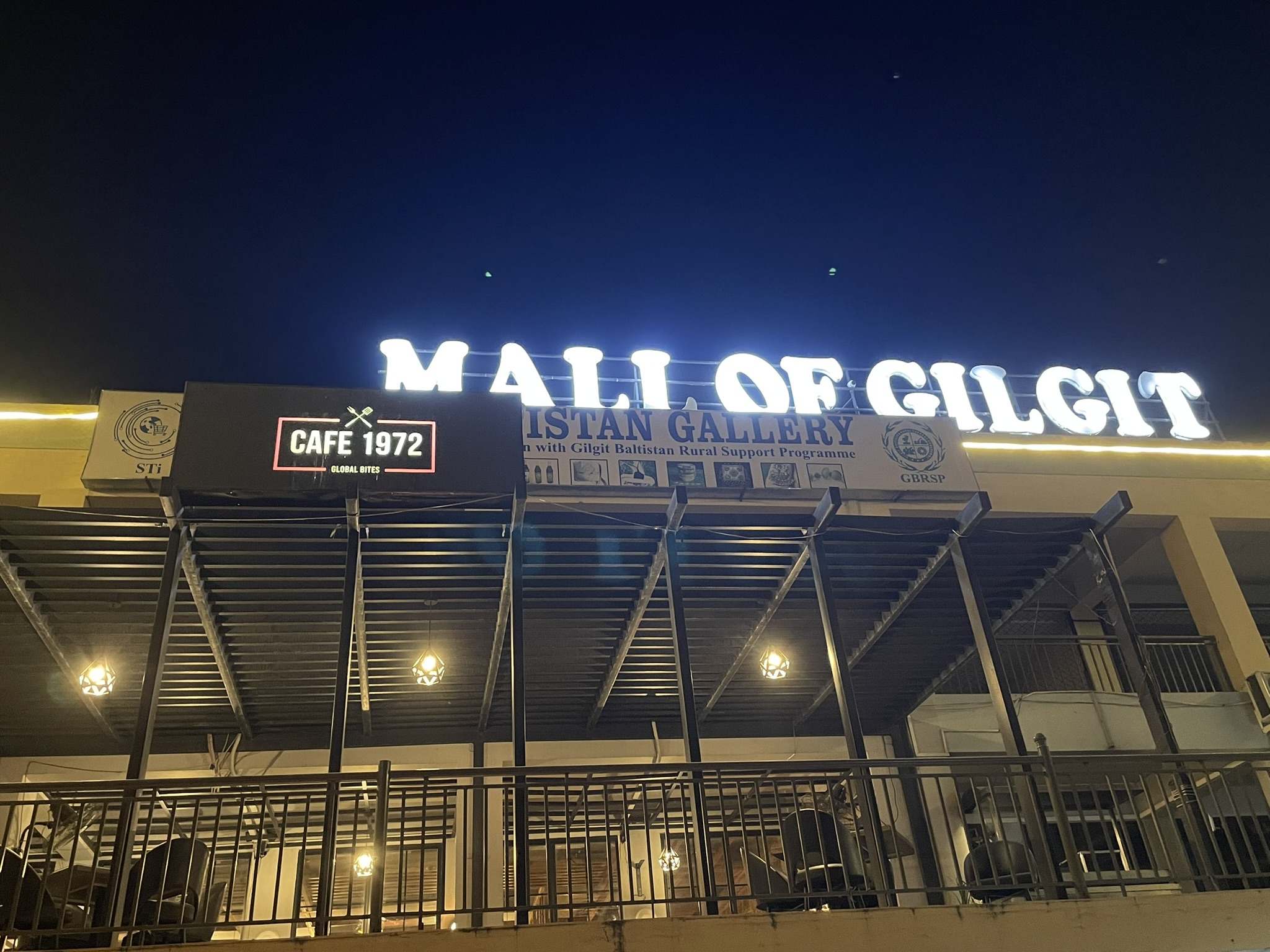
We perform ʿAṣr Ṣalāh at Jami Masjid Quba, Aliabad and also distribute some funds here to needy families. We return to Gilgit by 6pm and eat dinner at Cafe 1972. The temperature drops rapidly at night.
Jamia Sayyiduna Ali al-Murtada
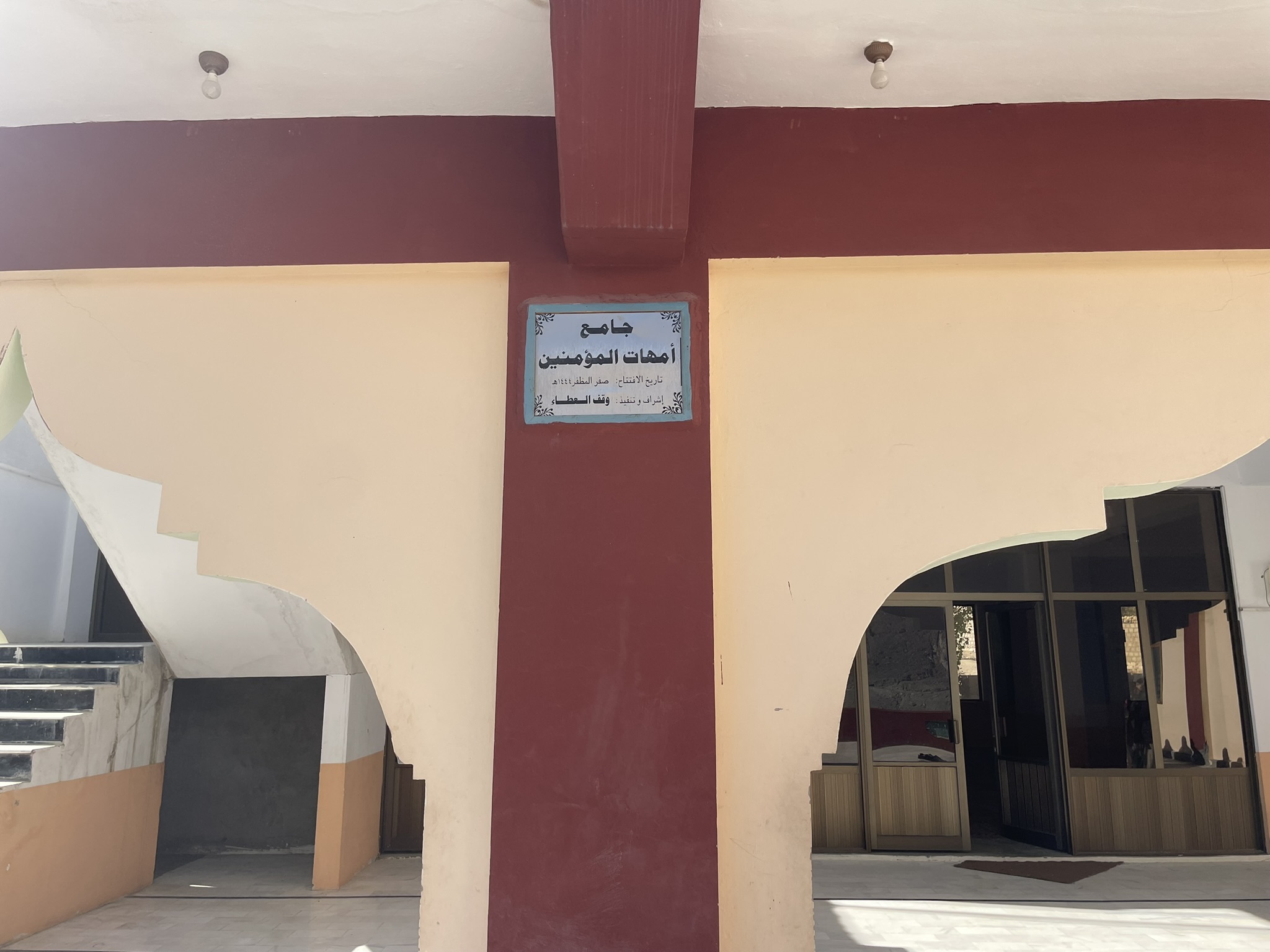
After dinner, we travel south towards Parri Bangla, 30km from Gilgit. There is a Madrasah here by the name of Jamia Sayyiduna Ali al-Murtada established by Mawlānā Ḥabībullāḥ and his colleague Mawlānā ʿAbd al-Ḥamīd.
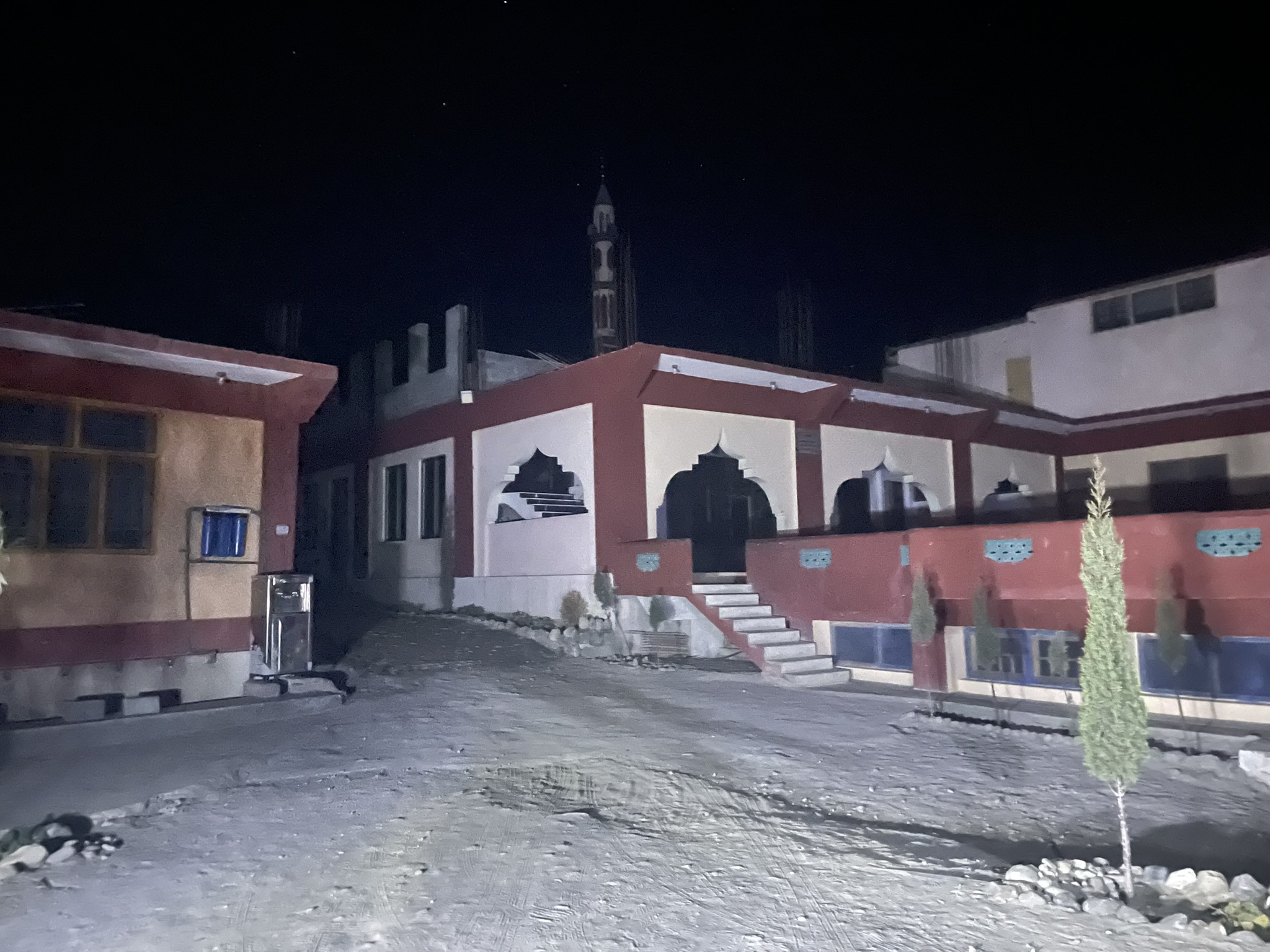
Both scholars are originally from Skardu and graduated from Jamia Uloom Islamia, Binori Town, Karachi and Jamia Imdadiyah, Faisalabad respectively and are connected with Sayyid Mufti Mukhtāruddīn Shāh Ṣāḥib (b. 1370/1950). The Madrasah has 200 non-residential students over two shifts, a morning shift for those who do not attend school and an afternoon shift for those who attend school in the morning. Those who do not attend school cannot afford the school fees, and so the Madrasah is planning to provide them with some basic schooling. This Madrasah is actually an off shoot of a seminary in Gujar Khan, Rawalpindi which is home to 300 residential boys and girls, including 100 boys from the Gilgit-Baltistan region. Both scholars are active in the area and have a good grasp of the local context. They inform us that the Shiites are extremely active in the region, and particularly in the region of Skardu, the Iranians are very active.
We also learn about the Noorbakhshi community located in the Skardu region and also further south into the Ladakh region of India. These people are neither 100% Sunni nor 100% Shiite, they are somewhat in between. Some of their scholars are graduates of our seminaries and they are doing some good work with wisdom. There are varied tendencies among them but according to Mawlānā Ḥabībullāḥ and Mawlānā ʿAbd al-Ḥamīd, they respect all the Ṣaḥābah (may Allah be pleased with them). They are 300,000 Noorbakhshi people in the Skardu region and there are efforts to correct their beliefs. This is why it is important to work in the Skardu region and empower scholars who can work in those communities and correct the beliefs of the people.
In addition to this, Mawlānā Ḥabībullāḥ and Mawlānā ʿAbd al-Ḥamīd mention that even in the Sunni areas south of Gilgit, there are villages that do not have a Masjid. We ask them to provide details so we can consider establishing Masjids there. I stress that along with establishing a Masjid, it is equally important to fund an Imam there to work in the local community. Many times, Masjids are built but there is no Imām. Anyone who funds the building of a Masjid should also provide some funding for an Imām for at least a few years so that the Masjid functions properly and the impact and benefits are realised.
It is a very fruitful meeting. We agree to stay in touch and return to Gilgit.
Qazi Nisar Ahmad
The next morning, Thursday 27 November 2025, we begin by visiting the local market in Gilgit city with Engineer Munīr and Mawlānā Tawṣīf and purchase some dry persimmon, dry apricot, cherry jam, pure Shilajit, honey, and Wild Thyme (Tumuro) tea leaves which has many benefits.
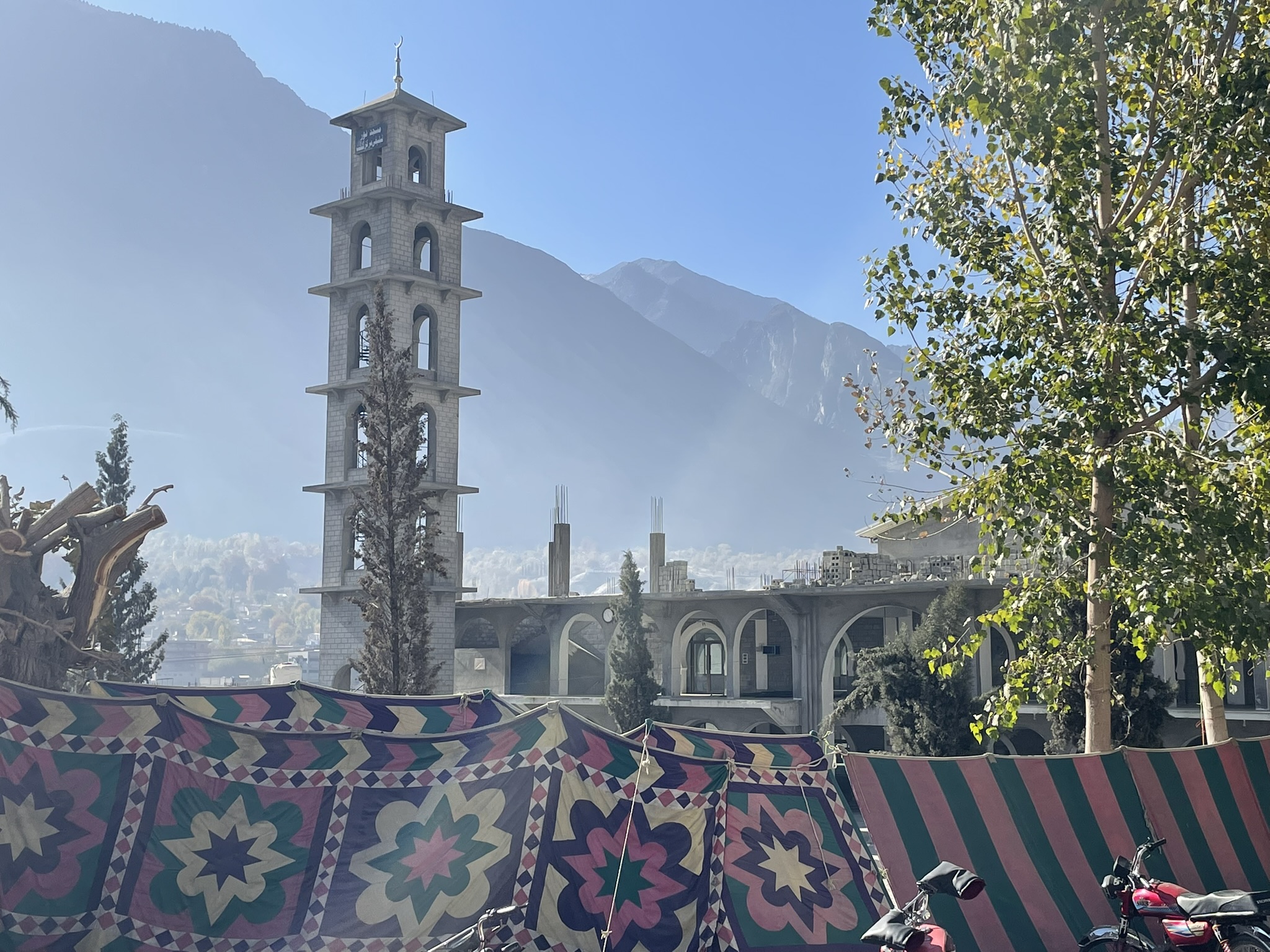
This is followed by the highlight of the trip, a meeting with Qazi Nisar Ahmad at his seminary, Jamia Islamia Nusratul Islam, Gilgit. Qazi Nisar Ahmad is well-respected throughout the Gilgit-Baltistan region. He graduated in 1991 from Jamia Uloom Islamia, Binori Town, Karachi. His father is Qazi ʿAbdurrazzāq who established this seminary in 1953, and also established the Masjid in Hunza we visited yesterday. He graduated from Darul Uloom Deoband in 1939 and studied under Shaykh al-Islām Mawlānā Ḥusayn Aḥmad Madanī (d. 1377/1957). He was the Qāḍī of this region, a role fulfilled by his son today.
Qazi Nisar Ahmad is a staunch defender of the Ahl al-Sunnah and survived an assassination attempt on 5th October 2025. As we meet him, there are several armed bodyguards around him and he is wearing a bullet proof vest. He tells me that if anyone insults the Ṣaḥābah, he will not let them rest. This is my first meeting with him, but it feels as though we have known each other since a very long time. He has a dynamic personality. There is a special radiance emanating from his face, as though he is a living martyr walking on earth. 300 bullets were fired at him and his bodyguards who were injured, but all survived. As our time is limited, he gives us a quick tour of the seminary. The full Dars Niẓāmī curriculum is taught here. There are 600 boys and 800 girls. The buildings for boys and girls are totally separate. We observe the teaching in some of the classes. I suggest to him that the seminary needs to prepare female teachers to teach the entire curriculum to females and not rely on male teachers for the final two years.
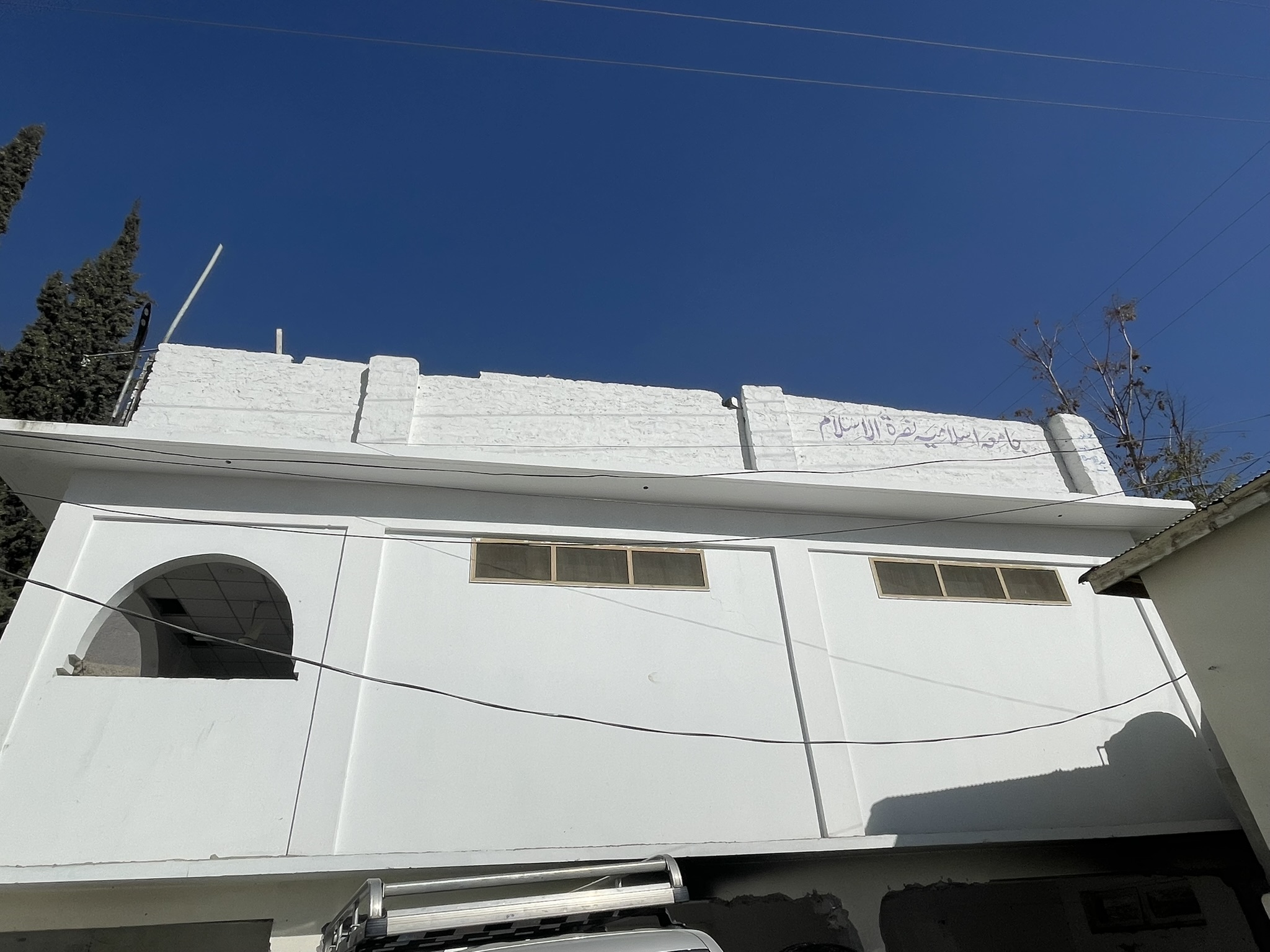
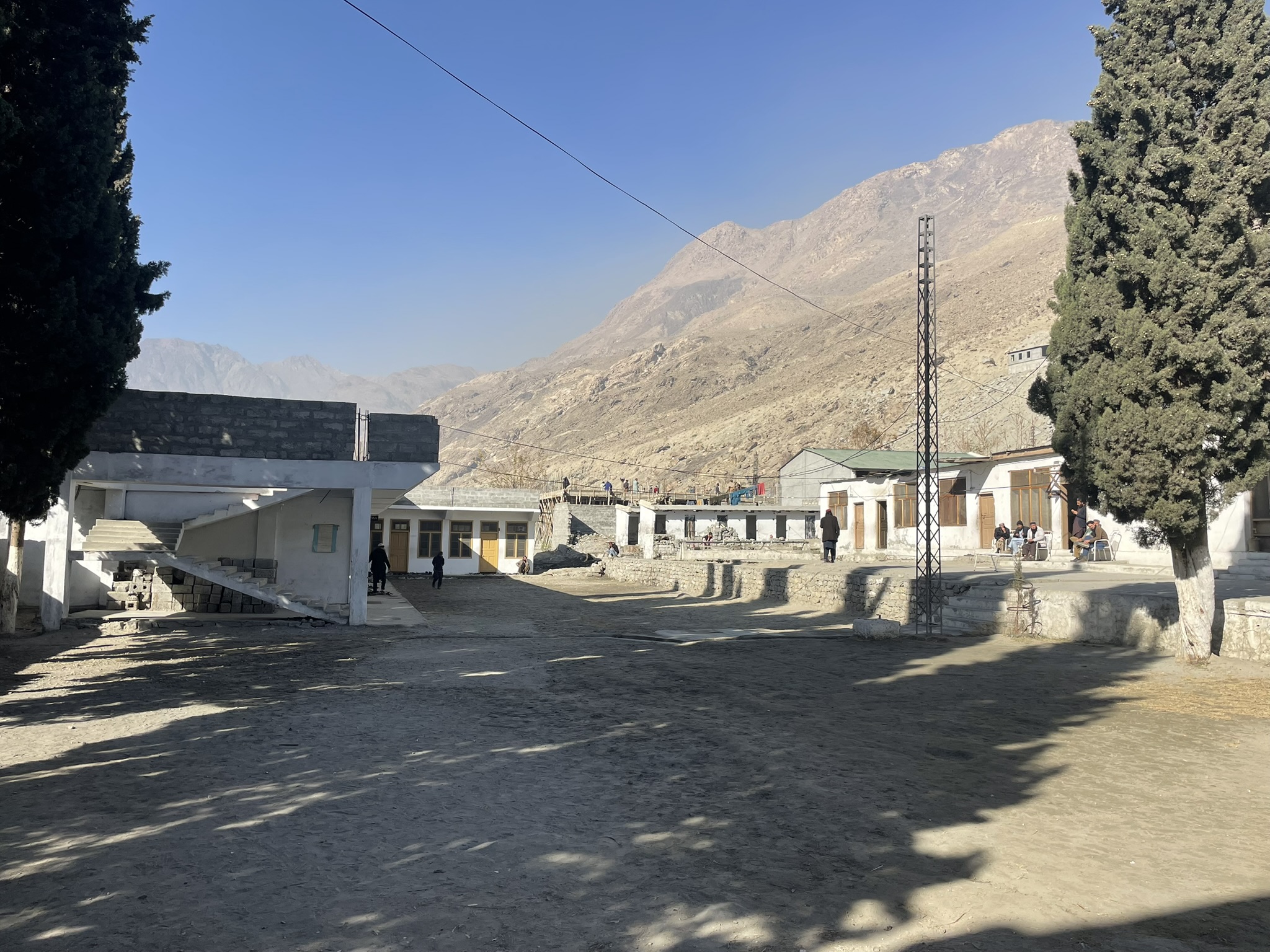
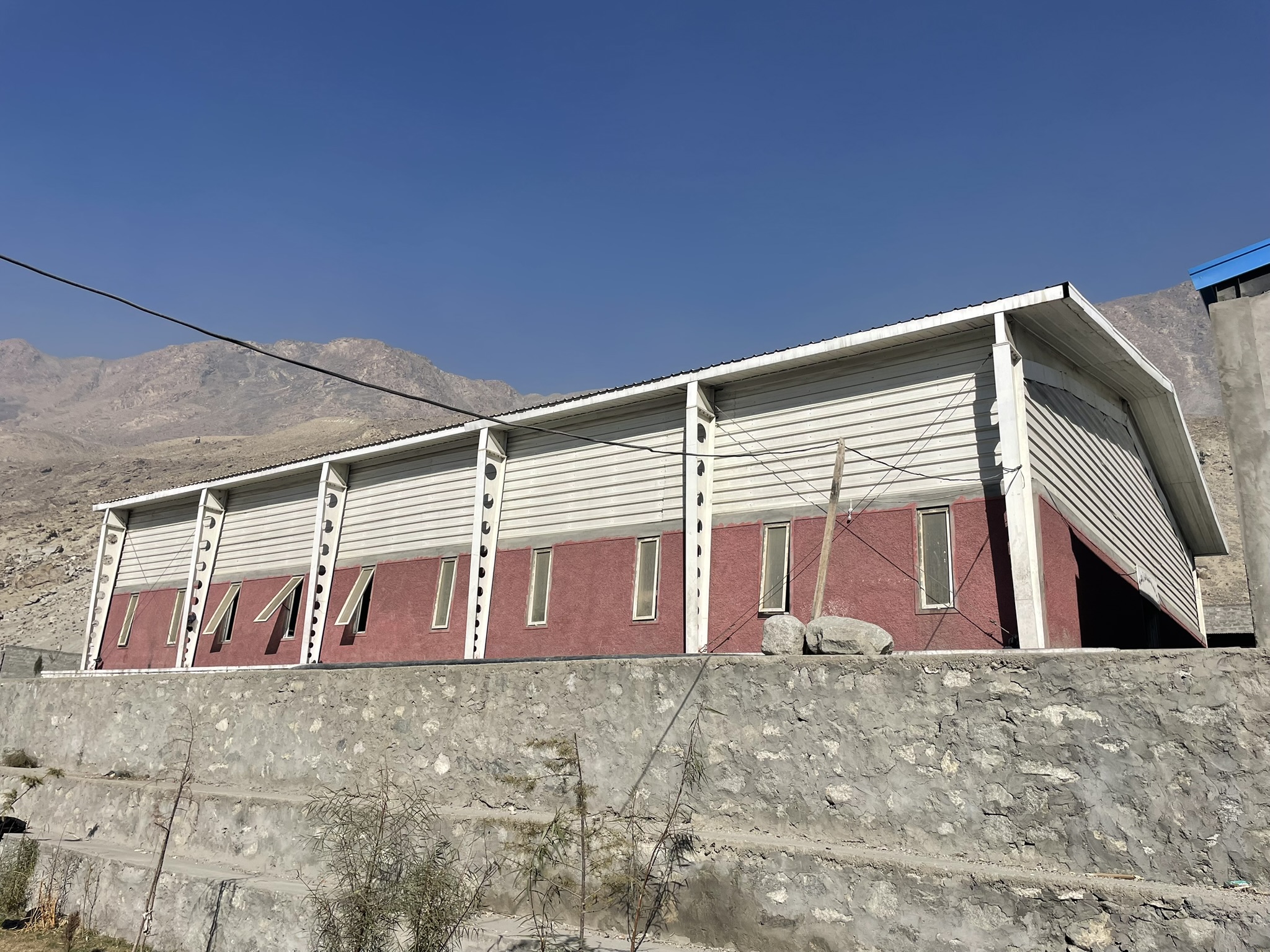
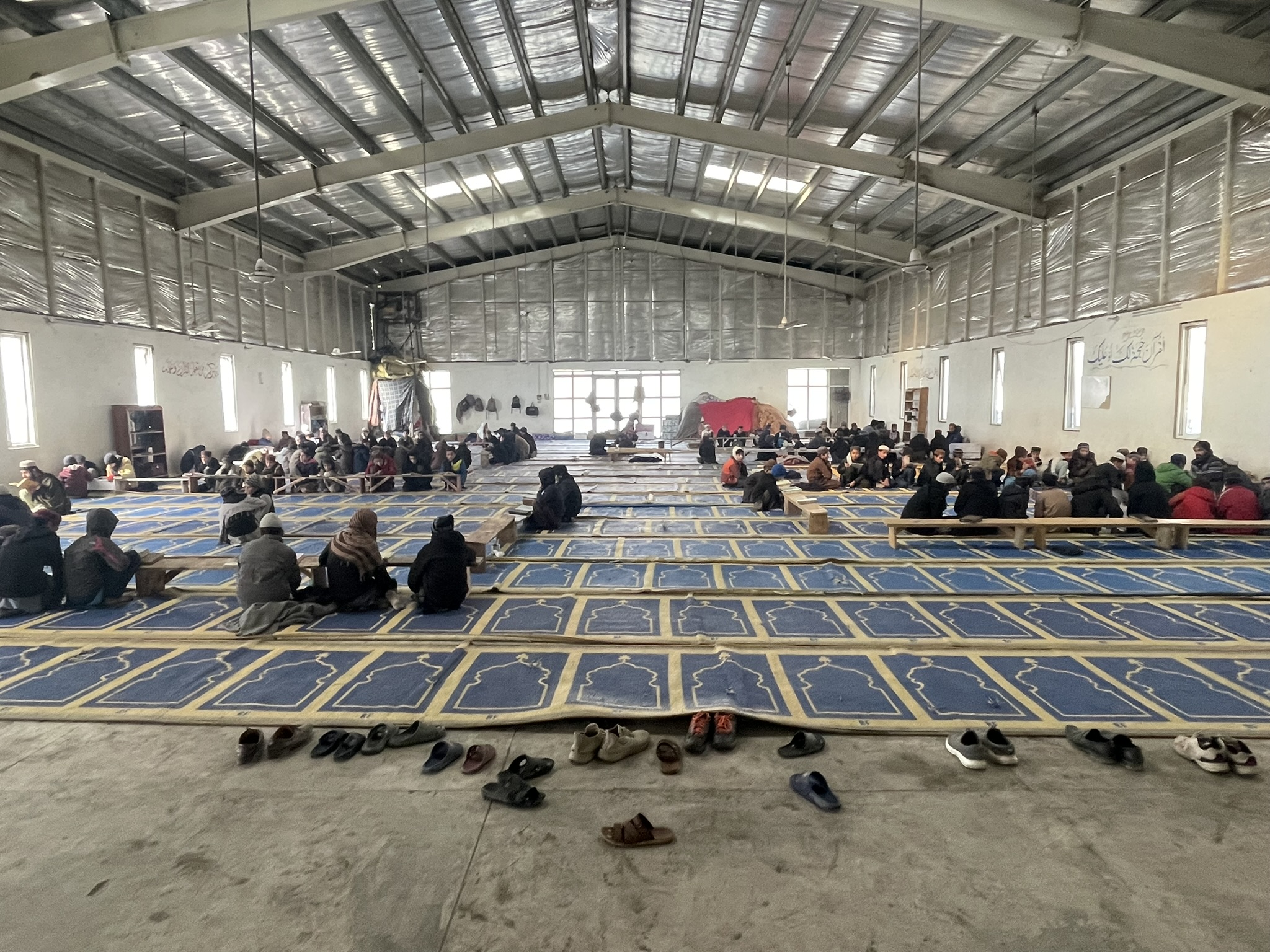
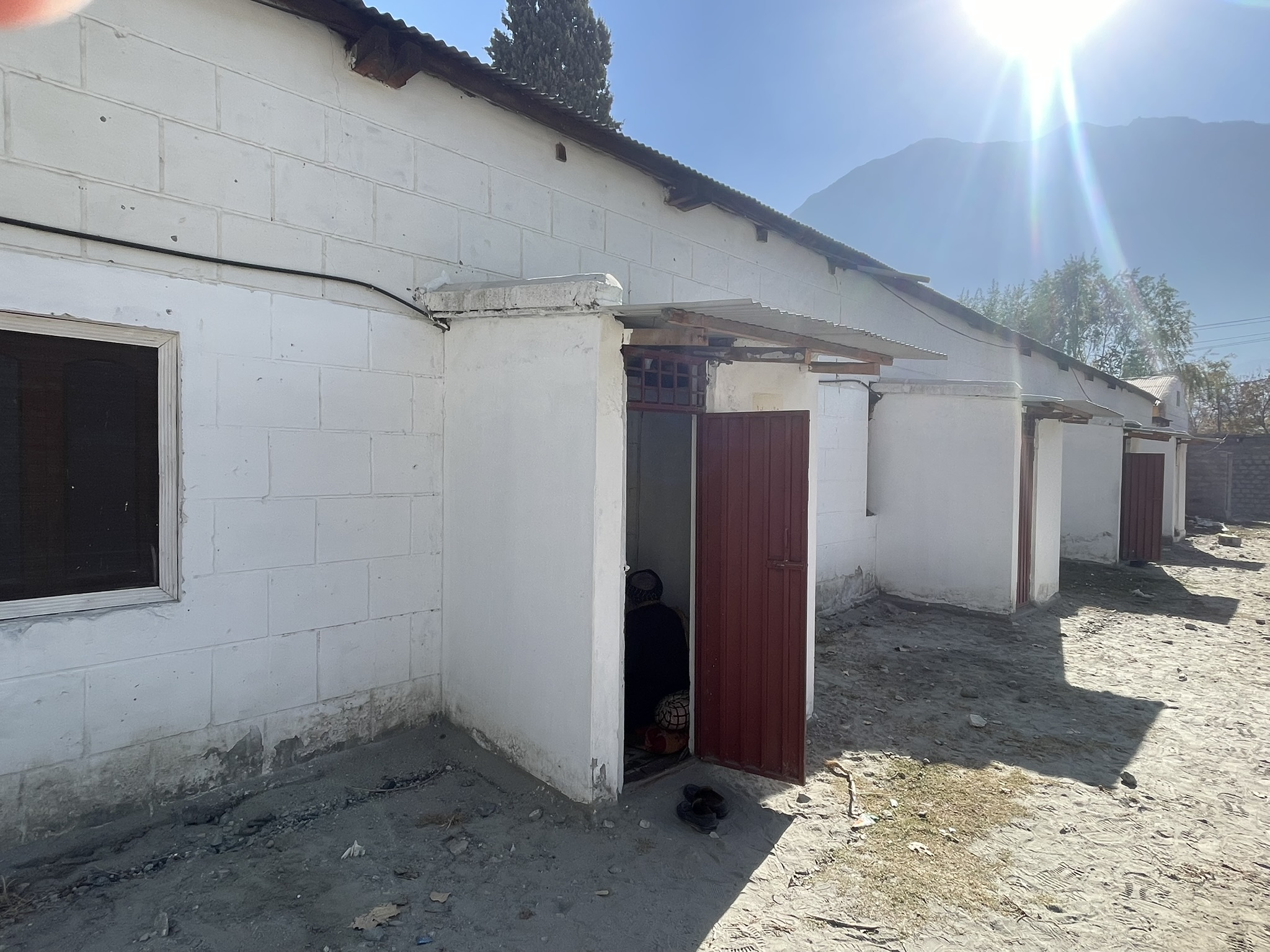
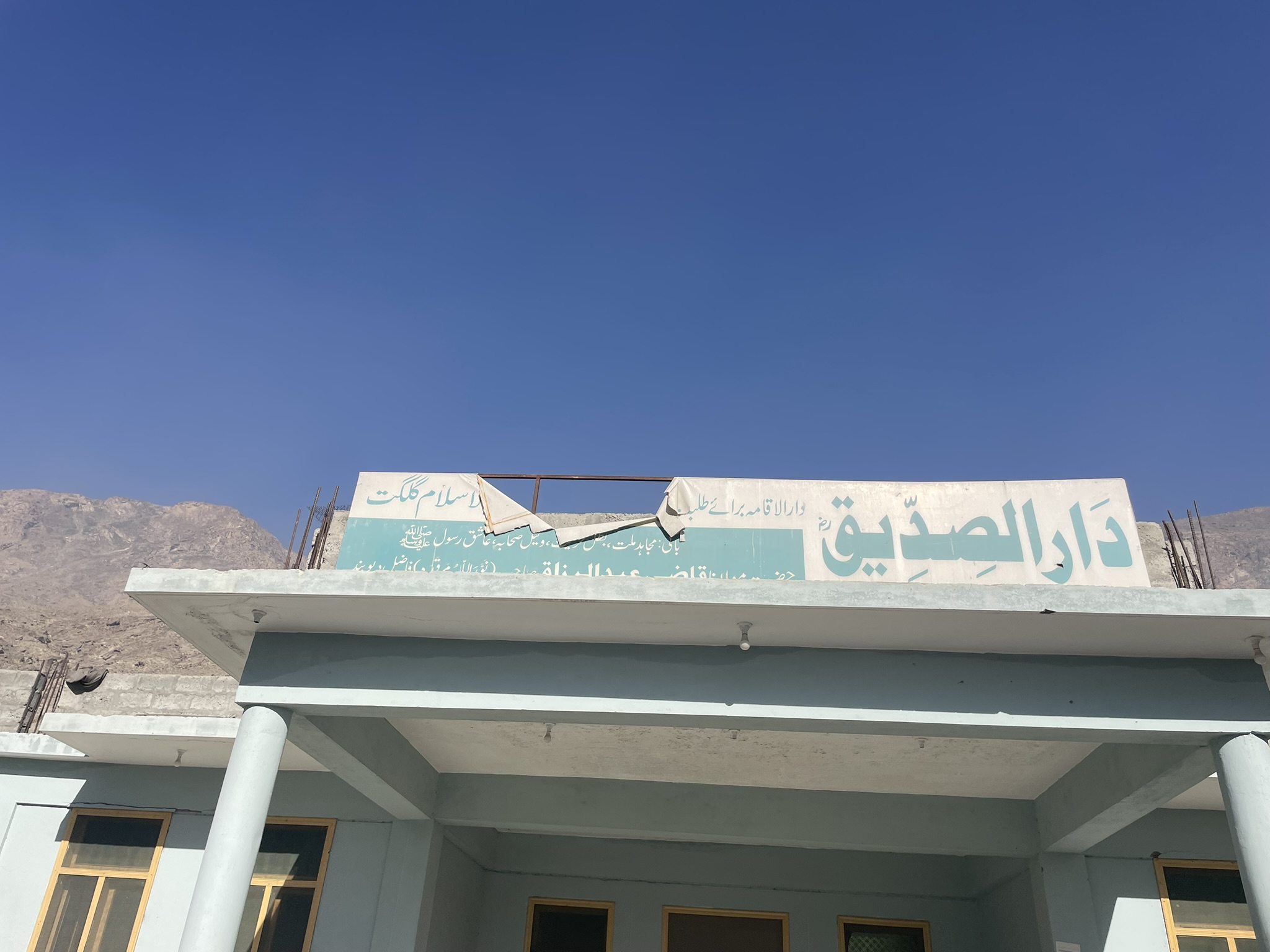
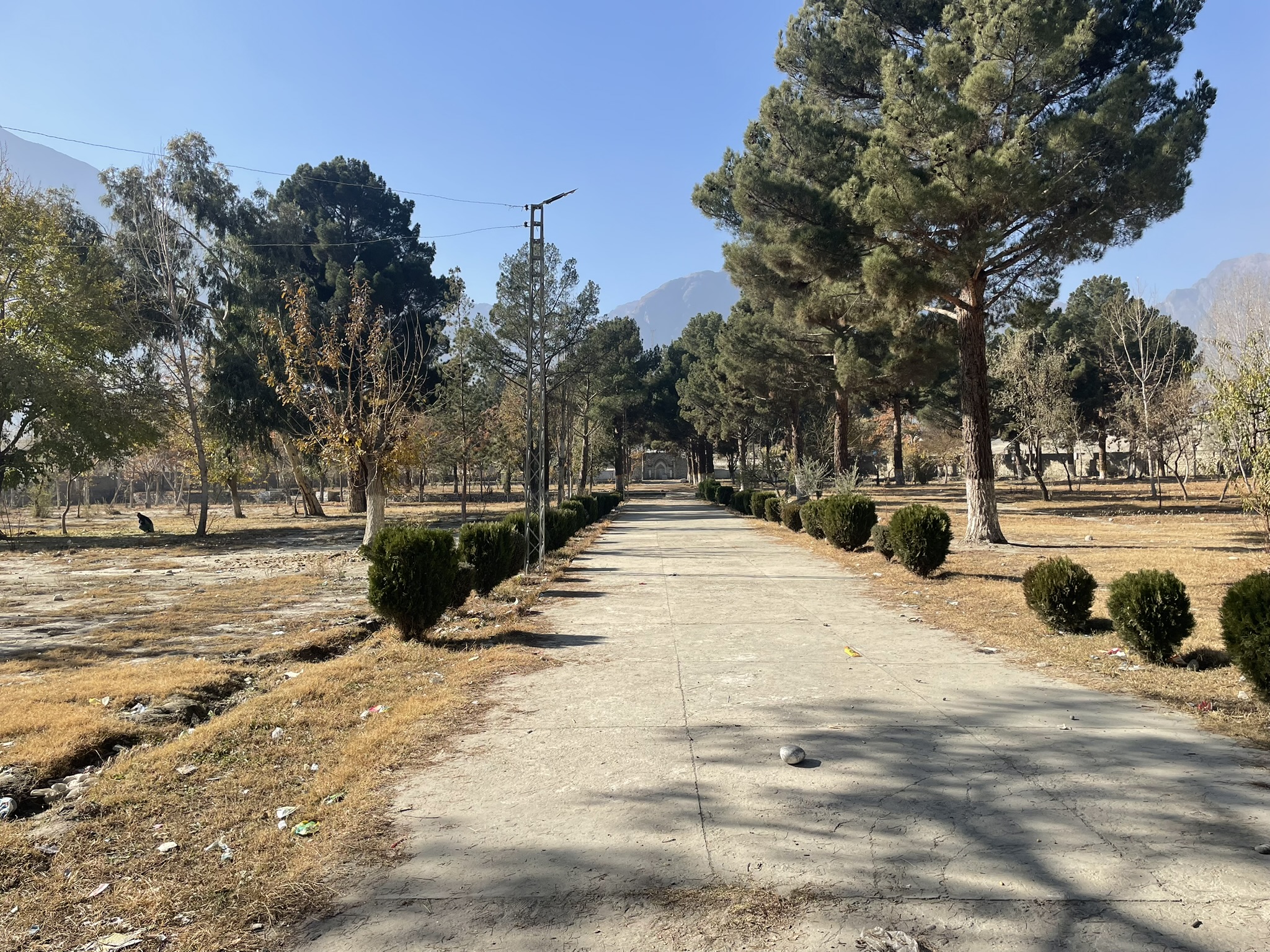
We visit the nearby Eidgah and also the library, which has a large stone which it is suggested has the name ‘Muḥammad’ engraved in it naturally, which is not obvious to us. The Tablīgh Markaz is also nearby the seminary. He does not permit us to leave without serving us fruit and tea.
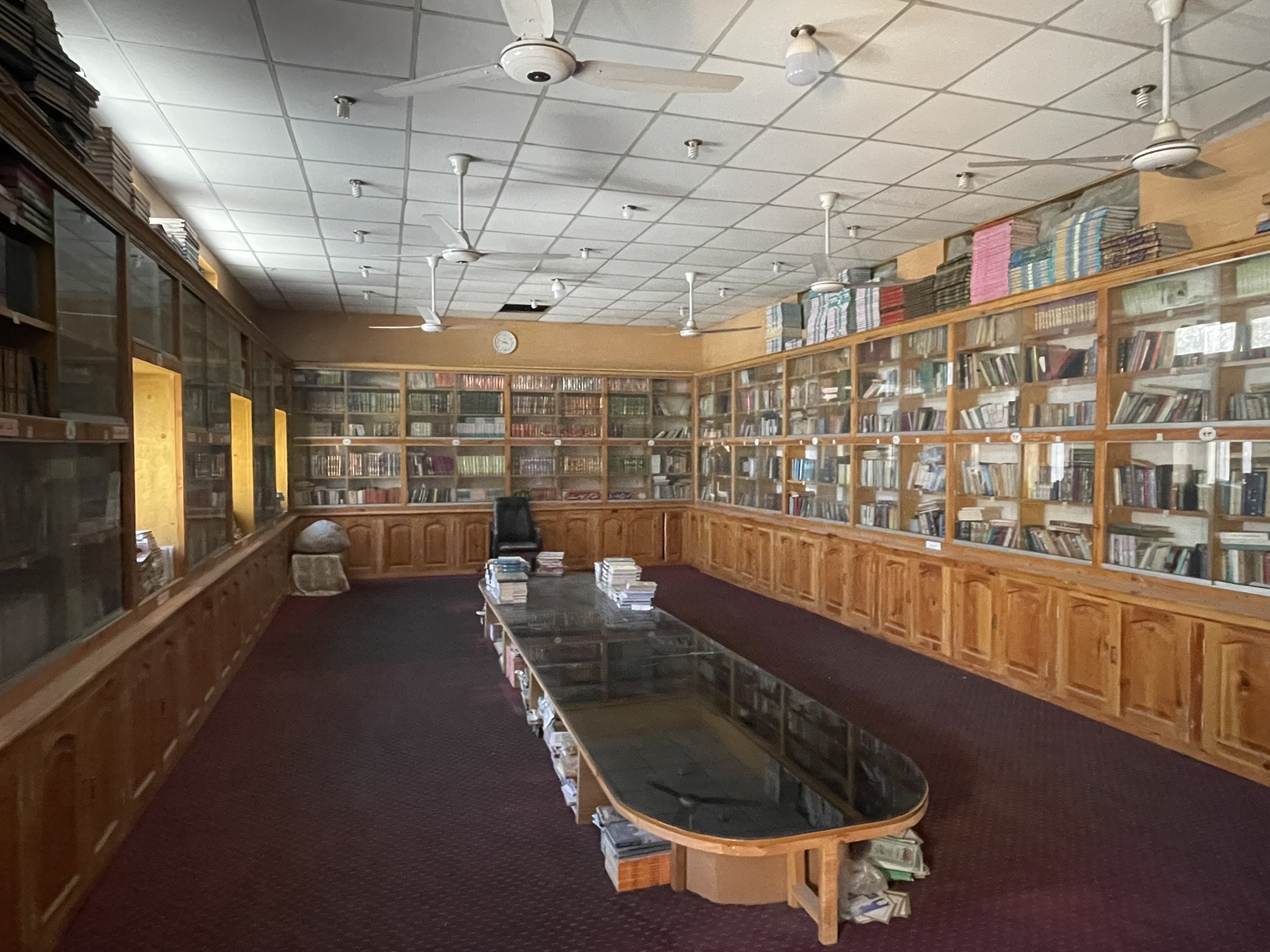
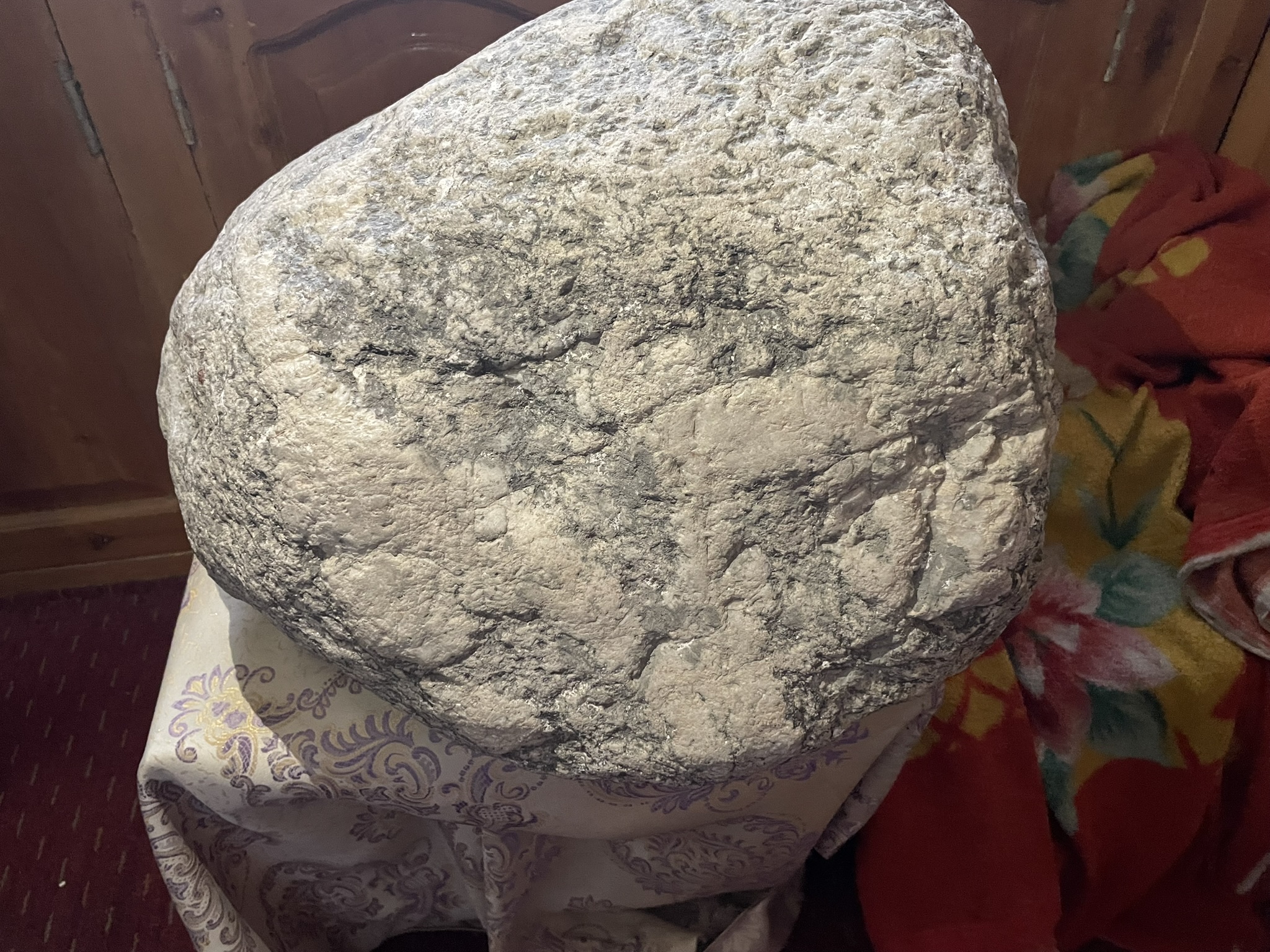
Before we depart, we donate 1 million PKR (£2700) for the ongoing construction work and also the running costs. He tells me that today is the payment date for the flour, and the seminary does not have sufficient funds, Allah Almighty sent you. We inform him that we had no intention of donating here and that everything occurs by the will of Allah Almighty. May Allah accept the donations of some of our friends as well as the Muṣallīs of Jaame Masjid Blackburn for their contributions.
I am left very moved by this meeting. Defending the Ṣaḥābah (may Allah be pleased with them) is a very noble endeavour, and Allah Almighty accepts certain people for this.
Flight cancellation
Our next stop is supposed to be the Airport, however, our flight to Islamabad has been cancelled. We do not understand the reason because the weather appears to be clear. There is no availability for tomorrow either, and there is no guarantee the flight will operate tomorrow or Saturday. We check flight options from Skardu, but there is no availability from there either. There is therefore no option but to travel by road. Our AVIS contact provides us with a large four by four to take us all the way to Islamabad. There are two types of cars in this region similar to Chitral. The first are untaxed cars which are very cheap but they cannot travel all the way to Islamabad. The second are the taxed cars which can travel all the way to Islamabad.
Return to Jamia Sayyiduna Ali al-Murtada
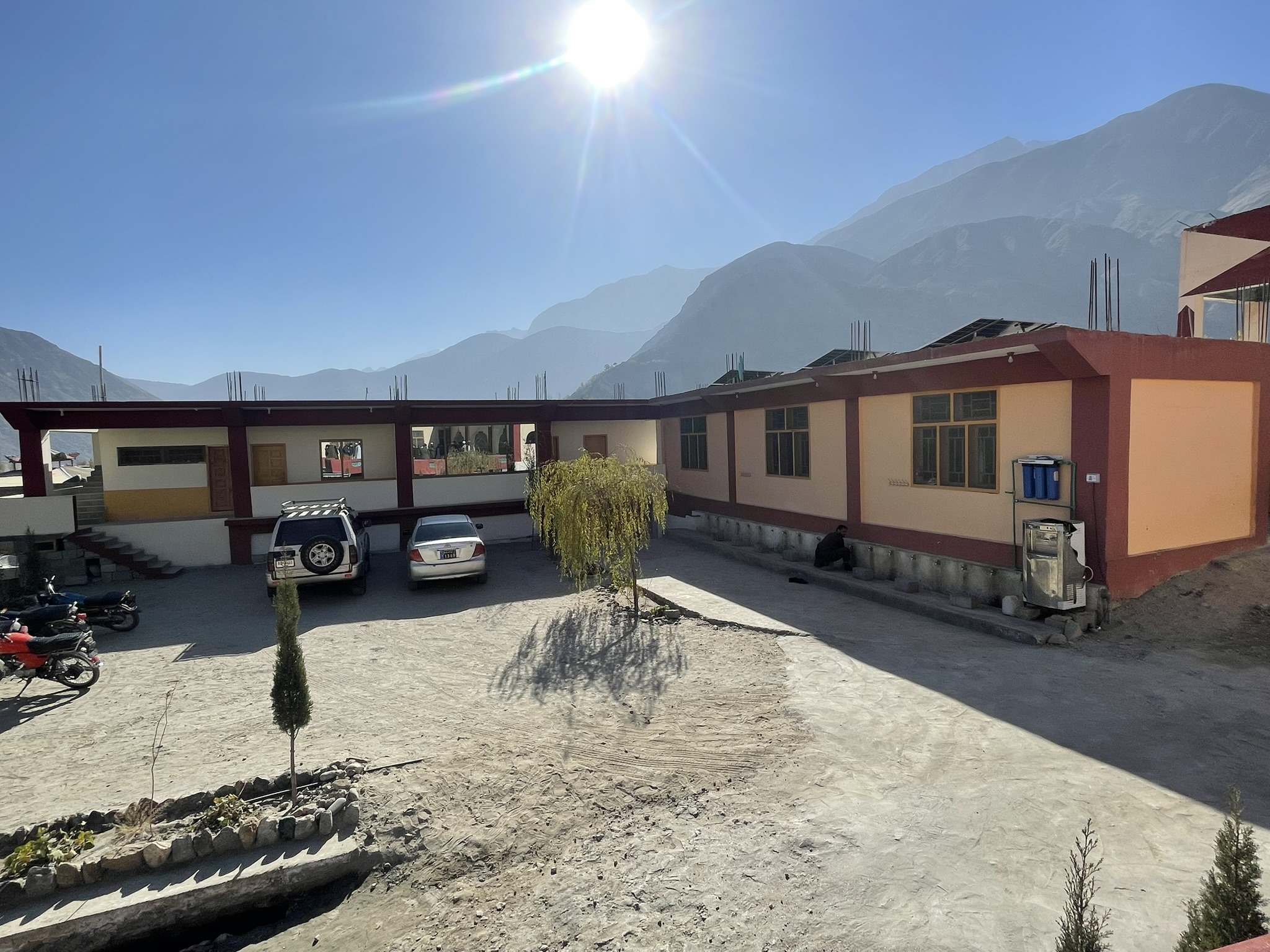
At 12.30pm, we arrive at Jamia Sayyiduna Ali al-Murtada, the institute we visited last night. This is on our way to Islamabad. Allah Almighty has his own plans and He is the best of planners. Last night, we had informed Mawlānā Ḥabībullāh that if there are any poor people or poor scholars who require support then we can support them, but given our time constraints they would need to meet us in Gilgit city. However, as soon as we planned to travel by road to Islamabad, we informed Mawlānā that we will come ourselves. We distribute 5000 PKR (£14) to the 45 people who have gathered which includes 30 scholars. Some of the Imams inform us that their monthly salary is 5000 PKR, which is less than £0.50 a day. These are the selfless unsung heroes of the Ummah who deserve support.
Road journey to Islamabad
We depart at 1pm towards Islamabad on the N35 Highway. At 1.50pm, we pass Tatta Pani, Raikot where boiling water comes out from the ground, which is beneficial for bones. People sit in the hot water and also drink it for relief. It is free. The driver informs us that as the temperature decreases and the weather gets colder, the temperature of the water increases. Subḥānallāh!
The N35 Highway is a single road until Mansehra. The route is scenic cutting through mountains and crossing over lakes. Landslides occur regularly in the region. Some parts of the route are dirt roads. There are also some road closures due to the construction of roads and dams. It is dark as we drive on some of the dangerous mountainous roads.
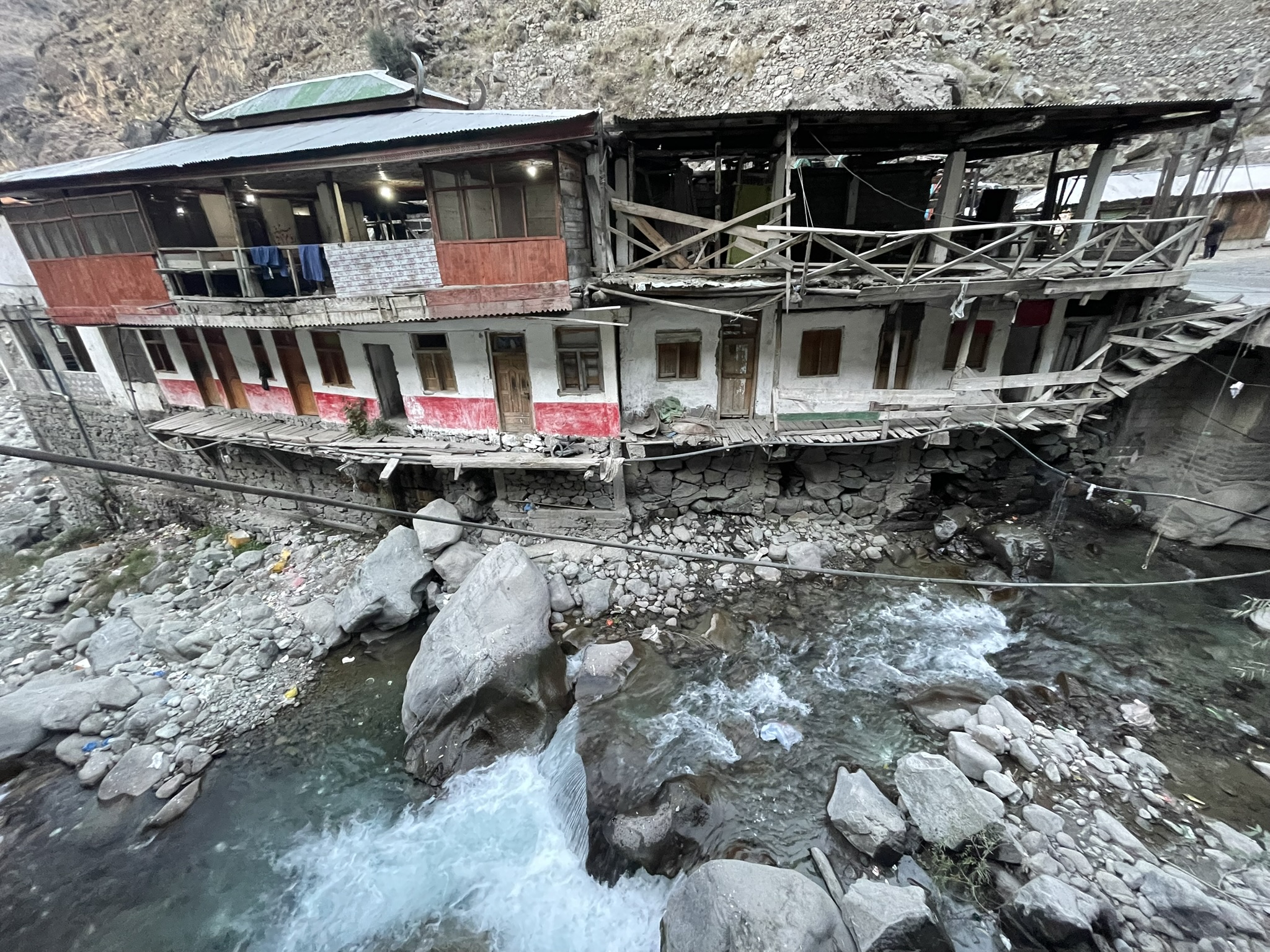
There are many checkpoints on the way, I lose count. People in this region have a lot of respect for scholars. The driver refers to me as Mufti Ṣāḥib and there are no issues. Otherwise, the first question at all the checkpoints is about foreigners in the car. In some locations, the driver mentions that we are guests of Qazi Nisar Ahmad and we are whizzed through without any questions. Even several hours from Gilgit, Qazi Nisar Ahmad is well known.
Our driver suggested earlier that we will reach Islamabad at 2am. However, we arrive shortly before midnight. We had a flight booked from Islamabad to Karachi earlier which was missed. In Pakistan, it is always advised to book refundable flights. We now have tickets booked for the morning, so we decide to stay near the Airport. There are no decent hotel options near the Airport and the city is far. Brother Naeem and Aamir of Global Reach, who have left no stone unturned in making our stay comfortable, book for us the Airport Gateway Guest House, a few minutes from the Airport. It is a new building but there is no heating yet and it is cold. The cost is only £9. There is a Double Tree Hilton under construction nearby but it is not operational yet.
Meeting with Mufti Muhammad Taqi Usmani
The following morning, Friday 28 November 2025, we fly on the 9am Air Blue flight from Islamabad to Karachi. We arrive into Darul Uloom Karachi at 12.30pm and head to our respected Mufti Muhammad Taqi Usmani’s residence. Mufti Ṣāḥib welcomes us in and is busy preparing himself for Jumuʿah Ṣalāh. He delivers the pre-Jumuʿah speech in Urdu at the large Masjid of the Darul Uloom attended by two to three thousand people. The speech focuses on being truthful in speech and also in action, as outlined in the 177th verse of Sūrah al-Baqarah.
After Ṣalāh, we return to Mufti Ṣāḥib’s residence and discuss our visit to Gilgit. Mufti Ṣāḥib commends us for thinking about these remote areas and supplicates for us. He suggests we expand our work there and consult with Qazi Nisar Ahmad, as he is the most prominent scholar in that region and Darul Uloom Karachi also did some work in the flood affected areas through him. He also suggests we focus on houses, Maktabs and Madāris. When we mention the plight of scholars and Imāms, he is saddened and suggests some form of economic empowerment for them. I brief Mufti Ṣāḥib on the economic empowerment of scholars in Chitral. Mufti Ṣāḥib suggests this should be replicated in Gilgit.
Mufti Ṣāḥib recalls his recent visit to the UK and in particular his visits to Dundee and Aberdeen for the first time and his happiness at seeing the Muslims striving to preserve their faith. He enquires about my father and conveys his Salām. As we depart, he repeats what he had mentioned to me in earlier trips that we should stay at the guest house of Darul Uloom. Mufti Ṣāḥib very kindly accepts my excuse due to my sleep apnoea.
World Memon Organisation
We leave Darul Uloom Karachi and meet with brother Arsalan Arif Nara, the secretary of World Memon Organisation (WMO) Pakistan. We eat lunch together and discuss potential collaboration opportunities.
Meeting with Hafiz ul Haq of Professional Education Foundation
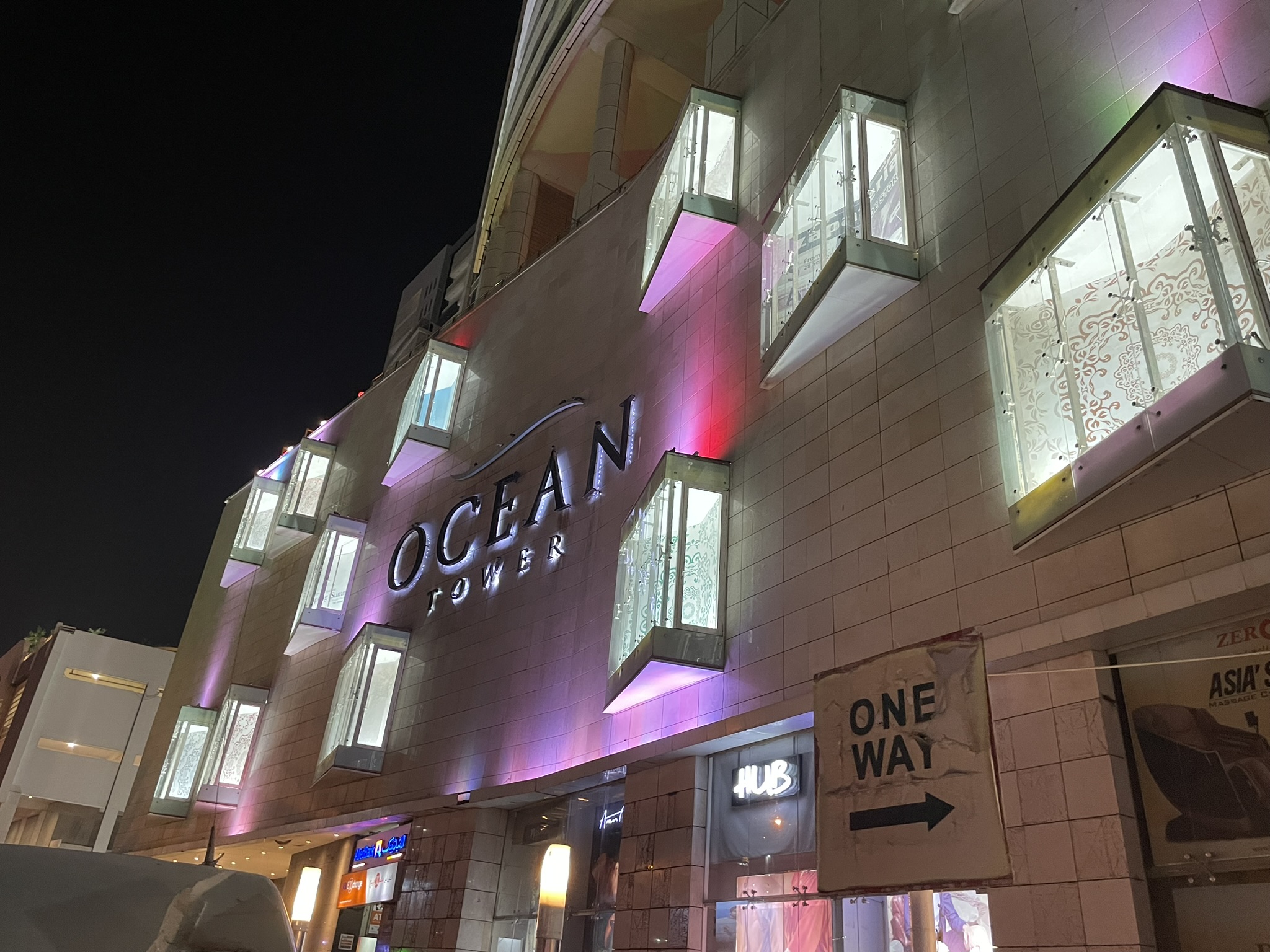
Later in the evening, we meet with brother Hafiz ul Haq of Professional Education Foundation (PEF) over dinner at the Kolachi restaurant in Ocean Mall.
This is my first meeting with him. He is nearly 80 years old. He is the nephew of the famous orator, Mawlānā Iḥtishām al-Ḥaq Thānawī (d. 1400/1980). He was stationed in the UK for many years and is now spending a lot of time in Pakistan. His Foundation specialises in providing scholarships to higher education students with a focus on medicine, engineering, agriculture, computer science and business administration. In 2024, 3121 students were supported across 41 universities in Pakistan. The selection is based on academic performance as well as the income of parents and there is also some weighting for orphans. We met with some of the PEF funded students at the National University of Science and Technology (NUST) in Islamabad earlier in the week.
Day trip to Balochistan
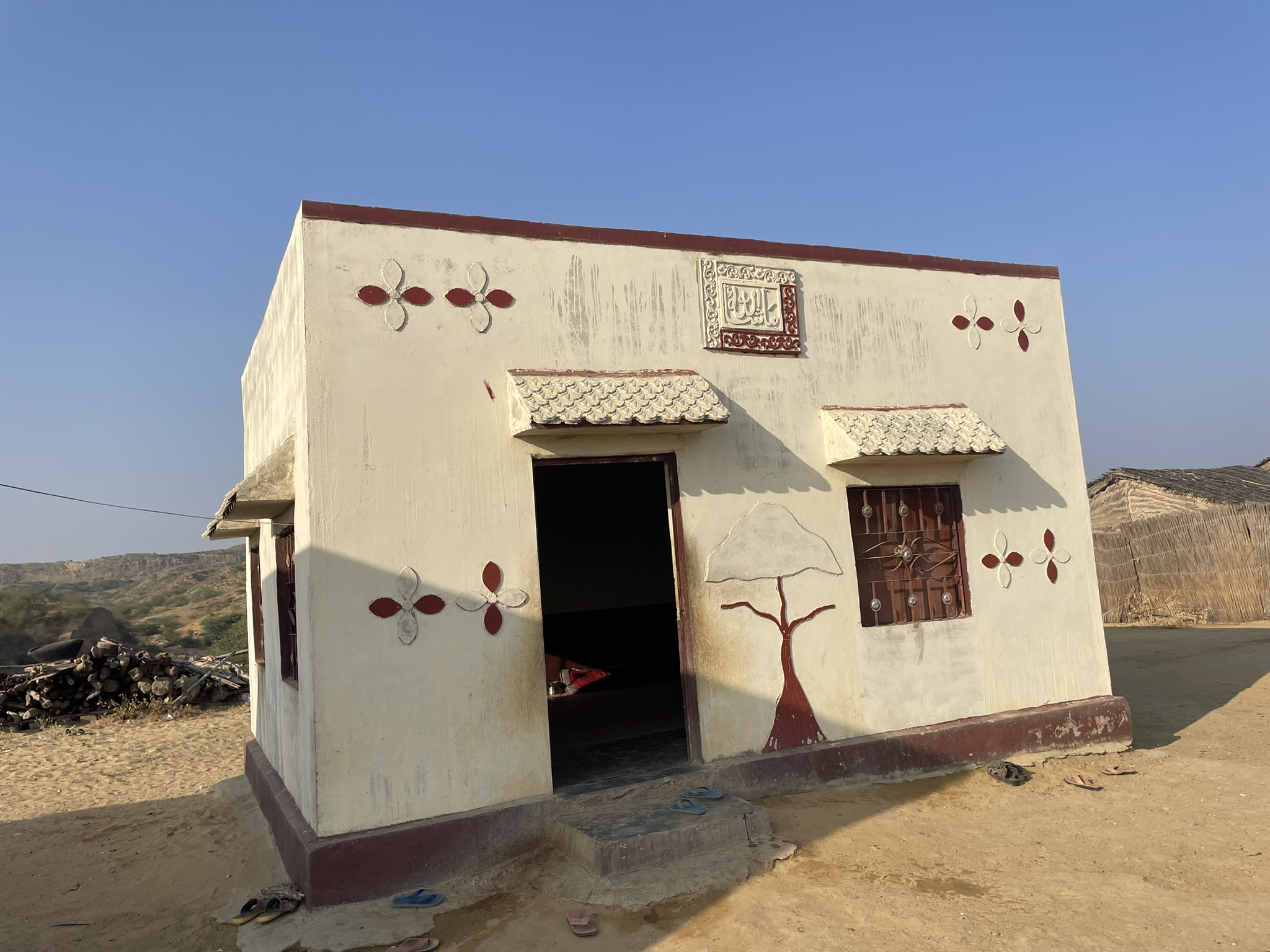
The next day, Saturday 29 November 2025, we depart from Movenpick hotel at 9am and make a day trip to Balochistan to visit the housing, water and Masjid support projects of Global Reach. The previous travelogue detailed the work of Global Reach in this region. We visit the town of Winder and surrounding areas which we did not visit in the previous journey. The charity has built a total of 48 houses in Balochistan. We visit some of these homes and also visit their former homes made of straw and bamboo sticks.
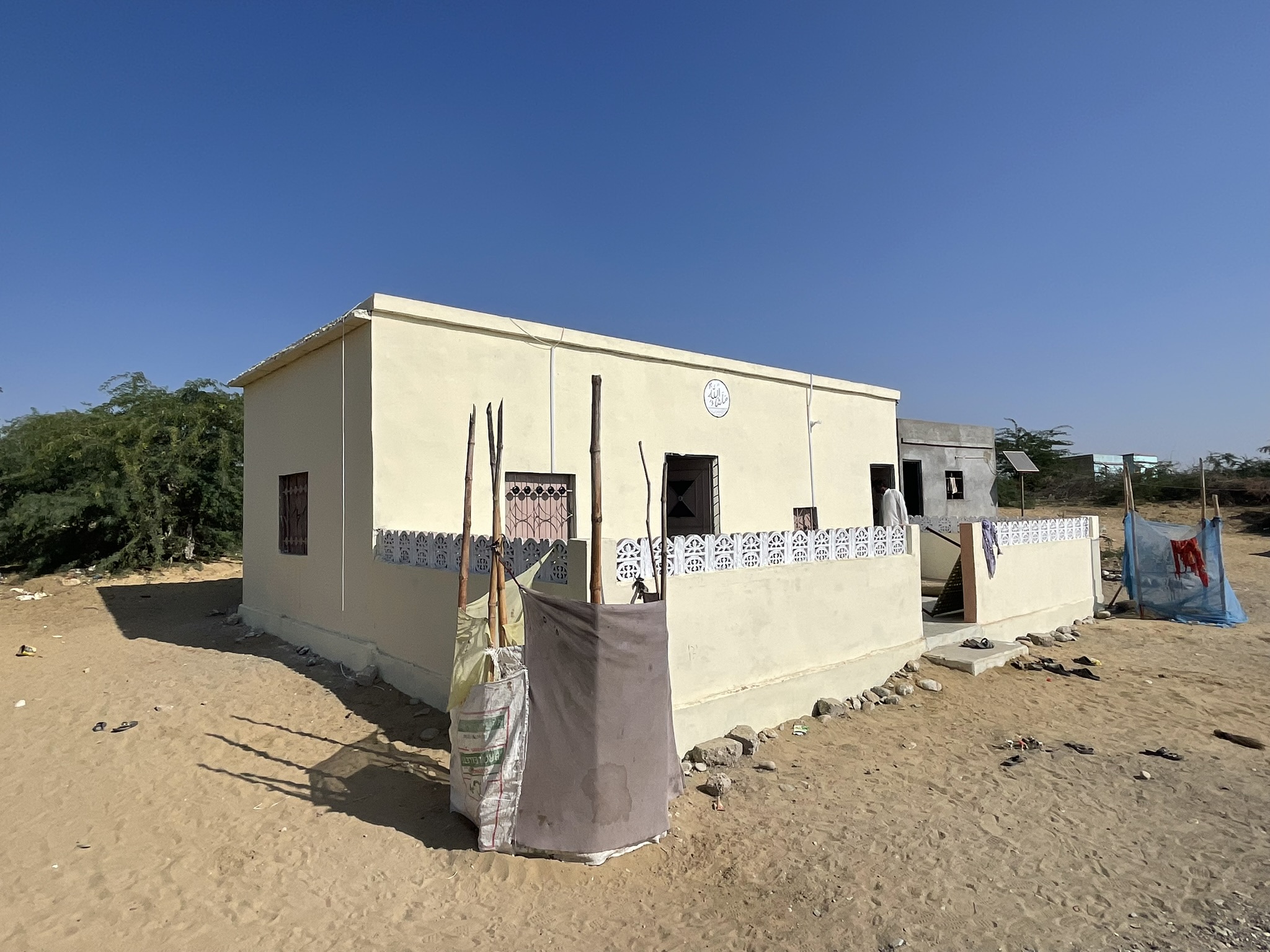
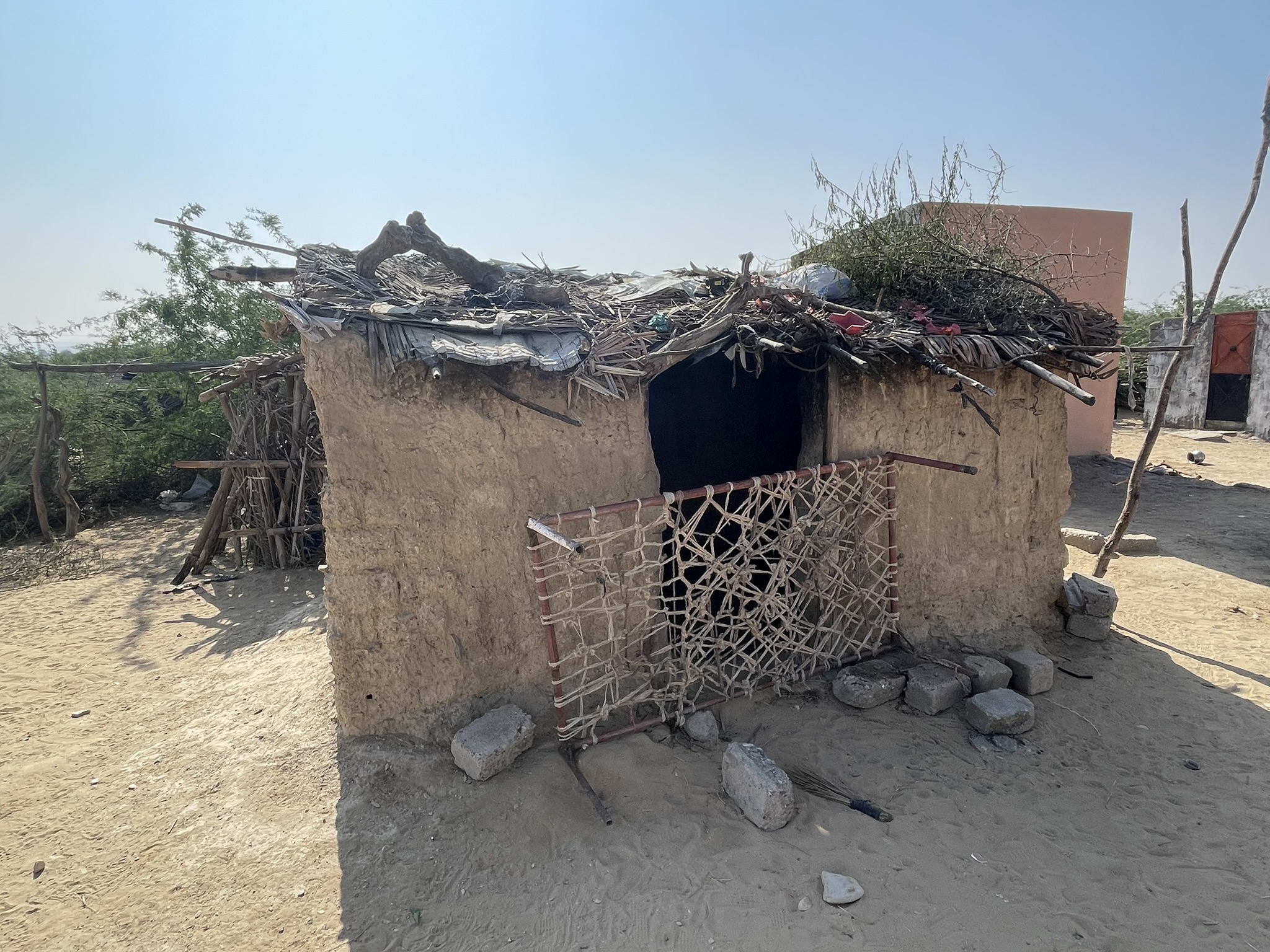
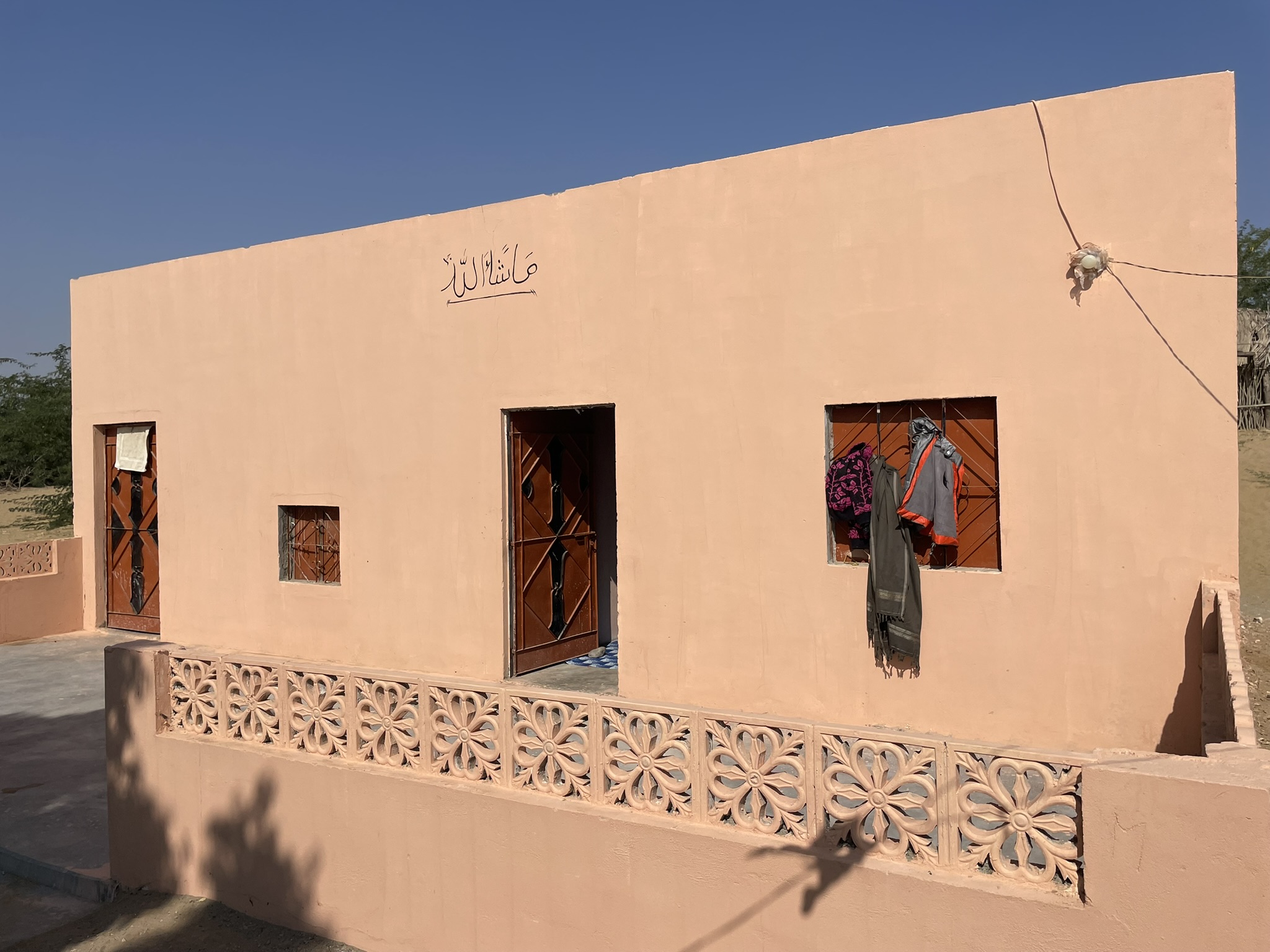
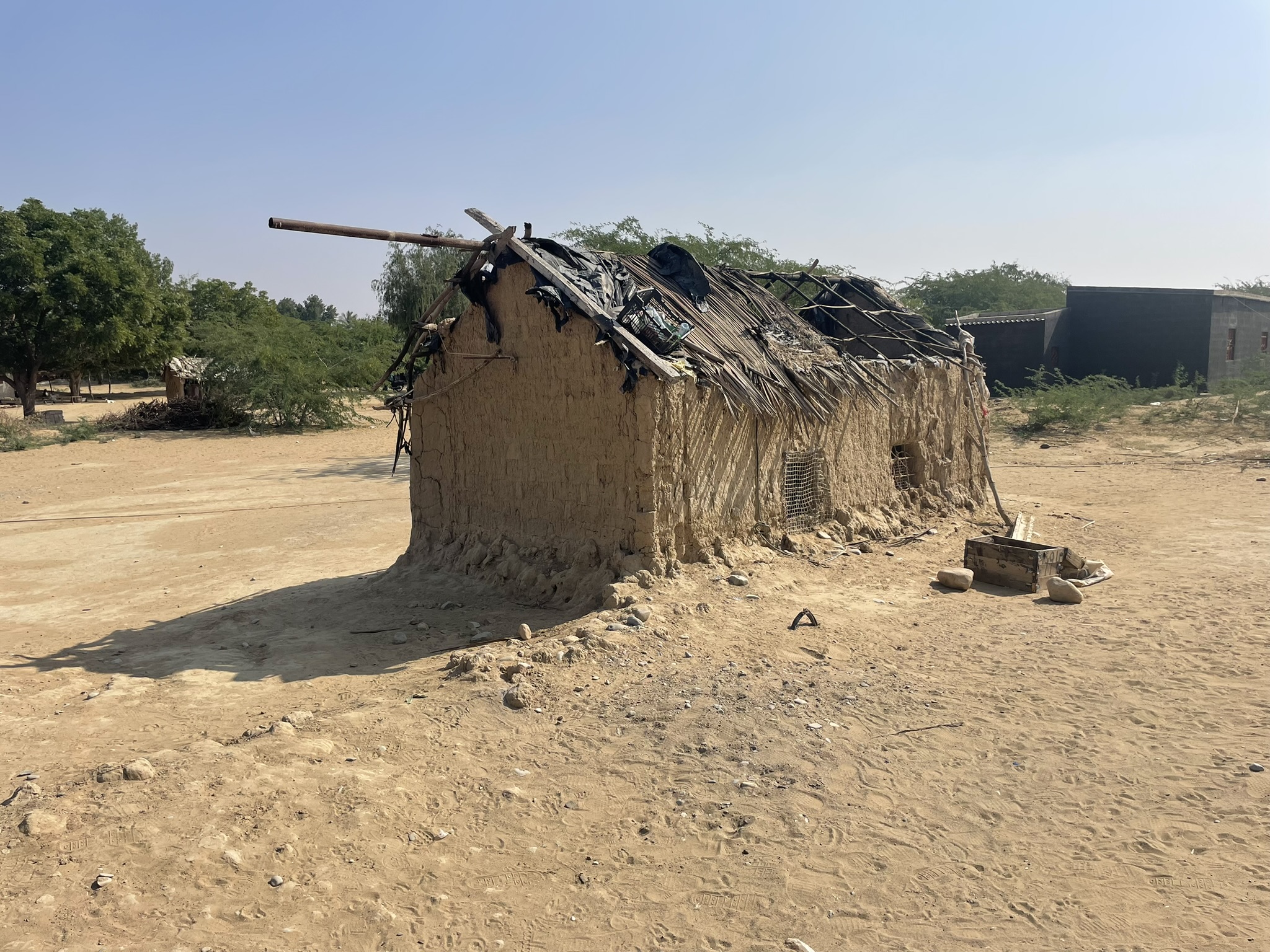
We meet with many of the beneficiaries and also distribute 5000 PKR (£14) in three different locations to more than 100 widows and poor people. We are extremely saddened when a widow informs us that her two young boys work in the Chikoo (Sapodilla, Sapota) farms and earn 200 PKR (£0.55) a day. Brother Aamir mentions that this area of Winder is famous for Chikoo farms, they grow in abundance a few times a year, and this is unique to this small area of Balochistan. Chikoo is commonly found in Gujarat India where it is also used to make milkshakes and ice creams.
We also visit the DG Cement Factory where brother Aamir works as a senior manager, this is among the largest cement factories in the world. The Masjid and residential homes within the complex are impressive. Brother Aamir serves us tea and snacks.
This is followed by a visit to the desert area behind the factory where there are only sand roads. We travel for 45 minutes and visit the villages of Chechai and Jarar Peer and appreciate how Global Reach has penetrated extremely impoverished and difficult to access areas. It is highly unlikely that NGOs would reach here. The sand road continues for another 120 minutes. The charity has established thirty boreholes in these remote areas. The residents in these areas do not own cars. There is only one transport vehicle that transports people and goods from these remote areas to the main road once a day.
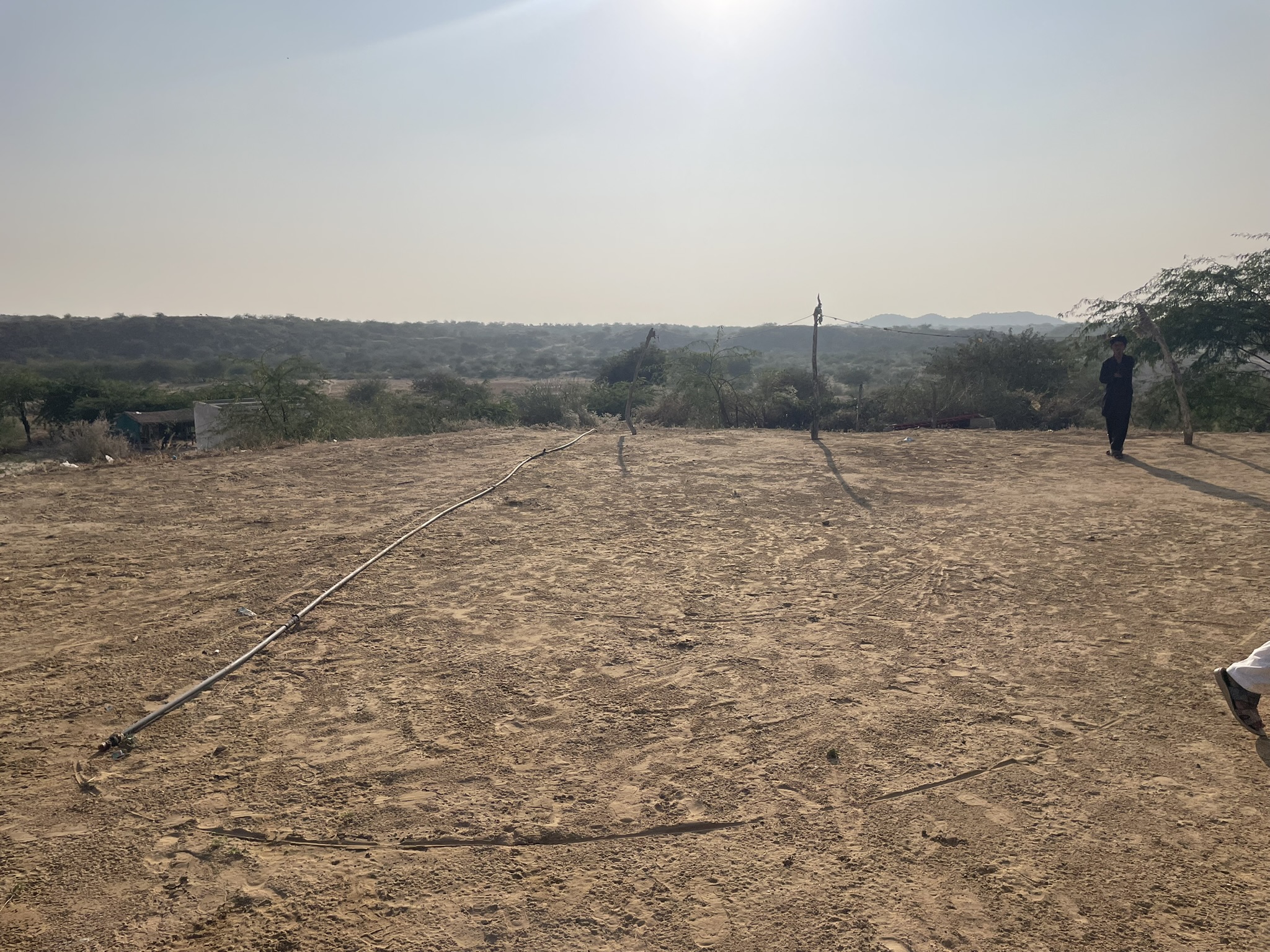
We return to Karachi and eat dinner at BBQ Tonight in Clifton. Allah Almighty reward brother Aamir for his hospitality, warmth, service and dedication. Before we depart, Mawlānā Muhammad Fazal Wadood, a graduate of Darul Uloom Karachi who is doing some work in Chitral, arrives and we have a brief meeting. We drop Riaz off to the hotel as his return flight is tomorrow, whilst Aamir drops me to the Airport. I purchase some sweets from the famous Rehmat-e-Shereen shop and board the 10.40pm Emirates flight to Dubai. Having some points provides for an upgrade on this flight as well as the onward flight to Manchester. The advantage of upgrading on board is that there are no taxes. However, it is subject to availability of seats.
I arrive Manchester at 6.30am the next morning. My dear cousin, Mawlānā Ashraf, who taught in Darul Uloom Bury for many years and is currently involved in the noble endeavour of supporting the elderly, kindly collects me. Allah Almighty reward him.
Conclusion
In developing countries like Pakistan, the need is everywhere. However, there are some regions that have well established connections with the outside world and good sources of income. There are also some regions where NGOs are active. Regions like Gilgit-Baltistan do not have these connections and therefore deserve more attention, especially because they are difficult to reach areas. There are also good religious reasons why the region needs more support so that the Ahl al-Sunnah are strengthened and the true Islamic teachings are spread among the local people.
Beyond this, Pakistan is a rich country full of resources and minerals and with so much potential, that the country can be prosperous without a need for any external funds. We pray to Allah Almighty to grant the country the leadership to help realise the potential of the country and strengthen Islam and Muslims regionally and worldwide. Āmīn.
Yusuf Shabbir
19 Jumādā al-Thāniyah 1447 / 10 December 2025